The United Nations and other international organizations are bracing for four more years of Donald Trump, who famously tweeted before becoming president the first time that the 193-member U.N. was “just a club for people to get together, talk and have a good time.”
In his first term, Trump suspended funding for the U.N. health and family planning agencies, withdrew from its cultural organization and top human rights body, and jacked up tariffs on China and even longtime U.S. allies by flaunting the World Trade Organization’s rulebook. The United States is the biggest single donor to the United Nations, paying 22% of its regular budget.
Trump’s take this time on the world body began taking shape this week with his choice of Republican Rep. Elise Stefanik of New York for U.S. ambassador to the U.N.
Stefanik, the fourth-ranking House member, called last month for a “complete reassessment” of U.S. funding for the United Nations and urged a halt to support for its agency for Palestinian refugees, or UNRWA. President Joe Biden paused the funding after UNRWA fired several staffers in Gaza suspected of taking part in the Oct. 7, 2023, attack led by Hamas.
Here’s a look at what Trump 2.0 could mean for global organizations:
‘A theater’ for a conservative agenda
Speculation about Trump’s future policies has already become a parlor game among wags in Washington and beyond, and reading the signals on issues important to the U.N. isn’t always easy.
For example, Trump once called climate change a hoax and has supported the fossil fuel industry but has sidled up to the environmentally-minded Elon Musk. His first administration funded breakneck efforts to find a COVID-19 vaccine, but he has allied with anti-vaccine activist Robert F. Kennedy Jr.
“The funny thing is that Trump does not really have a fixed view of the U.N.,” said Richard Gowan, U.N. director for the International Crisis Group think tank.
Gowan expects that Trump won’t view the world body “as a place to transact serious political business but will instead exploit it as a theater to pursue a conservative global social agenda.”
There are clues from his first term. Trump pulled the U.S. out of the 2015 Paris climate accord and is likely to do it again after President Joe Biden rejoined.
Trump also had the U.S. leave the cultural and educational agency UNESCO and the U.N.-backed Human Rights Council, claiming they were biased against Israel. Biden went back to both before recently opting not to seek a second consecutive term on the council.
Trump cut funding for the U.N. population agency for reproductive health services, claiming it was funding abortions. UNFPA says it doesn’t take a position on abortion rights, and the U.S. rejoined.
He had no interest in multilateralism — countries working together to address global challenges — in his first term. U.N. Secretary-General Antonio Guterres calls it “the cornerstone” of the United Nations.
A new ‘Cold War’ world?
The world is a different place than when Trump bellowed “America First” while taking office in 2017: Wars have broken out in the Middle East, Ukraine and Sudan. North Korea’s nuclear arsenal has grown, and so have fears about Iran’s rapidly advancing atomic program.
The U.N. Security Council — more deeply divided among its veto-wielding permanent members Britain, China, France, Russia and the U.S. — has made no progress in resolving those issues. Respect for international law in war zones and hotspots worldwide is in shreds.
“It’s really back to Cold War days,” said John Bolton, a former national security adviser at Trump’s White House.
He said Russia and China are “flying cover” for countries like Iran, which has stirred instability in the Middle East, and North Korea, which has helped Russia in its war in Ukraine. There’s little chance of deals on proliferation of weapons of mass destruction or resolving conflicts involving Russia or China at the council, he said.
Bolton, a former U.S. ambassador to the U.N., expects Stefanik will have a “tougher time” because of the range of issues facing the Security Council.
“What had been fairly sleepy during the first Trump term is not going to be sleepy at all in the second Trump term,” he said.
The Security Council has been impotent on Ukraine since Russia’s February 2022 invasion because of Russia’s veto power. And it has failed to adopt a resolution with teeth demanding a cease-fire in Gaza because of U.S. support for Israel.
The Crisis Group’s Gowan said Republicans in Congress are “furious” about U.N. criticisms of Israeli policies in Gaza and he expects them to urge Trump to “impose severe budget cuts on the U.N., and he will do so to satisfy his base.”
Possible impact on U.N. work
The day-to-day aid work of global institutions also faces uncertainty.
In Geneva, home to many U.N. organizations focusing on issues like human rights, migration, telecommunications and weather, some diplomats advise wait-and-see caution and say Trump generally maintained humanitarian aid funding in his first term.
Trade was a different matter. Trump bypassed World Trade Organization rules, imposing tariffs on steel and other goods from allies and rivals alike. Making good on his new threats, like imposing 60% tariffs on goods from China, could upend global trade.
Other ideological standoffs could await, though the international architecture has some built-in protections and momentum.
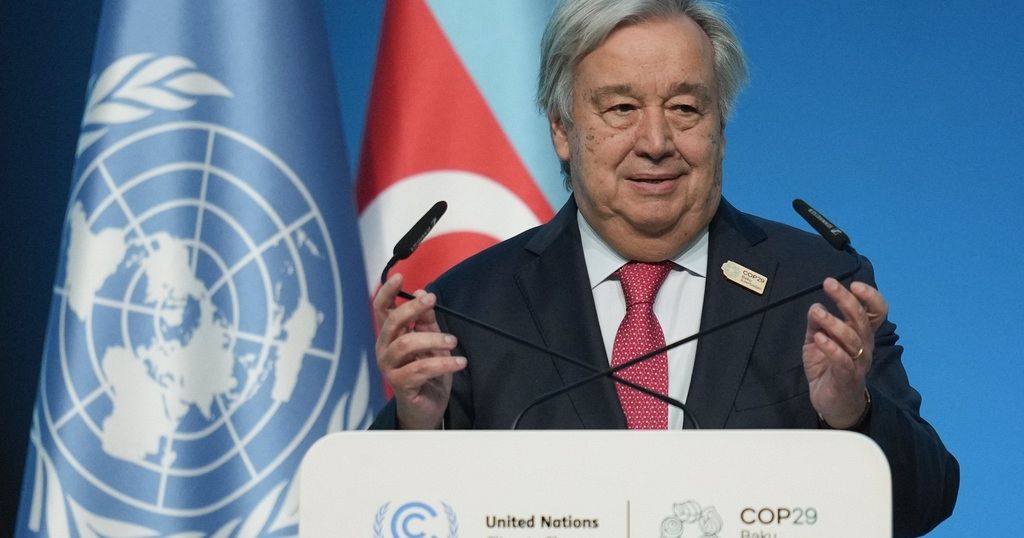
In a veiled reference to Trump’s victory at the U.N. climate conference in Azerbaijan, Guterres said the “clean energy revolution is here. No group, no business, no government can stop it.”
Allison Chatrchyan, director of the AI-Climate Institute at Cornell University, said global progress in addressing climate change “has been plodding along slowly” thanks to the Paris accord and the U.N. convention on climate change, but Trump’s election “will certainly create a sonic wave through the system.”
“It is highly likely that President Trump will again pull the United States out of the Paris agreement — yet under the rules of the treaty, this can only take effect after four years,” Chatrchyan, who was attending the COP29 climate summit, wrote in an email. “United States leadership, which is sorely needed, will dissipate.”
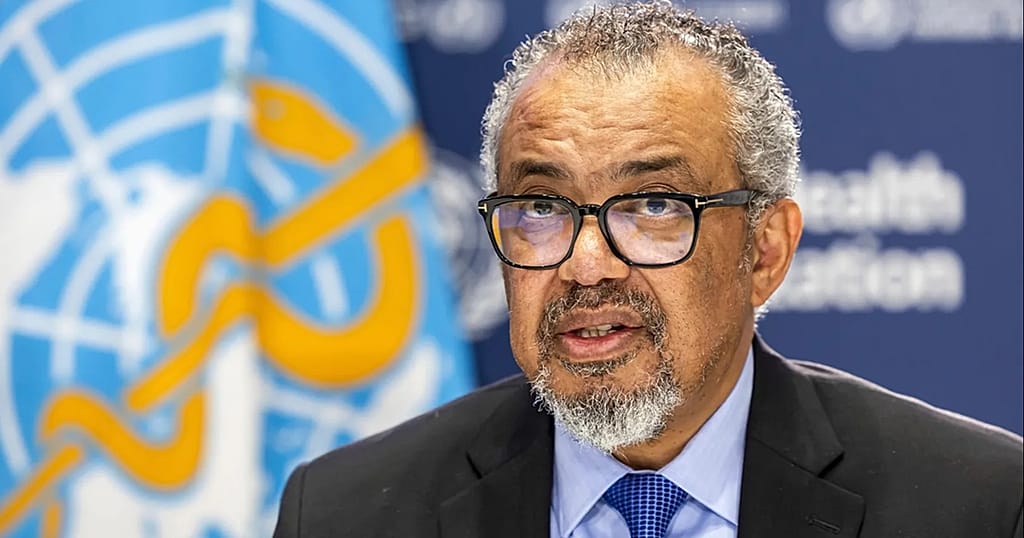
During COVID-19, when millions of people worldwide were getting sick and dying, Trump lambasted the World Health Organization and suspended funding.
Trump’s second term won’t necessarily resemble the first, said Gian Luca Burci, a former WHO legal counsel. “It may be more extreme, but it may be also more strategic because Trump has learned the system he didn’t really know in the first term.”
If the U.S. leaves WHO, that “opens the whole Pandora’s box, — by stripping the agency of both funding and needed technical expertise — said Burci, a visiting professor of international law at Geneva’s Graduate Institute. “The whole organization is holding its breath — for many reasons.”
But both Gowan and Bolton agree there is one U.N. event Trump is unlikely to miss: the annual gathering of world leaders at the General Assembly, where he has reveled in the global spotlight.
Source: Africanews