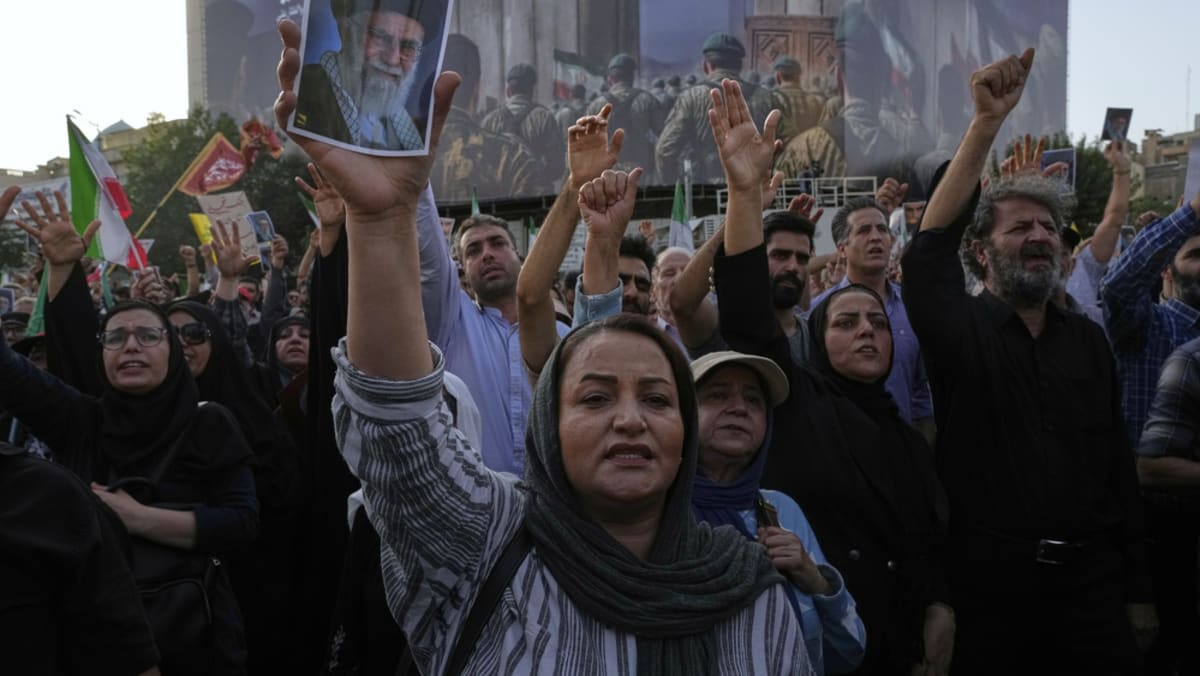
Iranians are a proud people and will rally around the flag in the face of severe attacks, setting aside political and ideological differences despite all their misgivings. An unconditional surrender, however, will force them to look inward at the choices that brought them here, and begin a reckoning against the clerical regime.
WHAT’S THE BEST OF BAD OPTIONS?
That leaves Iran the best of bad options – one it has taken before.
In 2020, during Mr Trump’s first term, it took five days after the US assassination of Islamic Revolutionary Guard Corps leader Qassem Soleimani before Iran retaliated. It fired more than a dozen ballistic missiles at US bases in Iraq.
Before it pressed the trigger, however, Tehran telegraphed the attacks, allowing Americans to seek safety. This prevented US fatalities, although more than 100 troops suffered traumatic brain injuries.

This would appear to be the best course forward. Iran can claim retaliation in force, both sides can then put a lid on this episode and then sit down to work out a lasting solution.
An agreement on the terms of Iran’s surrendering of its nuclear ambitions – without ever using that word – may then be worked out, allowing all sides to claim some wins, and climb down from the escalatory ladder.
Then again, in the Middle East, there are exceedingly few who have been accused of being rational actors.
Carl Skadian, a former journalist and editor for 30 years, is deputy director at the Middle East Institute, National University of Singapore.
Source: CNA