“MASTER OF THE APOCALYPSE”
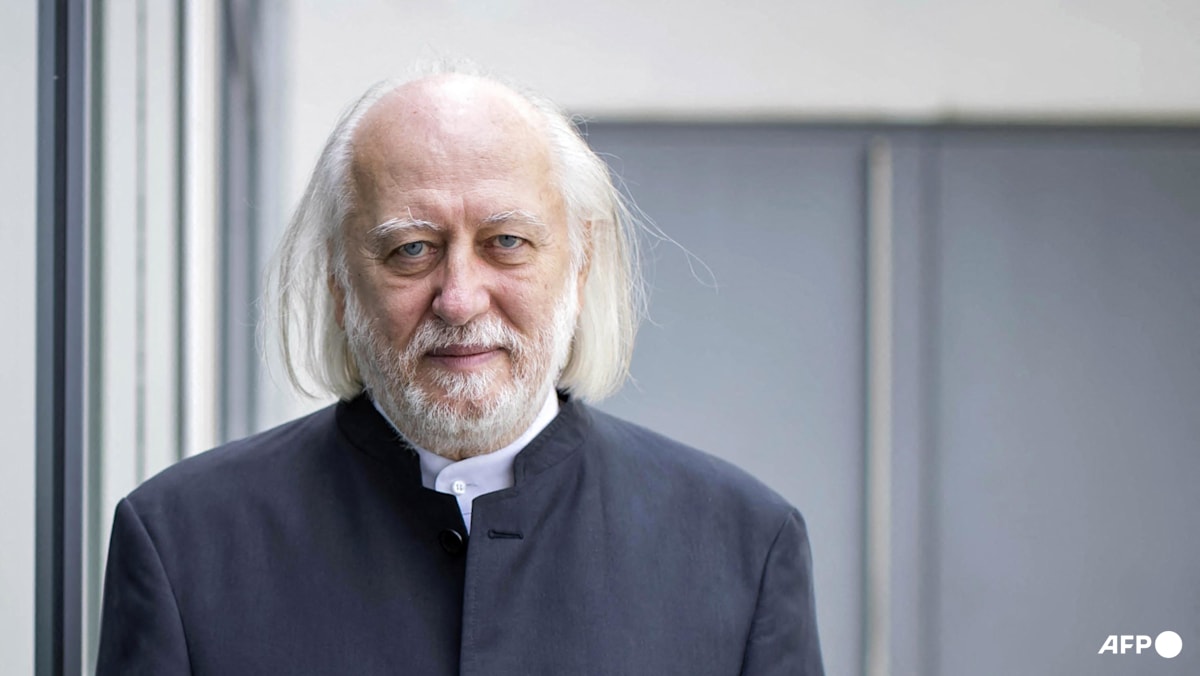
Krasznahorkai, the second Hungarian to win the prize, has been described as the postmodern “master of the apocalypse”.
“He is a hypnotic writer,” Krasznahorkai’s English language translator, the poet George Szirtes, told AFP.
“He draws you in until the world he conjures echoes and echoes inside you, until it’s your own vision of order and chaos”.
Exploring themes of postmodern dystopia and melancholy, his first novel brought Krasznahorkai to prominence in Hungary and remains his best-known work.

“The novel portrays, in powerfully suggestive terms, a destitute group of residents on an abandoned collective farm in the Hungarian countryside just before the fall of communism,” the Academy said.
Until now, the late Imre Kertesz was the only Hungarian to win the Nobel literature prize in 2002 for his semi-autobiographical novel “Fatelessness” about surviving the Holocaust.
Born in Gyula, a small town in southeast Hungary in 1954, Krasznahorkai grew up in a middle-class Jewish family.
He has drawn inspiration from his experiences under communism, and the extensive travels he undertook after first moving abroad in 1987 to West Berlin for a fellowship.
His novels, short stories and essays are best known in Germany – where he lived for long periods – and Hungary, where he is considered by many as the country’s most important living author.
Critically difficult and demanding, his style was described once by Krasznahorkai himself as “reality examined to the point of madness”.
His penchant for long sentences and few paragraph breaks has also seen the writer labelled as “obsessive”.
Asked about the apocalyptic images in his work, Krasznahorkai said: “Maybe I’m a writer who writes novels for readers who need the beauty in hell”.
Krasznahorkai had a close creative partnership with Hungarian filmmaker Bela Tarr. Several of his works have been adapted into films by Tarr, including “Satantango” and “The Werckmeister Harmonies”.
Their collaboration has garnered critical acclaim. In 1993, he received the German Bestenliste Prize for the best literary work of the year for The Melancholy of Resistance.
Source: CNA