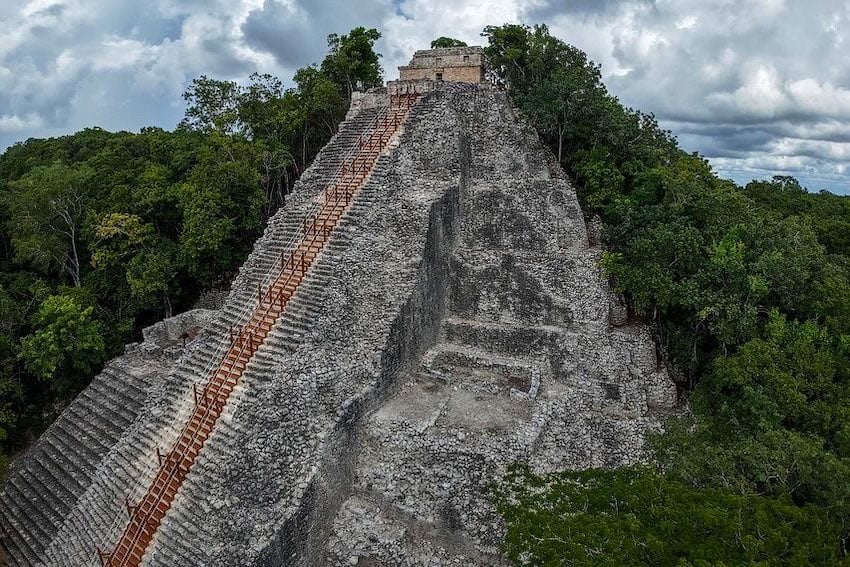
Nohoch Mul, the tallest pre-Columbian structure in the northern Yucatán Peninsula and one of the few climbable pyramids near the Riviera Maya, is open again for ascending after six years of rehabilitation work.
The experience, however, will be considerably safer and less damaging to the structure than before. The path to the top is now via a newly installed wooden staircase, built by members of the nearby community of Noh Bec, who have extensive experience in crafting structures with regional wood.
Cobá sigue revelando su historia.
Como parte del Programa de Mejoramiento de Zonas Arqueológicas #PROMEZA y gracias al trabajo de la comunidad ejidal y al @INAHmx, se reabrió el ascenso al Nohoch Mul.
Aquí, donde mujeres mayas ejercieron el poder hace siglos, celebramos que el… pic.twitter.com/QXGB9TlZjq— Claudia Curiel de Icaza (@ccurieldeicaza) December 8, 2025



At 42 meters (140 feet) tall and with 120 steps, Nohoch Mul is one of the architectural symbols of the ancient Maya city of Cobá. It is a favorite cultural tourism site, but its ascent had been suspended since 2019 due to the deterioration of the original steps, worsened by heavy tourist traffic.
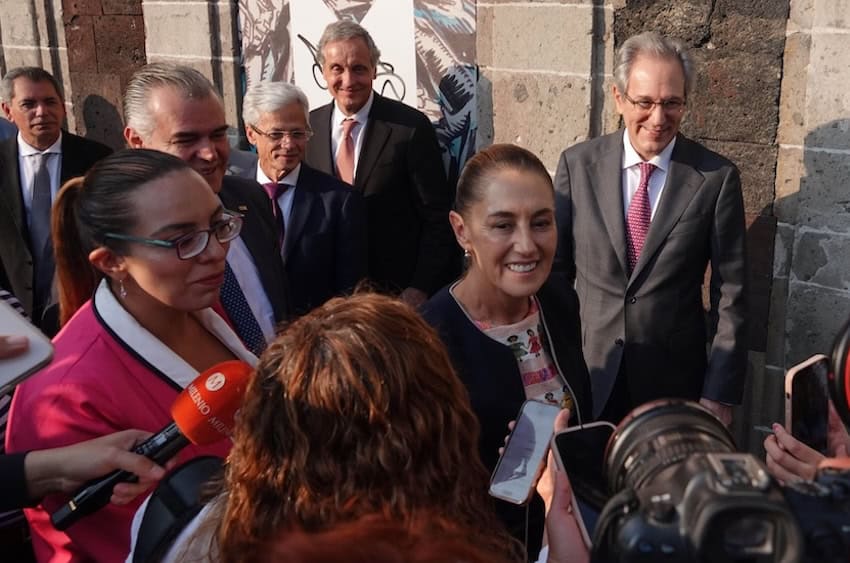
Culture Minister Claudia Curiel Icaza inaugurated the new staircase in an opening ceremony on Sunday. “On behalf of President Claudia Sheinbaum, I want to reiterate that this work embodies our understanding of cultural policy,” she said. “We believe that heritage is a right for all, that caring for our territory is a public good, and that conservation is a task that can only be achieved in collaboration with the community.”
The renovation work cost 5 million pesos (US $277,000) and was conducted by the National Institute of Anthropology and History (INAH) as part of initiatives to enhance archaeological zones connected to the Maya Train project.
During the renovation works, INAH conducted a topographic survey of each step of Nohoch Mul, from its base to its summit, to produce a detailed model of the hollows and reliefs. The collected data enabled experts to identify precise locations for installing the wooden staircase. The data also guided preventive consolidation work, leveling of the steps, and micro-drilling for the insertion of the necessary anchors.
According to INAH, the modern structure is approved by INAH’s Archaeology Council (CA) and was carried out in full compliance with international standards for the restoration of archaeological monuments.
Tourists and local tour guides said that the reopening of the staircase restores a key experience of the site, allowing visitors to appreciate from above, once again, the expanse of the city of Cobá and its surrounding jungle.
With reports from El Economista and Milenio
Source: Mexico News Daily