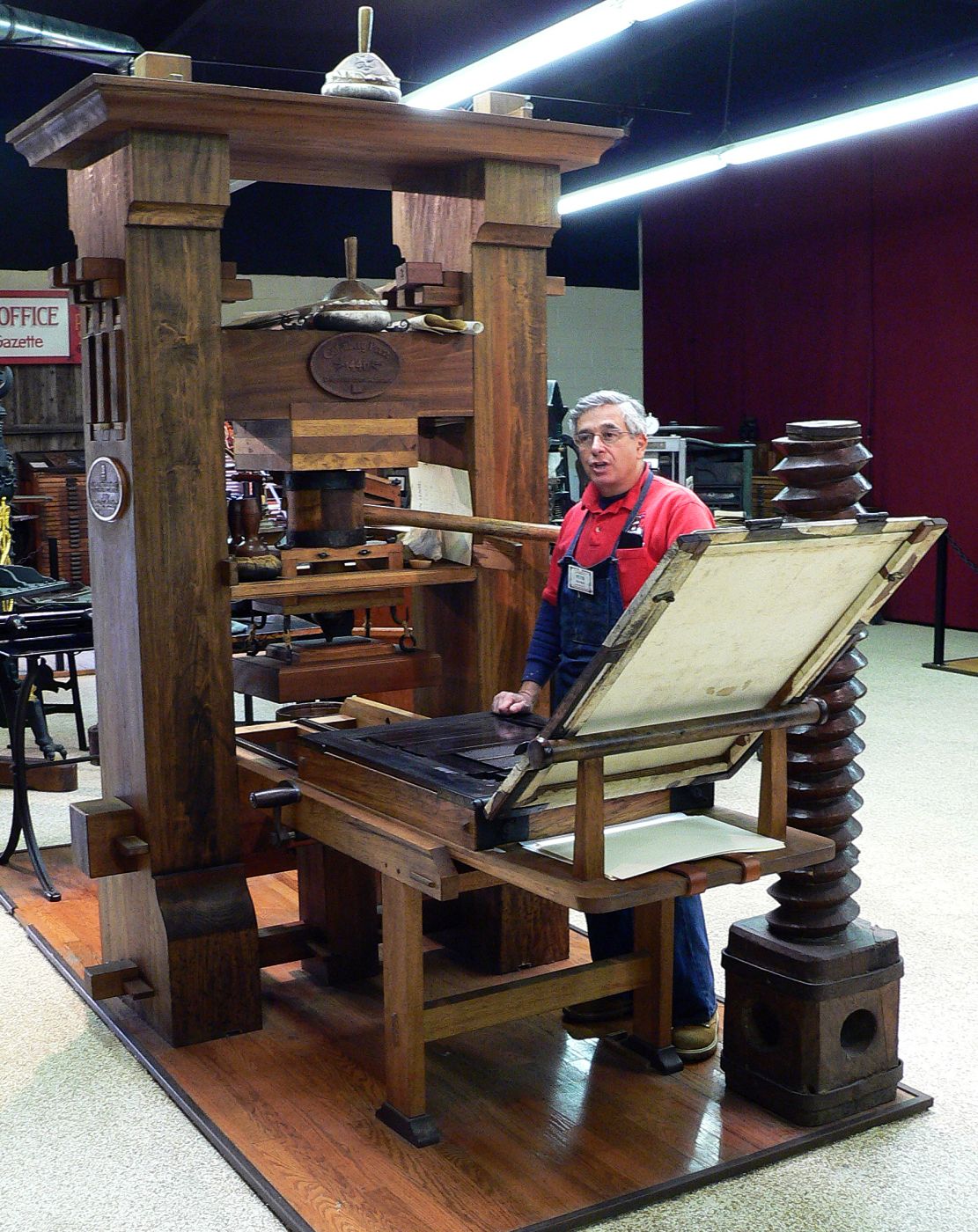
The Printing Press
The printing press, invented by Johannes Gutenberg around 1440, revolutionized the production of written material and is widely regarded as one of the most significant inventions in human history.
Before this invention, every copy of every book had to be laboriously reproduced by hand, a bottleneck that had kept literacy and the spread of new ideas painfully slow for centuries.
Movable Type
Gutenberg's key innovation was a system of movable metal type combined with an adapted mechanical screw press, allowing individual letters to be rearranged and reused for different pages — a dramatic improvement over the laborious hand-copying and woodblock printing methods used previously.
The Gutenberg Bible
Gutenberg's first major printed work, the Gutenberg Bible, completed around 1455, demonstrated the new technology's remarkable capabilities and print quality, and copies of this landmark work remain treasured artifacts held in libraries and museums today.
Spreading Across Europe
Printing presses spread rapidly across Europe in the decades following Gutenberg's invention, dramatically reducing the time and cost required to produce books compared to traditional hand-copying by scribes.
Fueling the Renaissance and Reformation
The printing press dramatically increased access to books and written information, playing a crucial role in fueling the spread of ideas during the Renaissance and enabling the rapid dissemination of Martin Luther's writings during the Protestant Reformation.
A Foundation for Modern Literacy
By making written material far more affordable and widely available, the printing press contributed significantly to rising literacy rates across Europe and laid essential groundwork for the later Scientific Revolution and the broader spread of education.