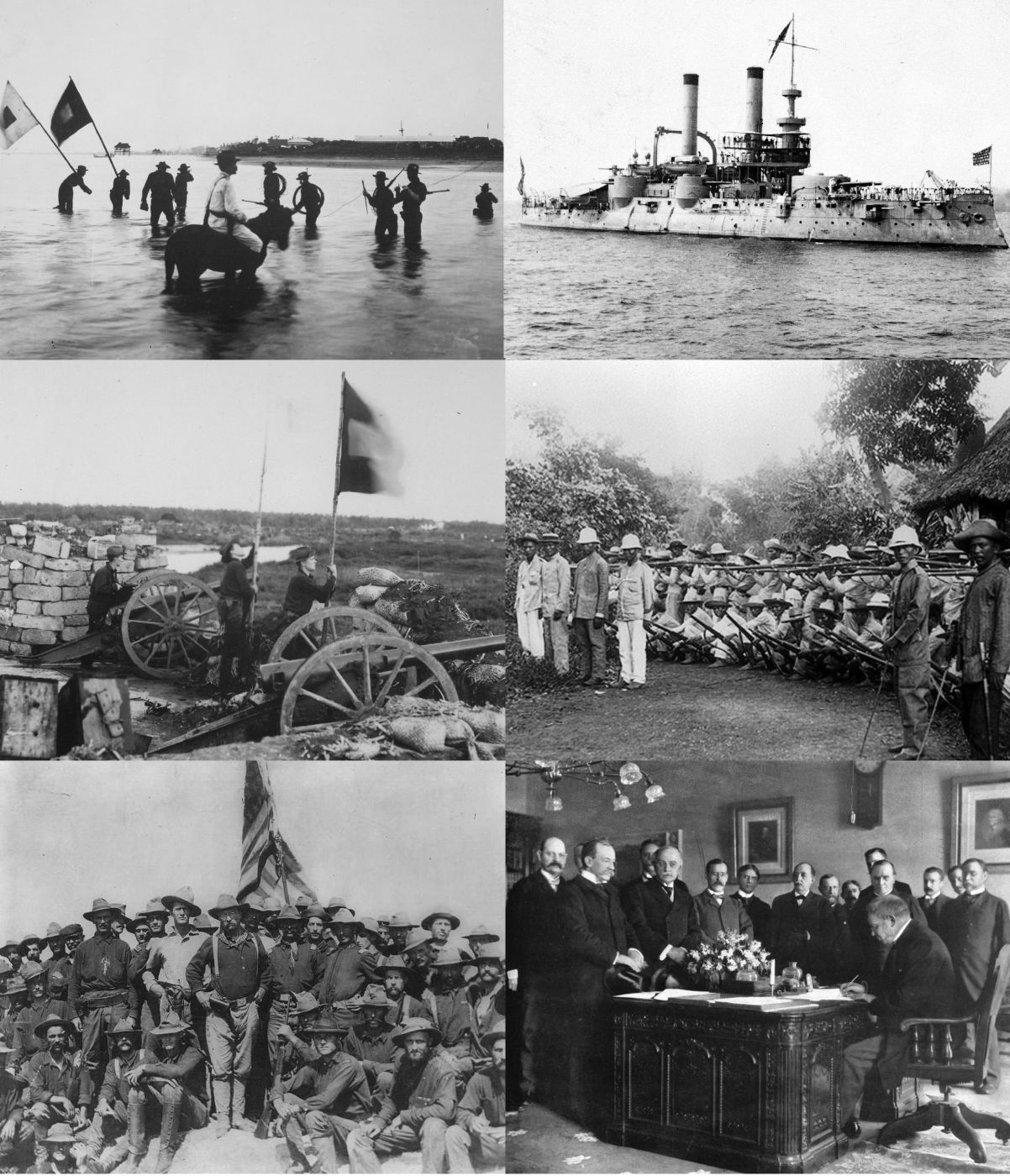
The Spanish-American War
The Spanish-American War was a brief but consequential conflict fought in 1898, resulting in the United States acquiring overseas territories and emerging as a significant global power.
Lasting only a matter of months, this brief conflict nonetheless transformed the United States from a regional power into an emerging global empire with territories spanning the Caribbean and the Pacific.
The Sinking of the USS Maine
The war was significantly precipitated by the explosion and sinking of the USS Maine in Havana harbor, an event that inflamed American public opinion against Spain.
A Brief but Decisive Conflict
The war lasted only a matter of months, with decisive American victories in both the Caribbean and Philippines theaters leading to a swift Spanish surrender.
American Territorial Acquisitions
Following the war, the United States acquired Puerto Rico, Guam, and the Philippines, while Cuba gained nominal independence under significant American influence.
Emerging as a Global Power
The war marked the United States' emergence as a significant global imperial power, extending its influence well beyond North America for the first time.