As I read a feature in the newspaper El Informador the other day about the oldest standing bridge in my hometown of Guadalajara, I was reminded of a scene from the Mary Poppins movie about our inability to see beyond the end of our noses.
How many times have we overlooked something that’s standing just in front of us because we don’t pay attention? The article made me reflect on this, as it told the story of the Zapopan Bridge, a 200-year-old structure that thousands of motorists cross every day without thinking about it.
The story of the Zapopan Bridge
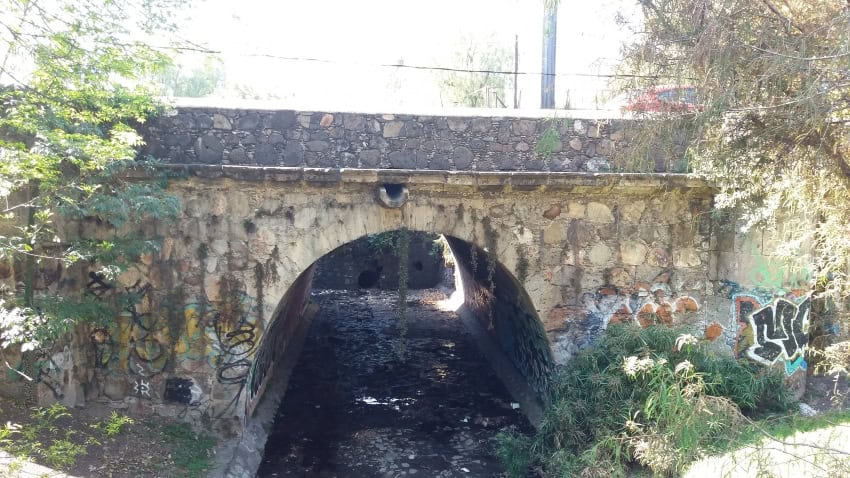
The bridge is located at a very busy intersection: Avenida de las Américas and Avenida Montevideo, in the Colomos Providencia neighborhood of Zapopan, part of the Guadalajara greater metropolitan area.
This landmark bridge, now neglected by city residents and covered in graffiti, was once an important thoroughfare that influenced the economic, social and cultural dynamics of Guadalajara and Zapopan.



According to the University of Guadalajara’s archives, the bridge was built in the early 19th century using stone, lime and sand. It was part of the old road to the Colomos area, when Zapopan was still a town far from Guadalajara.
Its stone arch structure once allowed residents to cross the rivers that flowed through the Colomos Forest: the Barranca Ancha stream, which is now Montevideo avenue, and the Atemajar River, which turned into Patria avenue.
The Barrancha Ancha is no longer visible as it has been channeled beneath the city. But the Atemajac River is a waterway that overflows every rainy season due to ongoing construction atop the remaining water streams.
Both the bridge and the old road once allowed travelers to navigate the ravines, hills and cliffs of the Colomos area, which are now evident in the irregular streets and winding avenues of the modern neighborhood.
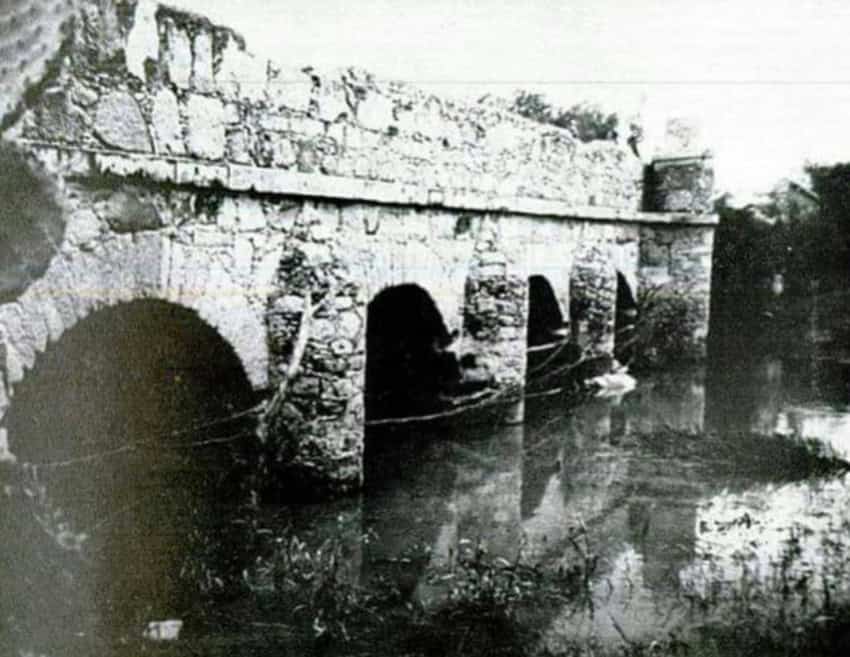
While the Zapopan Bridge lies overlooked under Guadalajara’s congested streets, another important bridge has been – thankfully – brought back to life and is now open for visitors.
The revival of Puente de las Damas
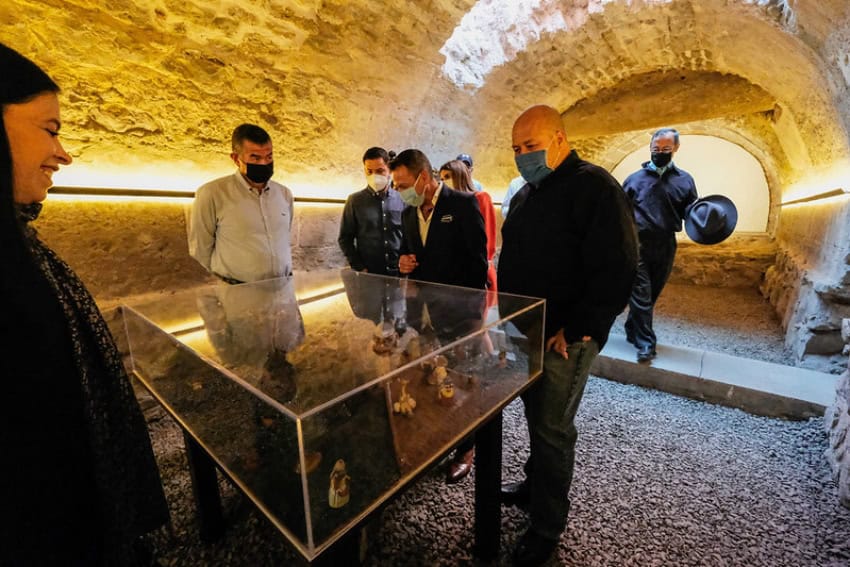
Built during the viceregal era by orders of Friar Antonio Alcalde — who also served as a Catholic bishop in Mérida and, later, Guadalajara — the Puente de las Damas remained buried underground for almost a century until it was rediscovered during drainage work in the Mexicaltzingo neighborhood almost a decade ago.
Inaugurated in 1798, the bridge connected the Spanish city of Guadalajara with the Indigenous Mexicaltzingo, today an industrial area of Guadalajara. The bridge also served as a pathway for commerce connected to the Camino Real de Colima — the major road between Manzanillo, Colima, and Guadalajara.
Following its rediscovery, the National Institute of Anthropology and History (INAH) conducted rehabilitation work and successfully unearthed five of the bridge’s arches. These colonial-era structures currently lie beneath Montenegro Street and Avenida de la Paz.
Since 2022, Puente de las Damas has been open to visitors from Monday through Friday, between 10 a.m. and 5 p.m., on a first-come, first-served basis. Admission is free.
One can only hope that authorities rehabilitate Zapopan Bridge and remind the people of Guadalajara of its historical value.
Gabriela Solis is a Mexican lawyer turned full-time writer. She was born and raised in Guadalajara and covers business, culture, lifestyle and travel for Mexico News Daily. You can follow her lifestyle blog Dunas y Palmeras.
Source: Mexico News Daily