Hi everyone, welcome back to SportsVerse, my twice-weekly newsletter that tells stories you can’t find anywhere else about the intersection of sports, fashion, business, and culture.
One of my favorite things to do is to hear from the people responsible for shaping sports teams of the future. One such person is Ahmed Iqbal, the chief marketing officer of Cadillac F1, the American team that is set to debut on the grid in 2026. Cadillac has already made quite a stir, breaking from Formula 1 convention to use an ad at last weekend’s Super Bowl, as well as a simultaneous countdown reveal in New York’s Times Square to reveal the team’s 2026 season livery (the cosmetic design of the outside of the car).
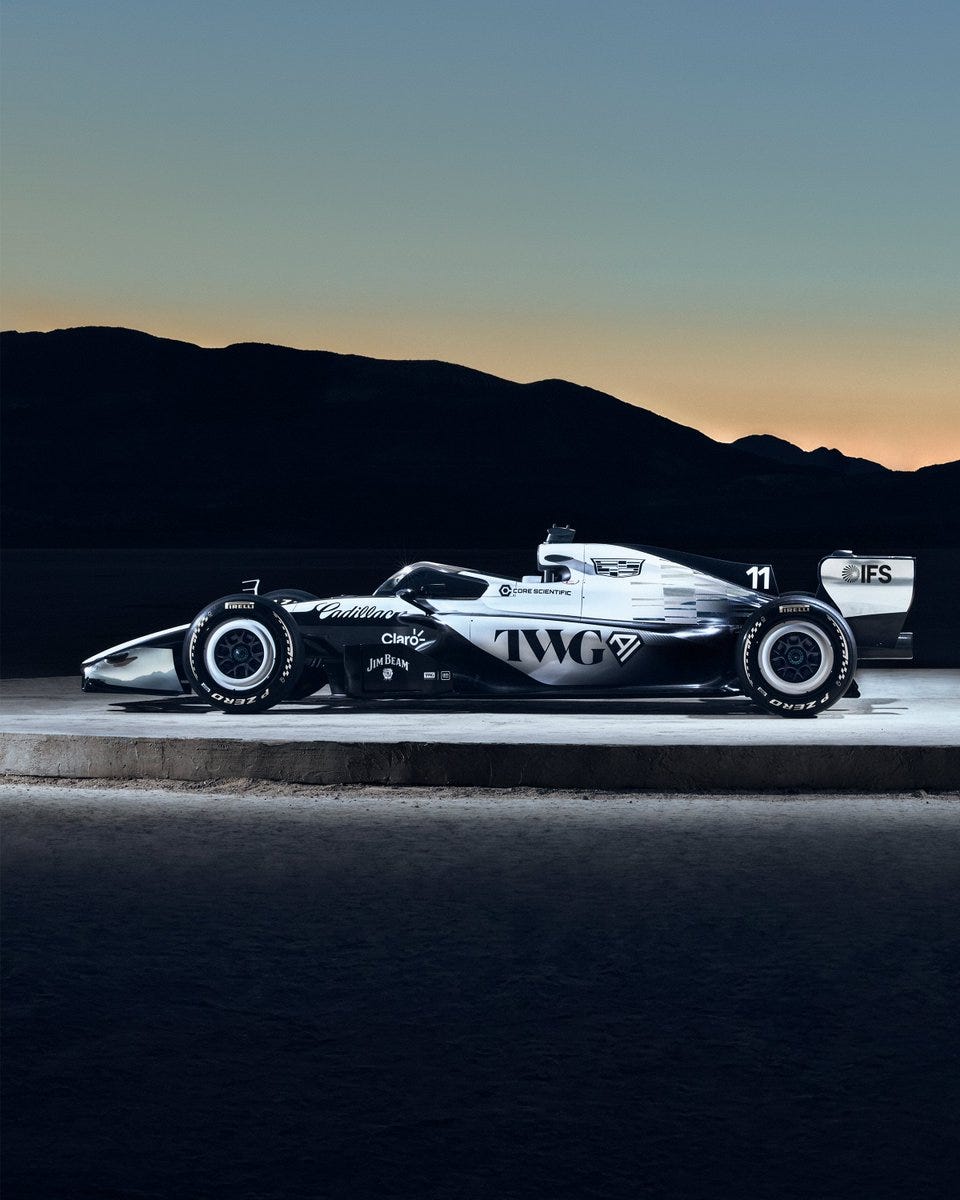
Yesterday, I sat down with Iqbal to talk through the marketing strategy fuelling the team’s debut season on the grid, and to discuss the synergies between modern F1 and the worlds of fashion and entertainment.
If you’re reading this and you’re wondering why the name Cadillac rings a bell, it’s because you read my article a few weeks ago, dissecting the aftermath of pre-season testing in Barcelona, when Cadillac’s drivers and team staff were spotted wearing Nike footwear — an interesting development given that there is no formal partnership between the two brands. In that article, I asserted that in the Formula 1 world, these things are never a coincidence and are always designed to send some kind of message. Naturally, I asked Iqbal what the thinking behind it was, and while he was coy, his answer very much confirmed my initial thesis:
“I saw the blogs going crazy about it. Here’s what I can say: everything we’re doing is done with intention. So that wasn’t a coincidence,” he told me, with a smile. “That said, I have no comment right now regarding anything additional on that.”

Reading between the lines, Cadillac’s decision to wear Nike footwear is in line with its strategy to create “America’s new home team,” to use Iqbal’s own words. This has been a guiding principle and through line in all of the team’s major cultural partnerships to date.
Cadillac’s inaugural fashion and apparel partner, for example, is Tommy Hilfiger, which just rolled out a co-branded fanwear collection. The team is also working in partnership with Apple, which is creating shot-on-iPhone content of the new livery out in Bahrain. Though there is no formal partnership with Nike as yet, opting to wear the brand’s footwear was a pointed choice to pick yet another big-ticket American success story to tie Cadillac’s appeal to.
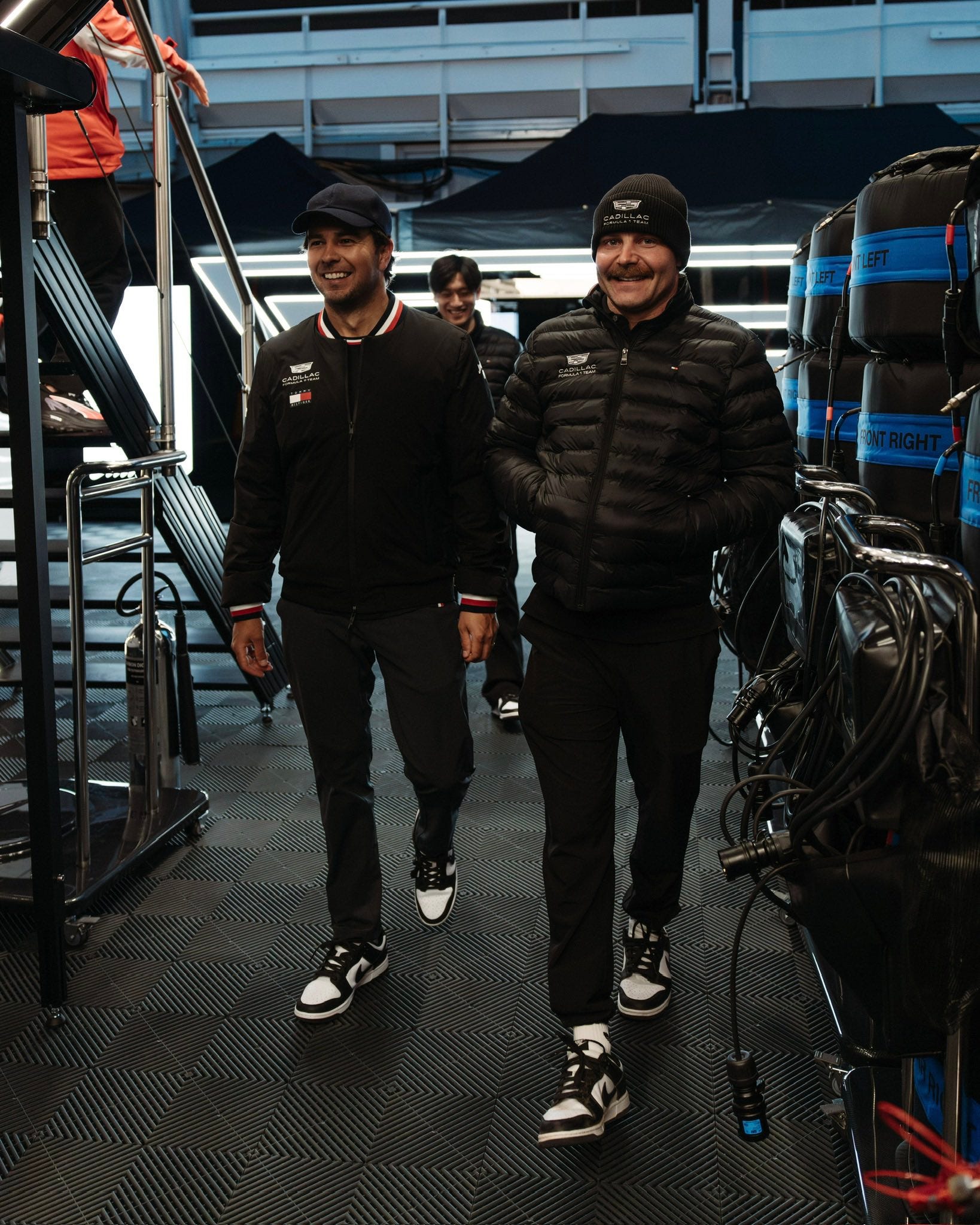
“One of the big themes when we started looking at our original partners [Tommy Hilfiger and Jim Bean among them], was this idea of American originals. Working with classic American brands that have had heritage storytelling,” Iqbal said.
Doubling down on modern Americana may feel like a bold, even risky strategy given the current political climate and overall perceptions of the country at the moment. But America is a major growth market for Formula 1, especially for the waves of new “casual” fans which continue to flood into the sport, enticed by shiny fun things like Drive to Survive, the F1 movie, WAG culture, paddock fits or general drooling over Lewis Hamilton.
Taken the above into consideration, the strategy to position Cadillac as the team to house America’s growing interest in F1, begins to make a lot of sense. Without a single American driver on the grid—Logan Sargeant was dropped by Williams in 2024—there so far has been no singular entity around which American fans could centre their fandom. That’s where Cadillac wants to come in.
(My friend and Formula 1-tech-politics-science guru Toni Cowan-Brown, wrote a brilliant deep-dive on the strategy behind Cadillac’s Super Bowl ad and the team’s all-American brand building ambitions driven by chief brand advisor Cassidy Towriss, which I strongly recommend you read.)
Cadillac also has a unique advantage in its efforts to assert itself in the world of F1 in its first season. It will be the only team on the grid to have not one, not two, but three home races on American soil, around which it can host major activations, bring along VIP talent and friends of the brand, and focus its efforts on converting American F1 fans, new and old.
Iqbal is all too aware, however, of the responsibilities that come with being the new kid on the block in Formula 1, a highly traditional and sometimes conservative world, where following the status quo is often the safest method.
“I think there’s an importance in knowing you have to pay homage to the sport and follow certain rules and codes on the way to go about certain things, making sure we meet expectations of the F1 community,” he said. And then there’s of course going to be moments [like breaking from tradition with the Super Bowl livery reveal ad and the Times Square activation] where we’re looking to change, innovate, do things differently, and evolve the sport to bring in new fans, making it more accessible to bigger and broader audiences.”
In this sense, the arrival of Cadillac appears to be a crucial piece of the broader evolution of Formula 1, which has been dramatically transformed from the Europe-centric closed shop it was (with just the one U.S Grand Prix on the calendar) before the Liberty Media acquisition.
The opportunity to seize the moment is not lost on the team.
“It’s our job to create experiences, to create content, to bring stories—everything from merch to access to cool content from the track. It’s not just for the core F1 fan and not just for the casual fan, but it’s a blend of both. Everyone can find something for themselves here in the team and in the sport, for sure.”
Like all things branding in sports, much of Cadillac’s cultural success will be predicated on how well the team performs on the track itself. As fun as partnerships are, nothing brings allure and credibility to an organisation like genuine sporting success.
But in the meantime, splashy marketing moments like Super Bowl ads and Times Square takeovers (which certainly don’t come cheap), combined with internet-breaking guerrilla marketing stunts like the Nike sneaker moment, seem like a very good place to start.
That’s all for today, friends. Thanks for coming along for the ride, and thanks to Ahmed for joining us, and to Meredith for making it happen.
See you next week,
DYM