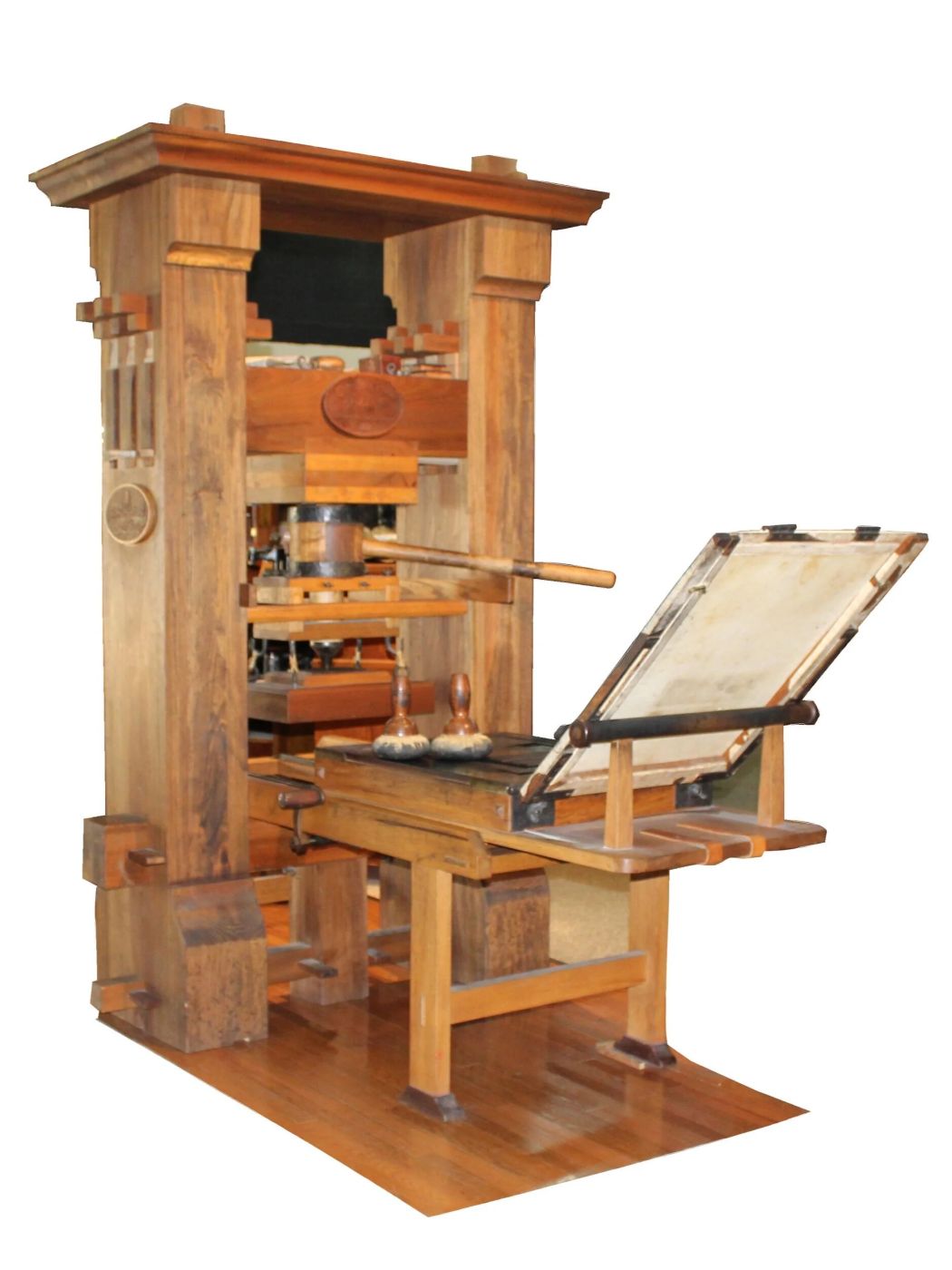
The Gutenberg Press
The Gutenberg Press, developed by Johannes Gutenberg in the 1440s in Mainz, was the first European movable-type printing press, triggering a communications revolution that democratized knowledge, accelerated the Reformation, and laid the groundwork for the modern world.
Before the mid-15th century, books in Europe were painstakingly copied by hand, making them rare, expensive, and accessible only to the privileged few; a single invention would shatter that world entirely. By mechanizing the reproduction of text, one goldsmith in a German city unleashed a force that would reshape religion, science, politics, and culture across the centuries.
Johannes Gutenberg and the Invention
Johannes Gutenberg, a goldsmith and craftsman from Mainz, combined the concepts of the wine or olive press, oil-based ink, and individually cast metal letters to create a practical system of movable type printing around 1440. His key innovation was an alloy of lead, tin, and antimony that could be cast quickly into durable, reusable letter forms with great precision.
The Gutenberg Bible
The first major product of the press, the Gutenberg Bible of around 1455, produced approximately 180 copies — a monumental output by the standards of the era when a single hand-copied Bible could take a monk years to complete. These volumes demonstrated that printed books could match the aesthetic quality of manuscripts while being produced far more rapidly and economically.
The Spread of Print and Its Consequences
Within fifty years of Gutenberg's invention, printing presses had spread to over 270 European cities, producing an estimated 20 million volumes. This explosion of printed material directly enabled the Protestant Reformation, as Martin Luther's ideas could be disseminated across Europe within weeks, bypassing the Church's control over information.
Legacy in the Modern World
Historians frequently rank the Gutenberg Press among the most consequential inventions in human history, comparing its societal impact to that of the internet in the modern age. By making literacy a practical goal for ordinary people and placing knowledge in millions of hands, it set in motion the Scientific Revolution, the Enlightenment, and the very concept of a reading public.