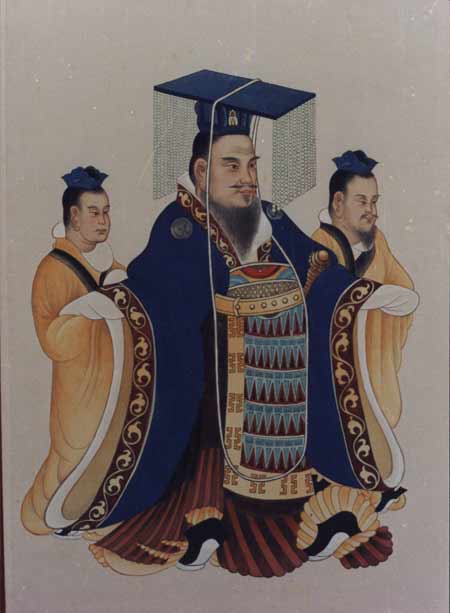
The Han Dynasty
The Han Dynasty ruled China from 206 BCE to 220 CE, a period considered a golden age that established many enduring foundations of Chinese culture, governance, and identity.
Ruling for over four centuries and giving the majority ethnic group of China its enduring name, this dynasty established governmental and cultural foundations that would influence Chinese civilization for two millennia.
A Foundational Chinese Dynasty
The Han Dynasty ruled China for over four centuries, a period so significant that the majority ethnic group of China continues to be known as "Han Chinese" today.
Expanding the Silk Road
The Han Dynasty significantly expanded trade along the Silk Road, connecting China with Central Asia, the Middle East, and eventually Europe.
Establishing Confucian Governance
The dynasty formally established Confucianism as the guiding philosophy of imperial governance, a foundation that would influence Chinese administration for nearly two millennia.
Significant Technological Innovation
The Han period saw significant technological advances, including early paper-making techniques and improvements in agriculture, metallurgy, and astronomical observation.