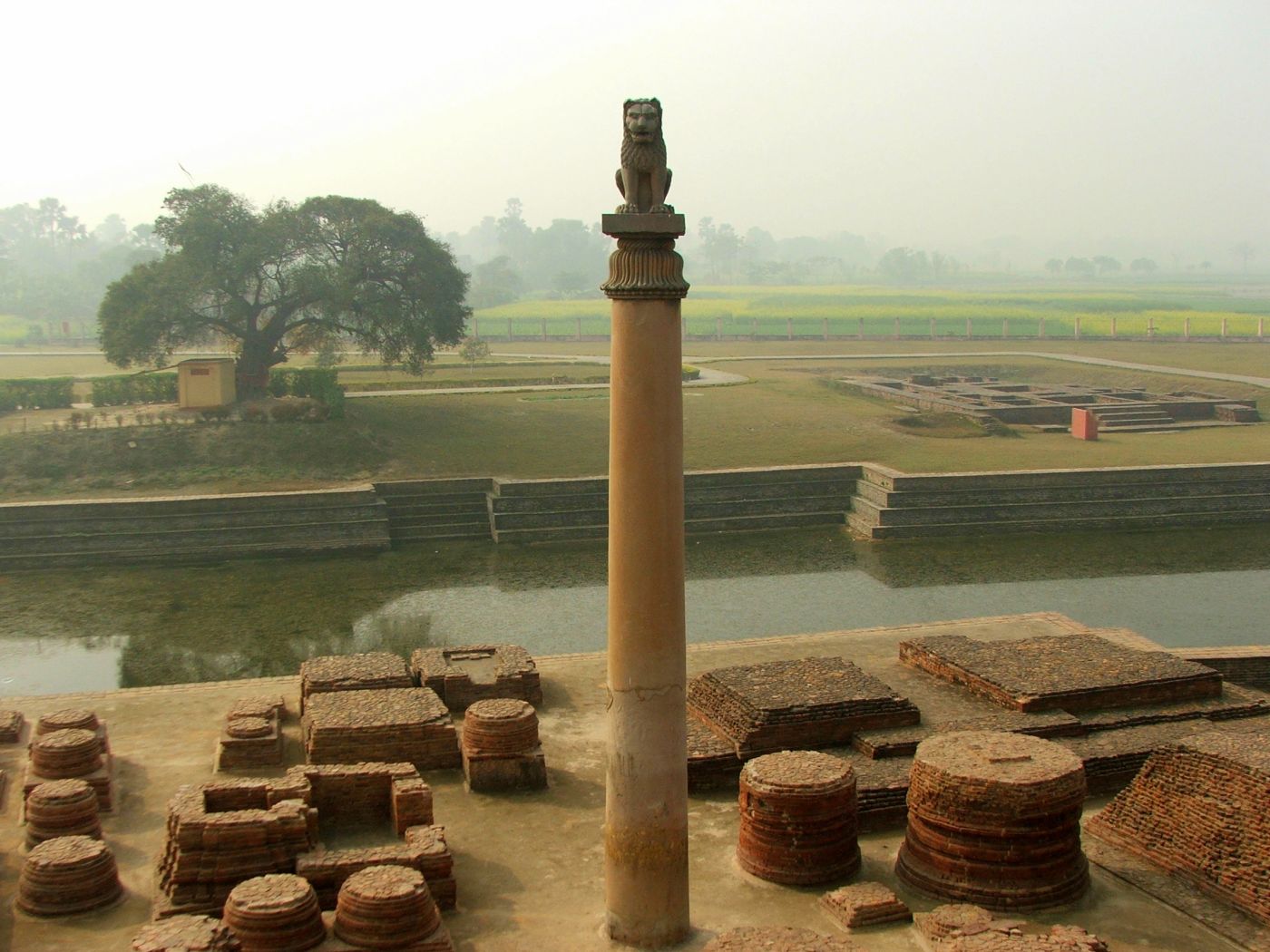
The Mauryan Empire
The Mauryan Empire ruled much of the Indian subcontinent from approximately 322 to 185 BCE, notable for unifying most of India under a single government and Emperor Ashoka's embrace of Buddhism.
Unifying most of the Indian subcontinent under a single centralized government for the first time in history, this empire's most famous ruler later renounced violence entirely following a brutal military campaign.
Unifying the Subcontinent
The Mauryan Empire achieved the unification of most of the Indian subcontinent under a single centralized government, an unprecedented political achievement for the region.
Emperor Ashoka's Transformation
Emperor Ashoka, after a brutally violent military campaign, underwent a profound personal transformation and embraced Buddhism, subsequently promoting nonviolence throughout his empire.
Ashoka's Edicts
Ashoka had his Buddhist principles and governing philosophy inscribed on stone pillars and rocks throughout his empire, many of which survive and remain studied today.
Spreading Buddhism
Ashoka's patronage significantly contributed to spreading Buddhism beyond India to Sri Lanka and other parts of Asia, shaping the religion's subsequent global development.