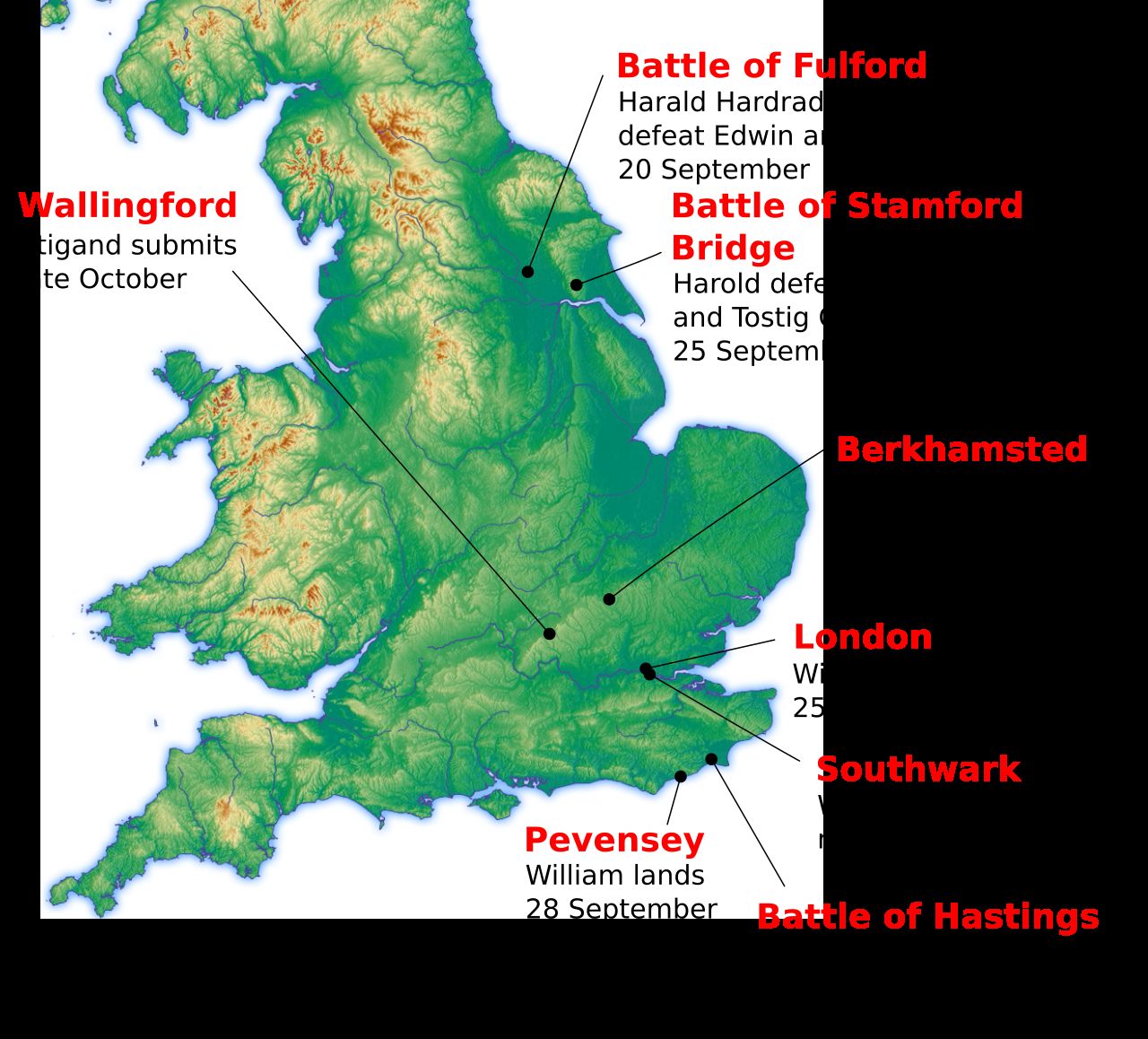
The Norman Conquest
The Norman Conquest of 1066 was the invasion of England by William the Conqueror, fundamentally reshaping English language, culture, and governance for centuries afterward.
A single decisive battle on a single day permanently altered the trajectory of English history, replacing its ruling class and infusing its language with a heavy dose of French vocabulary that persists to this day.
The Battle of Hastings
The conquest culminated in the Battle of Hastings on October 14, 1066, where William, Duke of Normandy, defeated King Harold II of England, who was killed in the fighting.
A New Ruling Class
William the Conqueror's victory replaced much of the existing Anglo-Saxon nobility with Norman lords, fundamentally restructuring English land ownership and governance.
Transforming the English Language
The conquest introduced substantial French vocabulary into English, permanently reshaping the language and creating the linguistic foundation for modern English as a blend of Germanic and French elements.
A Lasting Cultural Legacy
The Norman Conquest fundamentally reshaped English governance, architecture, and culture, with effects still visible in English institutions, law, and language nearly a thousand years later.