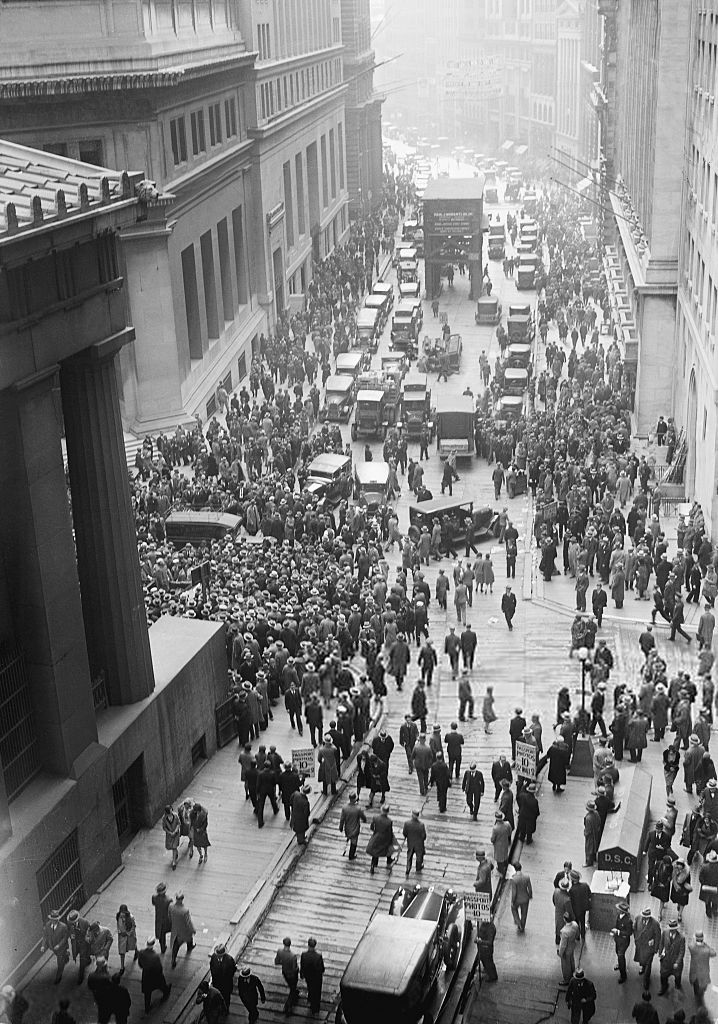
The Wall Street Crash of 1929
The Wall Street Crash of 1929 was a devastating stock market collapse that initiated the Great Depression, wiping out enormous amounts of wealth within a matter of days.
Erasing enormous paper fortunes within a matter of days after years of speculative excess, this stock market collapse became the opening chapter of the worst economic crisis in modern American history.
Years of Speculative Excess
The crash followed years of significant stock market speculation during the 1920s, with many investors borrowing heavily to purchase stocks on margin.
A Catastrophic Market Collapse
The crash unfolded over several dramatic days in October 1929, wiping out enormous amounts of paper wealth and shattering public confidence in the financial markets.
Triggering the Great Depression
The crash is widely considered to have triggered the broader Great Depression, though economists continue debating the precise relationship between the crash and the subsequent prolonged economic downturn.
Prompting Financial Regulation
The crash's aftermath led to significant new financial regulations, including the establishment of the Securities and Exchange Commission, aimed at preventing similar future collapses.