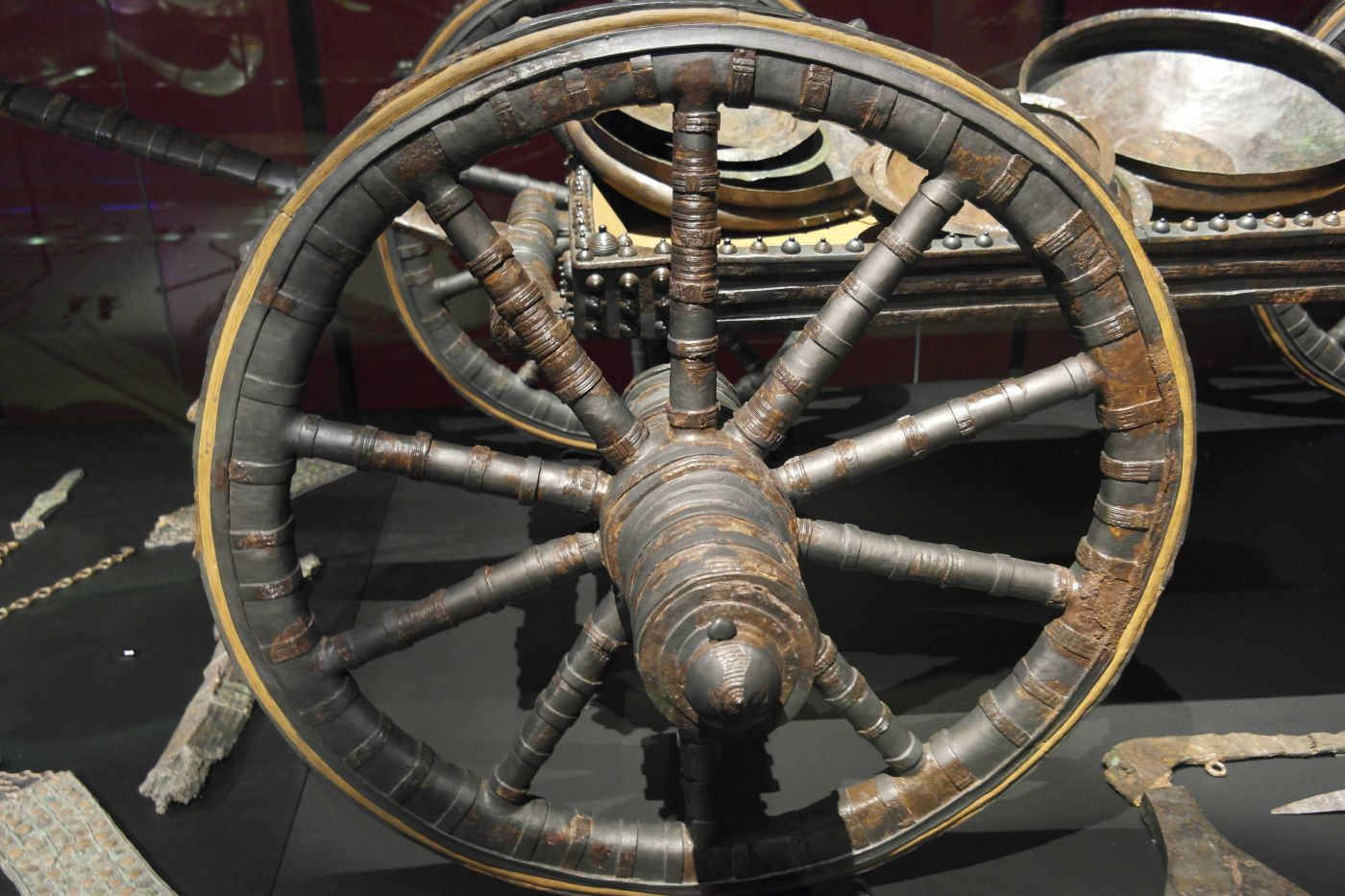
The Wheel
The wheel is one of the most transformative inventions in human history, believed to have originated in Mesopotamia around 3500 BCE, fundamentally changing transportation, agriculture, and manufacturing.
Its earliest known use wasn't for transportation at all — potters were spinning clay on wheels well before anyone thought to attach one to a cart.
Born from Pottery, Not Transportation
The earliest wheels are believed to have been developed for use in pottery making, functioning as potter's wheels that allowed craftsmen to shape clay vessels with far greater speed and precision than was previously possible.
Adapted for Movement
The wheel was later adapted for transportation purposes, appearing on carts and chariots several centuries after its initial pottery-related use, representing a significant technological leap for ancient societies in Mesopotamia and beyond.
Transforming Trade and Warfare
Wheel-based transportation dramatically increased the efficiency of moving goods and people over land, transforming long-distance trade networks and revolutionizing military capabilities through the development of war chariots in ancient civilizations.
A Foundation for Cities
The efficient movement of goods and materials enabled by wheeled transportation contributed significantly to the growth and development of early cities and complex civilizations across Mesopotamia, Egypt, and beyond.
An Enduring Foundation
Wheel-based technology has continued evolving for thousands of years, remaining a foundational element of nearly all modern transportation systems and countless mechanical, industrial, and technological applications used throughout the world today.