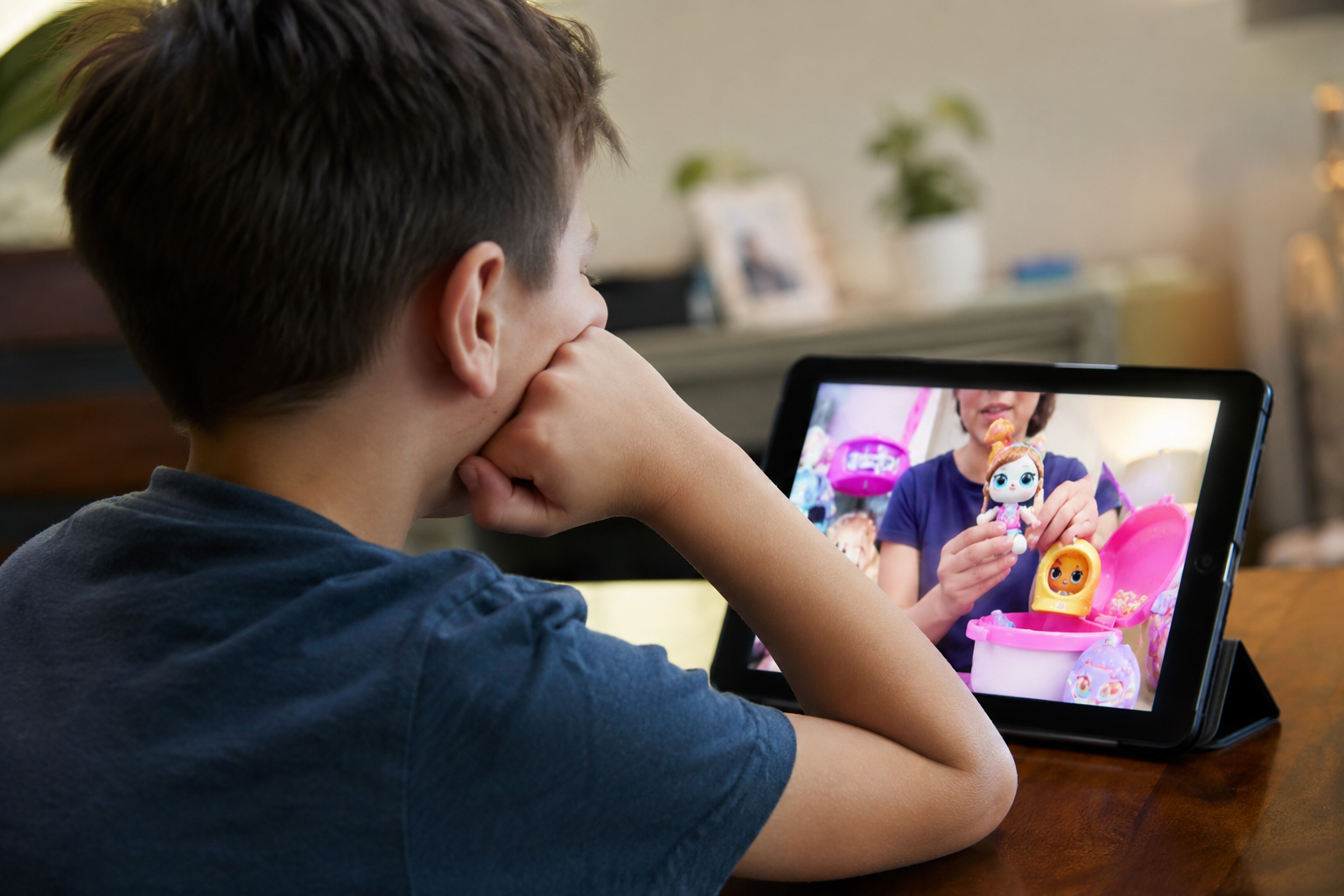
When Entertainment Becomes Influence: The Hidden Cost of Adults Playing with Children’s Toys Online
Behind the colorful screens and millions of views lies a growing concern: children becoming addicted to content built around adults playing with toys. As entertainment turns into profit, we must ask whether we are nurturing creativity—or encouraging unhealthy screen dependency. The future of our children deserves serious attention.

Social media has created a new generation of celebrities. Many of them are talented educators, artists, athletes, and creators who inspire millions. However, there is a growing trend that deserves serious discussion: adults creating content centered around children’s toys, dolls, pretend play, and childlike activities while attracting massive audiences and earning substantial income.
Traditionally, society viewed adulthood as a stage of maturity, responsibility, and personal growth. When adults spent excessive amounts of time playing with toys or engaging in activities typically designed for young children, people often questioned whether they were emotionally mature or behaving appropriately for their age. Yet in today’s digital world, the same behavior is frequently celebrated, rewarded, and monetized.
The issue is not that adults occasionally enjoy toys, games, or collectibles. Hobbies can be healthy and enjoyable. The concern arises when highly produced content is intentionally designed to capture the attention of children, keeping them glued to screens for hours while generating advertising revenue, sponsorship deals, and millions of views.
Many of these videos are fast-paced, colorful, repetitive, and psychologically engineered to maximize engagement. Children can become deeply attached to the content, often preferring screen-based entertainment over outdoor play, reading, creative exploration, or meaningful social interaction. As a result, parents face increasing challenges in limiting screen time and encouraging healthier activities.
Research has repeatedly shown that excessive screen exposure can affect children’s attention spans, sleep patterns, emotional regulation, and social development. While not all toy-based content is harmful, the endless stream of highly stimulating videos can contribute to unhealthy digital habits that are difficult to break.
Another concern is the message being sent to young viewers. Children naturally look to adults as role models. When social media rewards behavior primarily because it generates clicks and revenue, rather than because it provides educational or developmental value, children may learn that popularity is more important than purpose, creativity, or personal growth.
This is not a call to ban such content or criticize every creator. Rather, it is a call for parents, educators, policymakers, and social media platforms to think carefully about the long-term impact of what children consume online. We should ask difficult questions:
- Is this content helping children learn and grow?
- Does it encourage creativity and imagination, or passive consumption?
- Are children being entertained, educated, or simply kept engaged for profit?
- What values are being promoted through these videos?
As technology continues to shape childhood, protecting the next generation requires more than parental controls and screen-time limits. It requires honest conversations about the content itself and the incentives driving its creation.
Children deserve digital spaces that inspire curiosity, learning, kindness, and healthy development. If we fail to examine the effects of today’s online entertainment culture, we risk raising generations who are increasingly connected to screens but disconnected from the real-world experiences that help them thrive.
The future of our children is too important to leave entirely in the hands of algorithms.


Comments 0
Sign in to commentJoin the conversation — no account needed
No comments yet
Be the first to share your thoughts!