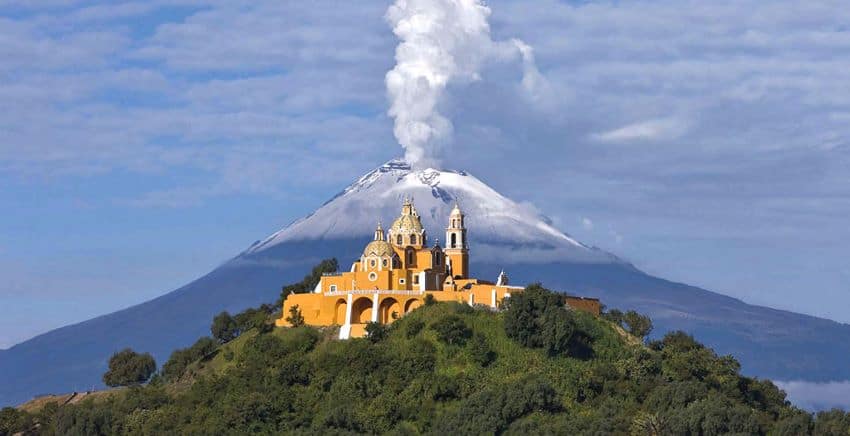
Puebla, capital of the state of the same name, is full of wonders. It’s home to the spectacular Catedral de Puebla, whose twin bell towers are the tallest in Mexico. It’s known for Talavera pottery, being the birthplace of Cinco de Mayo and the Amparo Museum, which houses one of the most impressive pre-Columbian, colonial, and contemporary art collections. Speaking of museums, Puebla is brimming with them, and visitors can admire everything from baroque art to Renaissance murals between bites of camotes de puebla, a famous local sweet.
Puebla is always a good idea, which is why we’ve compiled a list of 10 fun, quirky facts that will make your next visit to Mexico’s fourth-largest city nothing short of magical.
1. There are hidden tunnels underneath the city — and you can tour them
Puebla’s underground is as historic as its UNESCO World Heritage Site historic center. Considered a legend until 2015, a series of stone tunnels were discovered by construction workers while developing an urban remodeling project. The submerged pathways are ten kilometers in length and are tall enough to walk through, reaching a height of seven meters. They’ve served a variety of purposes, from transporting treasures of the Catholic Church to soldiers during the Battle of Puebla in 1862. Tunnels can be toured daily, except Mondays.
2. It’s the only city in Mexico where you can have a pasita
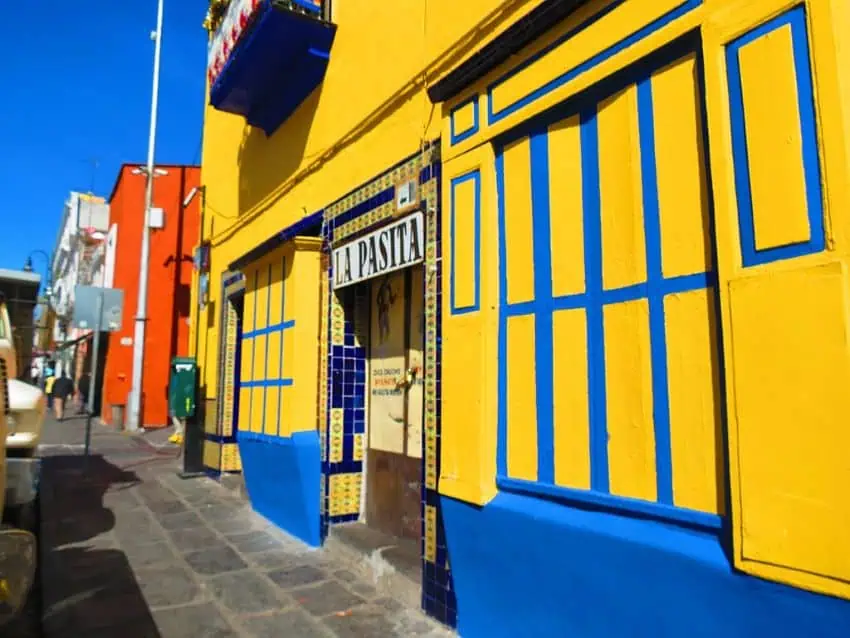
Puebla’s most iconic cantina is celebrated for serving up an extremely unique libation. In 1916, the owner of Gallo de Oro, a local grocery store, invented the now-famous liquor made of raisins. To complement the shot’s sweetness, he served it with a small cube of cheese, and that’s how it’s enjoyed to this day. Even if a raisin-based liquor doesn’t tickle your tastebuds, visiting Gallo de Oro is a must. The bar is a museum in itself, stuffed to the gills with trinkets from all over the world.

3. Puebla’s most charming street transforms into an antiques bazaar on Sundays
The Callejón de los Sapos, or Alley of the Frogs, is said to have gotten its name in the colonial era. A nearby river would frequently overflow and flood the alley, attracting frogs. The river no longer exists, but the street does, known for its colorful facades and romantic string lights. Lining the alley are boutique hotels, lively restaurants, and plenty of antique shops that take over the small square from 10 am on Sundays.
4. It’s believed to have been created through divine intervention

The city’s original name, Puebla de los Angeles, sprouted from a vision. In 1531, Bishop Julián Garcés had a dream in which angels descended from heaven, guiding him to a valley where a new city for incoming Spanish settlers could be built from scratch. Puebla was therefore constructed in this very place, and the city, often referred to as Angelópolis — City of the Angels — boasts a coat of arms featuring a castle protected by angels.
5. Mole poblano was invented out of a desperate attempt to feed an unexpected visitor
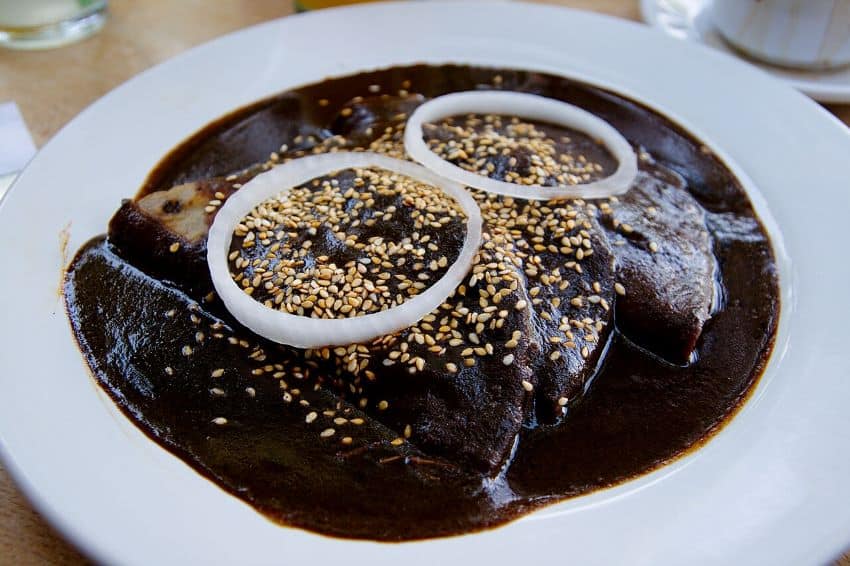
Yet another legend that remains steadfast, it’s said that in 1680, an archbishop dropped in without warning at the Convent of Santa Rosa, now the Museo de Arte Popular. The nuns, with nothing to offer the hungry visitor, fell into a panic. As they prayed for culinary inspiration, the ladies dumped everything they had in the kitchen into a pot: chilis, spices, stale bread, nuts, chocolate and a litany of spices. A few hours later, the unlikely combination transformed into a thick, rich sauce, impressing the archbishop and becoming known as the first mole poblano.
6. It’s home to more historical monuments than any other city in the Western Hemisphere
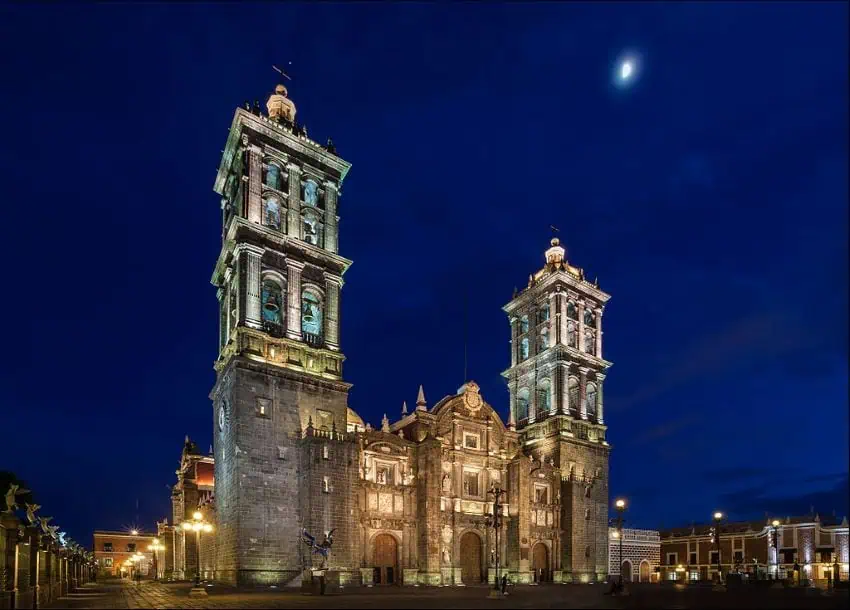
According to UNESCO, Puebla’s Historic Center is home to 2,619 monuments, more than any other city in the Americas. Beyond the quantity, the quality of the colonial architecture has been exceptionally preserved. One of these many landmarks is the Biblioteca Palafoxiana, which was established in 1646 and is considered the first public library in the Americas, with its collection still intact.
7. The last Volkswagen Beetle was manufactured here

The largest Volkswagen factory outside Germany is right here in Puebla. The historic 20 millionth Beetle — the first car in history to sell 20 million units — was built in Puebla in 1981 and featured silver metallic paint and black side stripes. The last classic Beetle ever built was also rolled off the production line here on July 30, 2003. Currently, the plant employs over 13,000 people and is considered the largest private employer in Puebla.
8. You’ve seen it in Hollywood films
Puebla’s perfectly preserved colonial architecture has made it Mexico’s go-to location for period films. The historic center has doubled for 18th and 19th-century Mexico and Spain in numerous productions, including major Mexican films like the 2009 “Arráncame la vida” as well as international productions like “Frida” featuring Salma Hayek, “Man on Fire” featuring Denzel Washington and “Vantage Point” with Dennis Quaid, all of whom made an appearance in Puebla for the films’ productions.
9. The Historic Center is decorated with French streetlights
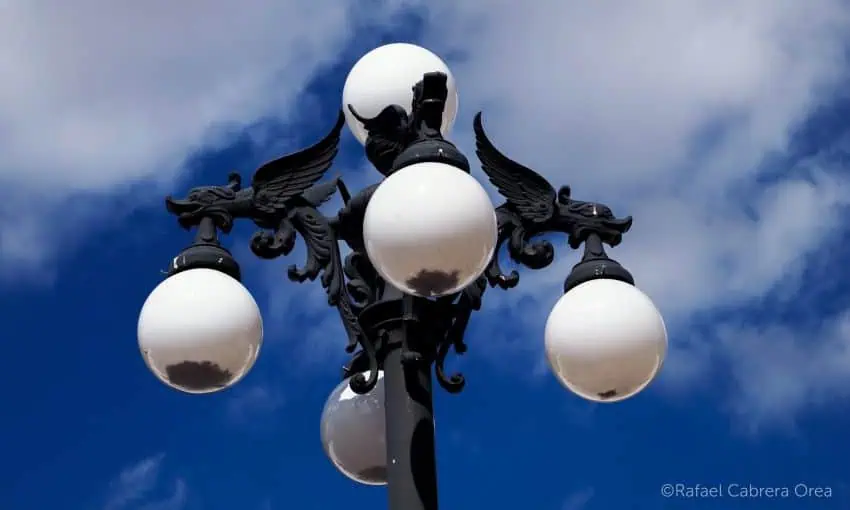
Somewhere around 1,920 ornate French-style street lamps adorn the center of Puebla. These elegant lamp posts were installed during the 19th century as part of a notable European influence during the Porfiriato, when cities like Puebla underwent dramatic urbanization in an attempt to modernize Mexico. The lamps coincided with the adoption of city-wide electric lighting. Local authorities and business leaders at the time preferred French design, so the street lights were imported and installed.
10. The first shots of the Mexican Revolution were fired here – and you can still see them
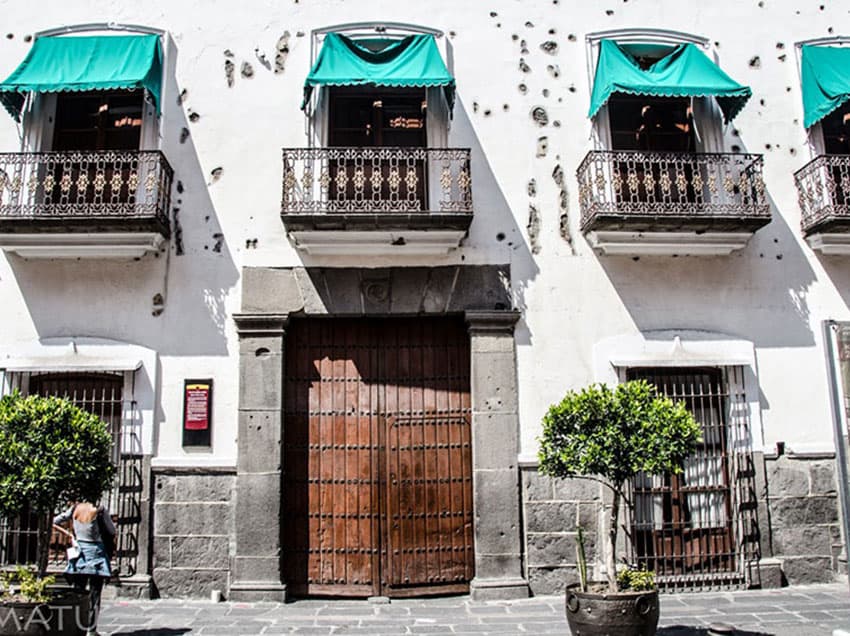
On November 18, 1910, the Serdán family home, located at 6 Oriente No. 206, would change Mexican history forever. After receiving an anonymous tip about a revolutionary conspiracy, the forces of Porfirio Díaz’s government surrounded the house and fired a string of bullets into the house’s facade. A violent gunfight followed, and the Serdán siblings, joined by about 17 supporters, resisted the attacks from inside the house. Eventually, law enforcement entered and captured conspiracy leader Aquiles Serdán. Serdán became the revolution’s first martyr and the attack on his home marked the first combat of the Mexican Revolution, which officially started two days later when Francisco Madero launched the Plan of San Luis Potosí. The house now serves as a museum and visitors can see the actual bullet damage that initiated the decade-long conflict.
Bethany Platanella is a travel planner and lifestyle writer based in Mexico City. She lives for the dopamine hit that comes directly after booking a plane ticket, exploring local markets, practicing yoga and munching on fresh tortillas. Sign up to receive her Sunday Love Letters to your inbox, peruse her blog or follow her on Instagram.
Source: Mexico News Daily