We are approaching the end of another big year of news in Mexico.
It was a year of significant change, as Donald Trump’s return to the White House had a considerable impact on Mexico, while the Mexican judiciary was overhauled via the country’s first-ever judicial elections.
It was a year of major floods and record rain, a year with fewer homicides but still obstinate insecurity, a year in which cartel honchos were sent abroad and an outspoken anti-crime mayor was killed at home.
President Claudia Sheinbaum completed her first year in office in 2025, a year that came with no shortage of challenges for Mexico’s first woman leader.



This year marks the seventh year of national governance by the “fourth transformation” (4T) political movement, which was founded by former president Andrés Manuel López Obrador, who held office for the Morena party between 2018 and 2024.
As we did at the end of 2023 and 2024, Mexico News Daily looked back at the past 12 months and selected 10 news and politics stories that we believe were among the biggest of 2025. In some cases, they are stories that are ongoing, stories with no clear end or resolution in sight, and stories that we will continue to watch closely in 2026.
1. The return of Trump
The return of Donald Trump to the White House in late January marked the commencement of a new era in Mexico-U.S. relations — one marked by unpredictability and uncertainty as well as deepening security cooperation and economic interdependence.
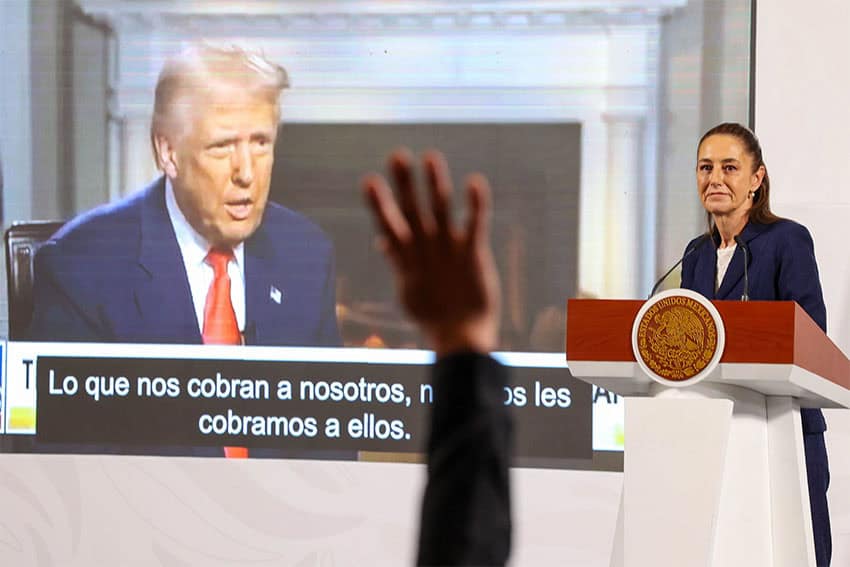
The 47th U.S. president took Mexico on a tariff rollercoaster ride in 2025, imposing new duties on a range of Mexican goods, lifting some soon after, threatening to raise tariffs tied to fentanyl trafficking, and offering some concessions to the United States’ southern neighbor — a sign that he still retains some respect for the USMCA trade pact, and recognizes the deep integration of the U.S. and Mexican economies.
The Mexican government has attempted to stave off, or at least mitigate U.S. tariffs, including through negotiation and the deployment of 10,000 National Guard troops to the northern border early in the year.
Beyond tariffs, the second Trump administration had a significant impact on Mexico in a range of ways this year.
There were, of course, other ways in which the Trump administration had an impact on Mexico this year, including in the aviation sector.
Still, despite the various tensions in the Mexico-United States relationship, Sheinbaum and Trump have established a personal rapport and publicly expressed respect for each other, even though the latter has also accused his Mexican counterpart of being “scared” of “the cartels.”
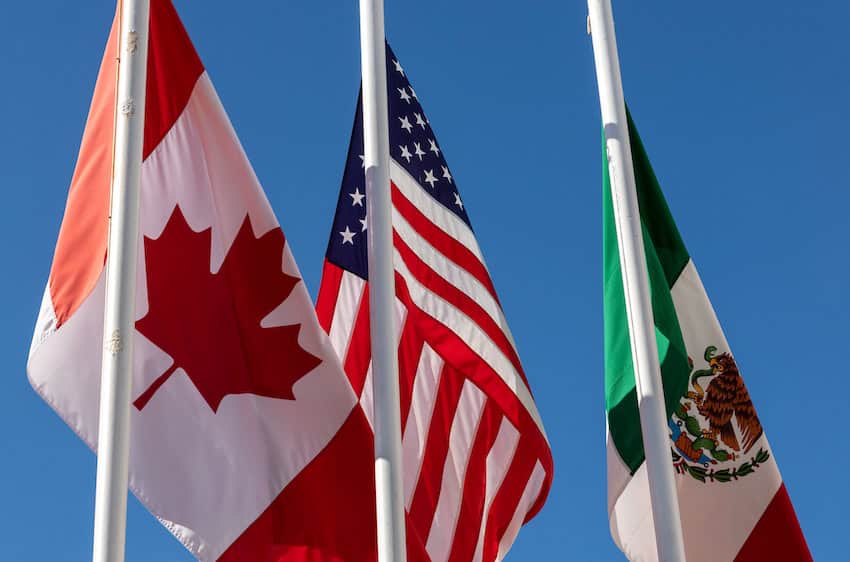
Next year will be another crucial year in the bilateral relationship, not least because the USMCA review will take place. Ahead of the review process, Sheinbaum, Trump and Canadian Prime Minister Mark Carney found the opportunity to discuss trade during a meeting at the FIFA World Cup draw in Washington, D.C., earlier this month.
Sheinbaum joins US President Trump and Canada PM Carney at the FIFA World Cup draw
A first bilateral in-person meeting between Sheinbaum and Trump appears likely to happen in 2026, providing the two leaders another opportunity to build on their rapport and perhaps iron out the trade and security issues that tarnished ties in 2025.
* MORE READING ON MEXICO-U.S. relations: Check out MND CEO Travis Bembenek’s recent article, headlined “Should the US help Mexico beat the cartels?”
2. Mexico stages its first-ever judicial elections
June 1 was a historic day in Mexico — the country’s first-ever judicial elections were held — but it was apparently just an ordinary Sunday for the vast majority of Mexican voters, as turnout was just 13%.
Nevertheless, President Claudia Sheinbaum described the democratic exercise as a great success.
The staging of the judicial elections was essential to rid Mexico’s judiciary of corruption, nepotism and other ills, or one of the biggest mistakes the country has ever made — depending on who you listen to.
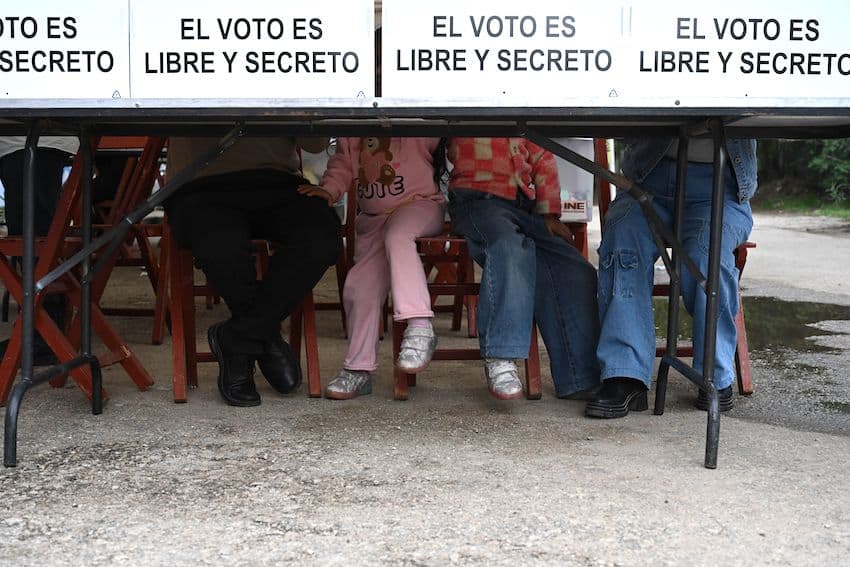
Whichever way you look at it, the judicial reform is well and truly underway, as the candidates who triumphed on June 1 have now been sworn in as judges, magistrates and Supreme Court justices. A second round of judicial elections will be held in 2027.
It is still too early to say whether claims that the popular election of judges will remove a vital check on government power and thus weaken the rule of law in Mexico are founded or not.
The impact of the judicial elections — for good and/or for bad — will become clearer in 2026.
* MORE READING ON THE JUDICIAL ELECTIONS: Shortly after the elections, we published an article on a critical report prepared by the Electoral Observation Mission of the Organization of American States. Read it here.
3. Floods devastate central and eastern Mexico
Mexico hasn’t experienced a major and destructive earthquake so far in 2025 — knock on wood — but other natural disasters, including hurricanes and wildfires, took a significant toll on the country.
The most impactful natural disaster this year was, however, the severe flooding that affected the states of Veracruz, Hidalgo, Puebla, San Luis Potosí and Querétaro in October.
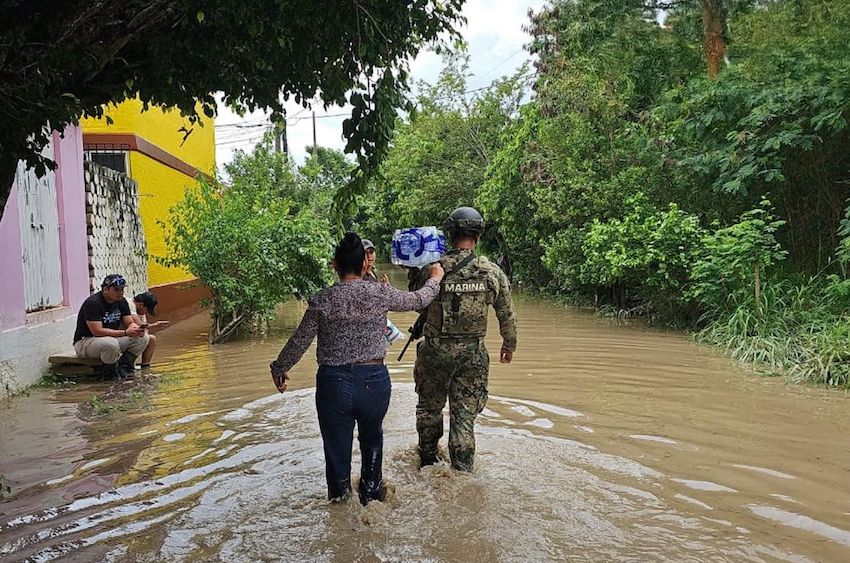
The floods claimed at least 83 lives and an additional 17 people remained missing long after the floodwaters had receded.
The federal government faced criticism over its initial response, with some flood-affected citizens asserting that authorities acted too slowly and provided insufficient assistance.
The government defended its response, and later highlighted that it provided some 7.6 billion pesos (US $411 million) in aid to more than 100,000 flood-affected households
The floods served as yet another reminder that Mexico is vulnerable to a wide range of natural disasters, some of which could become even more severe, and consequently more devastating, in the years ahead due to the impact of climate change.
* MORE READING ON THE FLOODS: On Oct. 20, we published a story about a floating seafood restaurant in Veracruz state that became an emblem of the devastating floods after breaking free of its moorings and traveling into the Gulf of Mexico and hundreds of kilometers along the coast.
Veracruz restaurant swept to sea during flood comes ashore 570 km away
4. Homicides decline
While large protests against insecurity were held in cities across Mexico in November, the federal government has made significant progress in combating crime, according to official statistics.
The most closely-watched indicator of insecurity is the data on homicides, which increased to record annual highs early in Andrés Manuel López Obrador’s presidency before declining in the second half of his 2018-24 term.
The Sheinbaum administration has succeeded in further lowering the homicide rate, although there have been questions about the accuracy of the data showing the reduction.
In any case, preliminary data presented by the federal government on Dec. 9 shows that Mexico’s daily homicide rate declined 29% annually to 65.1 in the first 11 months of the year.
While the reduction is good news at face value, the fact remains that almost 22,000 lives were lost to violent crime between January and November. There is no doubt that the federal government still has a lot of work to do in a country where insecurity is the No. 1 concern of many citizens.
* MORE READING ON MEXICO’S SECURITY SITUATION: At Sheinbaum’s morning press conference on Dec. 9, security officials presented the latest data on homicides, arrests, drug seizures and firearm confiscations. Click here to read our report on that mañanera.
5. Mexico hands over 55 cartel figures to US
Less than a week before a 25% U.S. tariff on all imports from Mexico was due to take effect, and as the Mexican government faced pressure from the Trump administration to do more to combat transnational drug trafficking, the Sheinbaum administration sent 29 cartel figures, including notorious drug lord Rafael Caro Quintero, to the United States.
The Feb. 27 transfer was described as “historical” by Mike Vigil, a former DEA chief of international operations, and a “huge smack to cartels” by Ioan Grillo, a Mexico-journalist with extensive experience reporting on organized crime.
In August, an additional 26 organized crime figures were sent to the U.S., bringing the total number of extradited prisoners to 55.
The Mexican government said that it took its own sovereign decision to send the cartel figures to the U.S., citing the risk of some of them being released from prison as a major reason for the transfer.
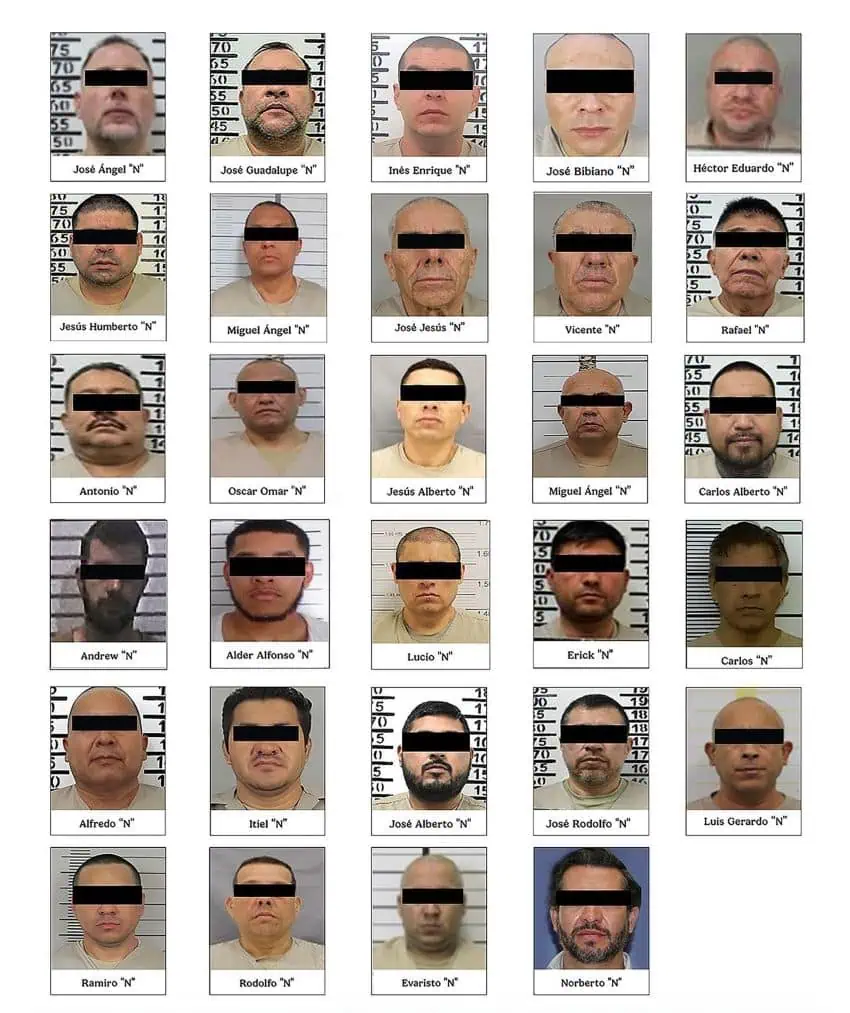
But claims persisted that the main reason the criminals were sent north was to appease a U.S. government that, throughout 2025, has maintained pressure on Mexico to combat organized crime.
* MORE READING ON THE EXTRADITED CARTEL FIGURES: The most notorious cartel figure that was sent to the United States this year is Rafael Caro Quintero, the convicted murderer of United States DEA agent Enrique “Kiki” Camarena. In July 2022, we reported on his capture in northern Mexico, while in September we covered Sheinbaum’s response to U.S. Attorney General Pam Bondi’s claim that Caro Quintero was sent to the U.S. on Trump’s orders.
6. Sheinbaum continues to make history
As Mexico’s first female president, Claudia Sheinbaum continued to make history in 2025, her first full year as leader of the world’s 11th most populous country.
Among the notable “firsts” she achieved this year were that she became the first woman to deliver an Informe de Gobierno (Government Report), an annual state-of-the-union style address, and the first female president to deliver the Cry of Independence (El Grito) from the National Palace balcony on the eve of Mexico’s Independence Day.
The impact of seeing a woman leading the nation in such moments — no doubt an inspiration for tens of millions of Mexican girls and women — should not be underestimated.
On the international stage in 2025, Sheinbaum represented Mexico at a CELAC summit in Honduras in April, the G7 Summit in Canada in June and the World Cup draw in Washington, D.C., earlier this month. She also visited Guatemala in June, where, along with the Guatemalan president and the prime minister of Belize, she announced the creation of an international area called the Great Maya Forest Biocultural Corridor.
In a short period of time, Sheinbaum has established herself as a highly-respected figure on the world stage, where she has advocated for things such as “economic well-being and cooperation for development,” greater integration of Western Hemisphere countries and Mexico’s Indigenous heritage.
NYT names Sheinbaum among the most stylish people of 2025
All the while, the president has maintained an extremely high approval rating at home, although her popularity declined slightly after a difficult November that included the assassination of the mayor of Uruapan (see below) and large protests against insecurity.
* MORE READING ON CLAUDIA SHEINBAUM: Check out this profile of Sheinbaum that we published just after her historic victory in the 2024 presidential election.
7. Poverty declines
In a country where poverty and inequality are prevalent, and the federal government frequently highlights its commitment to put “the poor first,” the news in August that some 13.4 million people were lifted out of poverty between 2018 and 2024 was very significant indeed.
While there was some controversy over the methodology used to calculate the reduction in poverty, federal officials, including Sheinbaum, held up the data as proof that the 4T’s “economic model” is working.
That model, the government says, prioritizes citizens’ well-being, including via the provision of numerous welfare and social programs.
With more than 13 million people exiting poverty during the AMLO years, the percentage of Mexico’s population living in poverty dipped below 30%, from almost 42% in 2018.
Nevertheless, Sheinbaum acknowledged that her government still has work to do.
“It’s obvious that with 30% of the population in Mexico living in poverty, we have to keep advancing,” she said on Aug. 14. ”
“…And we’re certain that we’re going to continue making progress. That’s why we talk about continuity and the advance of the fourth transformation,” Sheinbaum said.
* MORE READING ON POVERTY REDUCTION: On Aug. 15, we published this report, which notes that poverty reduction in poor southern states between 2018 and 2024 was not as great as in other states across the country.
8. Mexico’s fuel smuggling problem comes into focus
Crimes involving petroleum products, including the theft of fuel from pipelines, have long been a problem in Mexico.
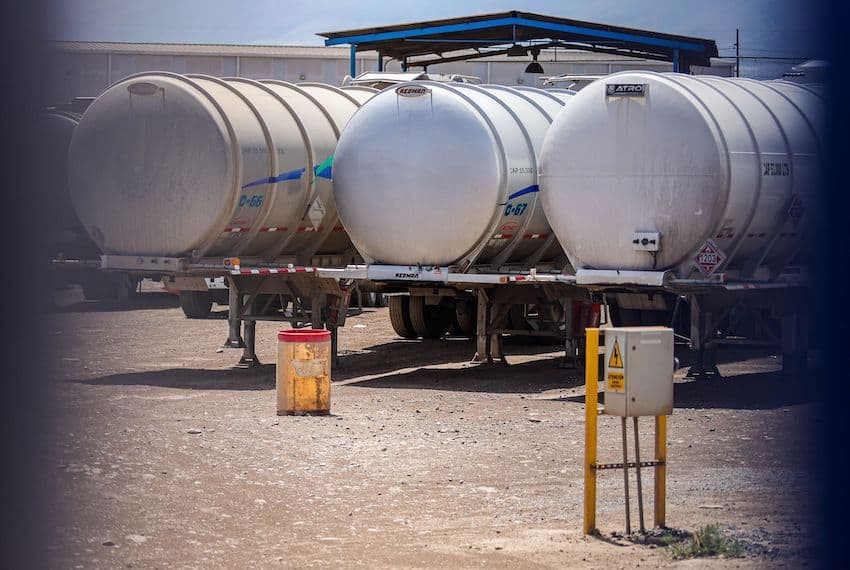
In 2025, a fuel smuggling offense known as huachicol fiscal became the most notorious of those crimes, in part because it was at the center of a major corruption scandal.
Anti-corruption chief reveals sophisticated fuel tax evasion network costing Mexico billions
In April, a report by the Mexican company PetroIntelligence stated that Mexico’s Treasury was deprived of around US $24 million a day in 2024 due to fuel theft and huachicol fiscal, in which gasoline and diesel that is brought into the country — mainly from the United States — is declared as other liquid products (such as lubricants or even vegetable oil) that are not subject to the IEPS excise tax.
The evasion of the tax allows people involved in huachicol fiscal schemes to make huge profits on the fuel they bring into the country.
In May, the federal government’s Anti-Corruption and Good Governance Minister Raquel Buenrostro said that “customs agents and even high-ranking managers in certain companies” participate in “well-designed” and “sophisticated” huachicol fiscal schemes, which have been operating in Mexico for several years. Buenrostro said that “each unloading” of a shipment of fuel for which the IEPS is not paid costs the tax authorities a seemingly incredulous amount of around 1 billion pesos (US $55 billion).
In September, the crime was at the center of a major corruption scandal for the Mexican government as several members of the navy, including a vice admiral, were arrested in connection with a huachicol fiscal scheme.
The news was especially scandalous as the Mexican Navy is generally considered Mexico’s most trustworthy security institution.
Sheinbaum said in November that the incidence of huachicol fiscal has decreased, but acknowledged that the crime is an ongoing problem that the government must continue to combat.
Any further revelations that federal officials are involved in the crime would be a blow to the Sheinbaum administration and undermine its anti-corruption rhetoric.
* MORE READING ON HUACHICOL FISCAL: In October, we published this story based on a report by Reuters, which detailed how a petroleum products company from Houston teamed up with a notorious Mexican cartel to smuggle US $12 million of fuel into Mexico. In September, we reported on a customs reform that aims to prevent tax evasion, corruption and other forms of criminal activity at ports.
9. A productive rainy season alleviates droughts and replenishes reservoirs
At the end of April — before the commencement of the 2025 rainy season — 65.9% of Mexico’s national territory was in drought (46.5%) or said to be experiencing “abnormally dry conditions” (19.4%), according to the drought monitor published by the National Water Commission and the National Meteorological Service (SMN).
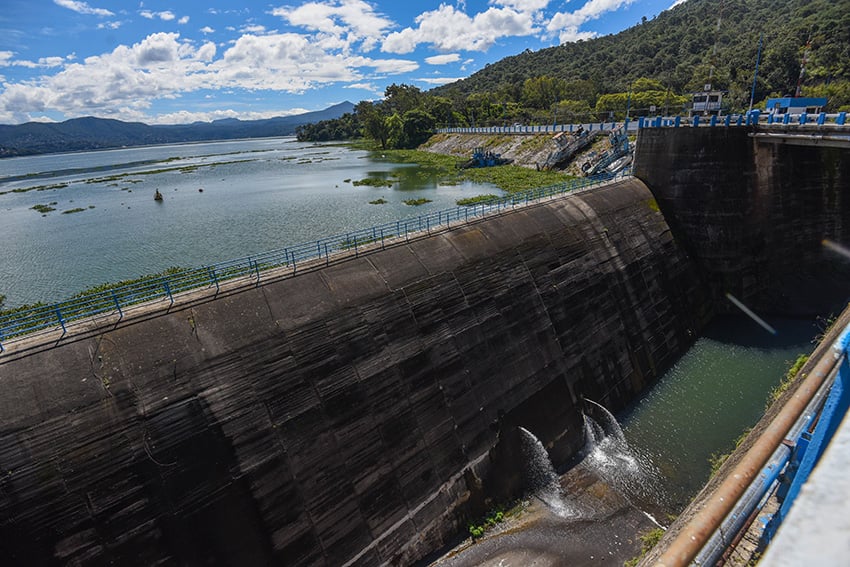
At the end of November, only 21.8% of the national territory was in drought (10.8%) or experiencing abnormally dry conditions (11.2%), representing a marked improvement.
A very productive rainy season in 2025 didn’t just alleviate drought conditions across much of Mexico, but also replenished many of the nation’s reservoirs, some of which were particularly parched. A case in point is the Cutzamala system of dams and reservoirs, in which water levels exceeded 97% of capacity in November, after having dipped to just 30% in April 2024, intensifying concerns about water availability in the Mexico City area.
Given the extreme importance of water to human life, to agriculture and to industry, the alleviation of drought and the replenishment of reservoirs as a result of a particularly rainy temporada de lluvias (rainy season) are more than deserving of their place among the biggest stories in Mexico in 2025.
* MORE READING ON THE RAINY SEASON: In July, we reported on SMN data that showed that June was Mexico’s rainiest month on record. Click here to read the story.
10. The mayor of Uruapan is assassinated
Among the many murders perpetrated in Mexico this year, the one that attracted the most attention was the brazen assassination of Carlos Manzo, the mayor of Uruapan, Michoacán.
The Nov. 1 assassination of the outspoken anti-crime crusader shocked a nation that has been somewhat numbed by many years of relentless violence, triggering protests and precipitating the creation of a major “peace and justice” plan for Michoacán.
The murder also prompted a renewed national conversation about violence in Mexico and how best it can be combated.
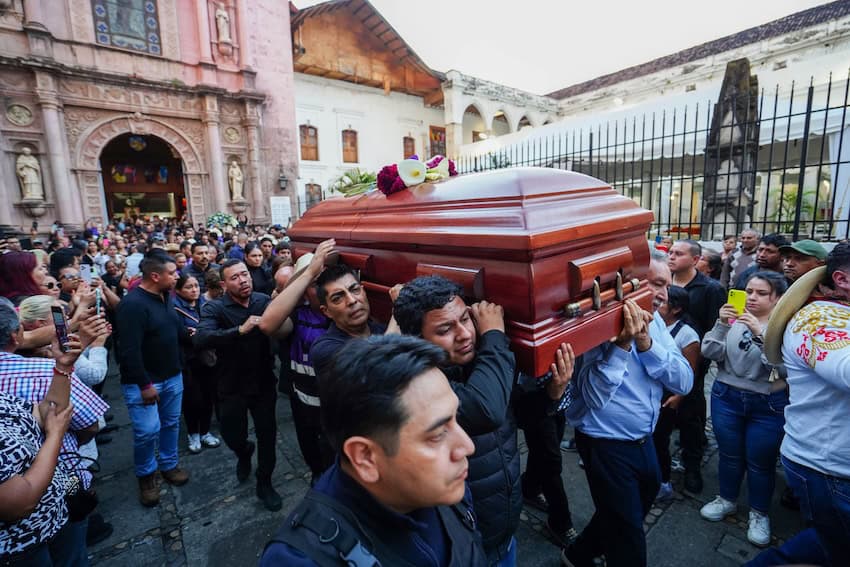
A day after Manzo was killed, U.S. Deputy Secretary of State Christopher Landau reiterated that the U.S. “stands ready to deepen security cooperation with Mexico to wipe out organized crime on both sides of the border.”
The federal government continued to voice its opposition to any kind of U.S. military actions in Mexico, while Sheinbaum ruled out any return to the kind of “war” on drug cartels former president Felipe Calderón launched in 2006 with the help of the Mexican military.
The murder of the mayor by an alleged (and now deceased) 17-year-old gunman was symptomatic of the serious security problems that plague various parts of Mexico, including Michoacán, where Manzo was tragically killed while attending a solemn Day of the Dead event in the company of his young family.
* MORE READING ON THE MANZO CASE: In November, we reported on the arrest of an alleged mastermind of the mayor’s assassination, while later the same month we published this story about the detention of seven of Manzo’s eight municipal police bodyguards.
By Mexico News Daily chief staff writer Peter Davies ([email protected])
Source: Mexico News Daily