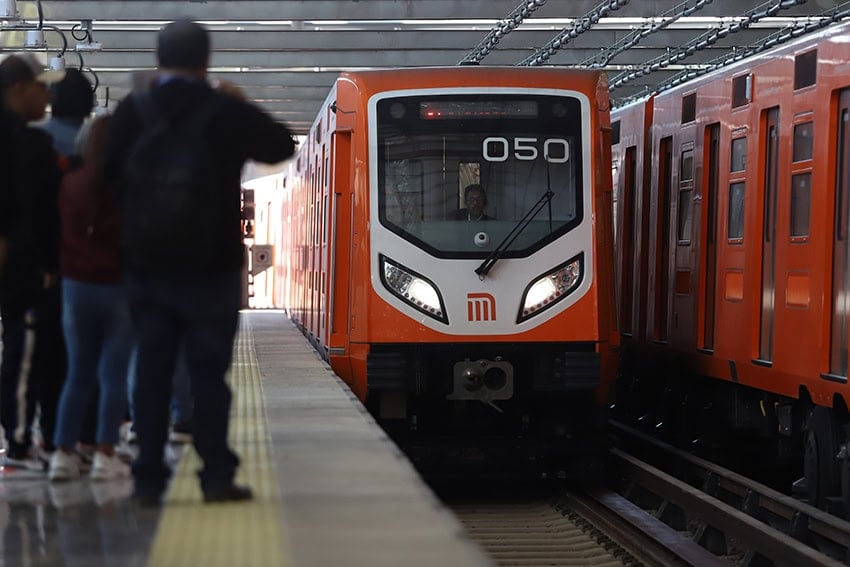
As a long-term aficionado of the Mexico City Metro, I was more than happy to descend to the capital’s subway system to report a series of stories for Mexico News Daily this year.
My aim was to give readers insight — or additional insight — into the artistic vibrancy, commercial buzz and vital importance of the metro system, which opened in 1969 with a single line, but has since grown into an elaborate 12-line network.
In case you missed the stories earlier this year, or would like to revisit them, here is a brief overview of the series with a link to each of the three parts.
Part I: Art in transit
In this piece, I explored the amazing and incredibly varied expressions of culture on display in the Mexico City Metro system, including underground urban art, pre-Columbian relics, detailed murals, live music, and even the skeletal remains of an extinct animal.


Here’s an extract:
“The song ‘Sandunga’ by Puerto Rican ‘King of Reggaetón’ Don Omar blares from a television to a captive audience of commuters standing just behind an embossed yellow line.
Below the TV is a Maya stele from the Izapa archeological site in Chiapas featuring intricate bas-reliefs. This juxtaposition of culture — the ancient and the very modern — plays out on a platform of the Bellas Artes metro station in the subterranean heart of Mexico City.”
Art in transit: How Mexico City’s metro doubles as a museum
Part II: Mercado Metro
Since my first trip on the Mexico City Metro in 2011, I’ve been fascinated with the abundance of buying and selling that takes place in stations and on trains, although the number of vendors on board the so-called gusanos naranja (orange worms) has dwindled in recent years.
For this story I spoke to a number of metro-based vendors, including a teenage purveyor of hot meals who counts police officers among his customers, and a health store employee who sells products including shark cartilage capsules and “Praw Praw Sex” pills.
Here’s an extract:
“Amaranth bars, headphones, stuffed toys, jeans, Japanese peanuts, espresso machine coffee, skincare products, McDonald’s soft serve cones, churros, tortas gigantes, tacos, sexual enhancement pills, lingerie, newspapers, books and oh-so-many different kinds of chatarra (junk food).
All these products — and countless others — are available for purchase in the Mexico City Metro system.”
Mercado Metro: The vibrant world of commerce beneath Mexico City’s streets
Part III: The backbone of a sprawling transit system
In this third and final part of our Mexico City Metro series, I delved into the history of the subway system and spoke to commuters about how they use it today.
I also looked at how the metro fits into the broader public transport network in the Valley of Mexico metropolitan area, which includes Mexico City and many municipalities of México state.
Here’s an extract:
“In Mexico City, a public transit ride can be a quick zip up a metro line, and it can also be an hours-long, patience-testing odyssey (or ordeal) involving various modes of transportation. Commuters who come into central Mexico City from the surrounding metro area municipalities of México state face some of the longest trips.
One such person is Maura Hernández, a domestic worker who lives in the México state municipality of Nicolás Romero, located around 40 kilometers northwest of central Mexico City.”
The Mexico City Metro: Backbone of a sprawling transit system that gets Chilangos where they need to go
By Mexico News Daily chief staff writer Peter Davies ([email protected])
Source: Mexico News Daily