The World Bank has slashed its 2025 economic growth forecast for Mexico amid what it called “the highest levels of trade uncertainty in a decade.”
The Washington-based international financial institution is now predicting that the Mexican economy will stagnate in 2025 with 0% GDP growth.
The forecast is 1.5 percentage points lower than that the World Bank made in January in its Global Economic Prospects report.
The new forecast is included in an advance copy of a chapter of the upcoming World Bank report “Organized Crime and Violence in Latin America and the Caribbean,” which will be released next Monday.


Among 29 Latin American and Caribbean (LAC) countries, only Haiti is forecast to record a worse economic result than Mexico this year. The World Bank is predicting that the economy of the troubled Caribbean country will contract 2.2% in 2025.
On the other end of the scale, it is predicting that the economy of Guyana will grow 10% this year and that Argentina will record a 5.5% economic expansion.
The World Bank’s downgrade of its growth forecast for Mexico comes just after the International Monetary Fund (IMF) slashed its outlook for Latin America’s second largest economy. The IMF is now predicting Mexico’s GDP will contract 0.3% this year, a downward revision of 1.7 percentage points compared to its January forecast.
The Mexican economy grew 1.5% annually in 2024.
‘A more challenging external scenario’
The World Bank also lowered its growth outlook for the Mexican economy in 2026. It is now forecasting 1.1% growth next year, down from a 1.6% forecast in January.
In “The State of the LAC Region” chapter of its upcoming report, the World Bank said that the outlook for the region “has become more uncertain as modest advances on the internal front are being compounded by a more challenging external scenario.”
“… The external environment … has changed substantially in the six months since the October 2024 Latin America and Caribbean Economic Review (LACER), with both short-term and long-term consequences,” the financial institution said.
“… The apparent shift toward higher tariffs by the United States casts uncertainty on the nearshoring project, the practice of bringing offshore operations to nearby or friendly countries, and global market access more generally,” the World Bank said.
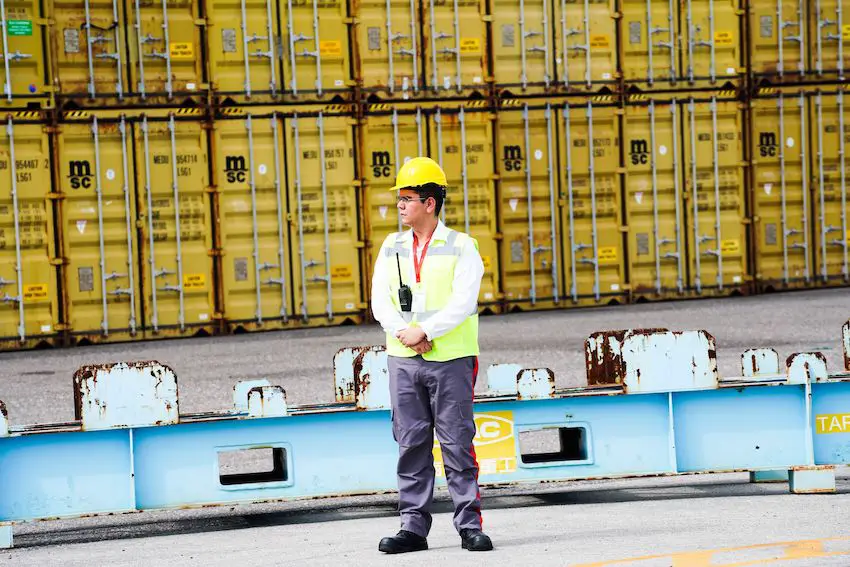
“… Even before the increased uncertainty introduced by the rising US tariffs, there was evidence that the region was potentially missing the boat on nearshoring,” the bank said.
In the three months since Donald Trump began his second term as president, the United States government has imposed tariffs on steel, aluminum and cars made in Mexico as well as Mexican goods not covered by the USMCA free trade pact.
The Mexican government is currently attempting to negotiate exemptions from the steel, aluminum and auto tariffs, which the United States imposed on imports from around the world.
The World Bank said “it is impossible to know where the new tariff regime will settle.”
For now, “higher tariffs, and the highest levels of trade uncertainty in a decade, impede further integration of the region into U.S. supply chains, as well as imperiling jobs in export-related industries,” it said.
The World Bank highlighted that Mexico recently signed a new trade agreement with the European Union, and said that “represented a step toward diversification of markets.”
However, it added that “the emerging challenges require addressing a now decades-old agenda in infrastructure, education, regulation, competition, and tax policy to increase both productivity and the nimbleness of the region’s economies in the face of new uncertainty.”
Sheinbaum takes issue with World Bank forecast
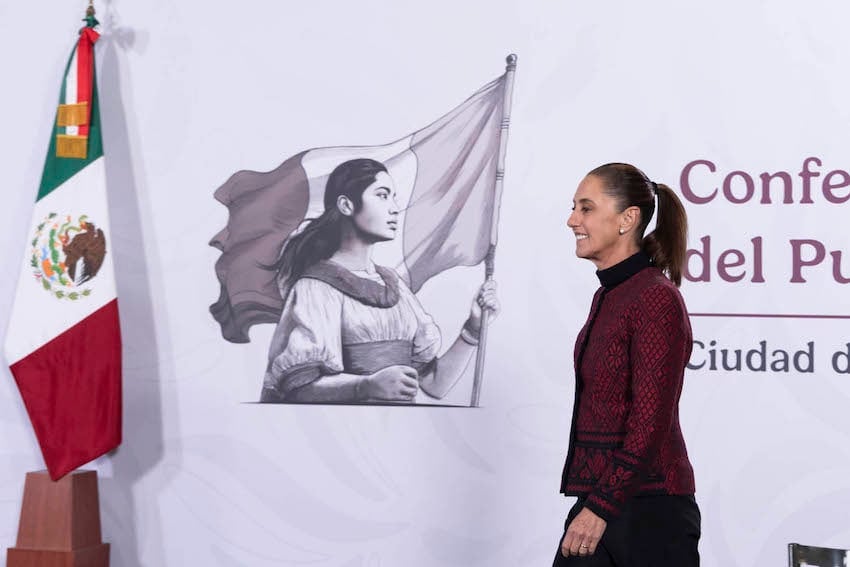
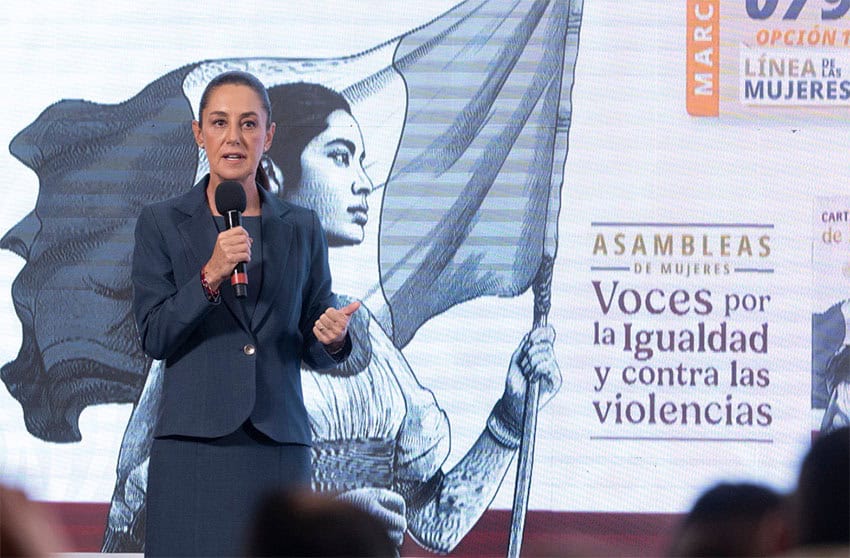
At her Thursday morning press conference, President Claudia Sheinbaum expressed her disagreement with the economic forecasts of international organizations such as the World Ban, the IMF and the OECD, which is also predicting that the Mexican economy will contract this year.
International financial organizations “have economic models that don’t take into account what we are doing,” she said.
Sheinbaum said that if their models establish that “there is going to be inflation and economic recession in the United States,” they say “there will [also] be recession in Mexico” due to the “economic integration” between the two countries.
She asserted that international financial organizations also “don’t take into account” that “not everything is determined yet” with regard to the United States’ trade relationships with the rest of the world, and “particularly” its relationship with Mexico, which sends more than 80% of its exports to its northern neighbor.
Returning to her first claim, Sheinbaum said that international organizations fail to consider Plan México, the federal government’s ambitious economic initiative to grow the economy by boosting domestic industry and building new infrastructure projects, among other measures.
The World Bank said in its report that public investment in Mexico “supported the expansion of aggregate investment and output growth during 2023,” — when the Mexican economy grew 3.2% — “but as it lost momentum during 2024, this stimulus weakened.”
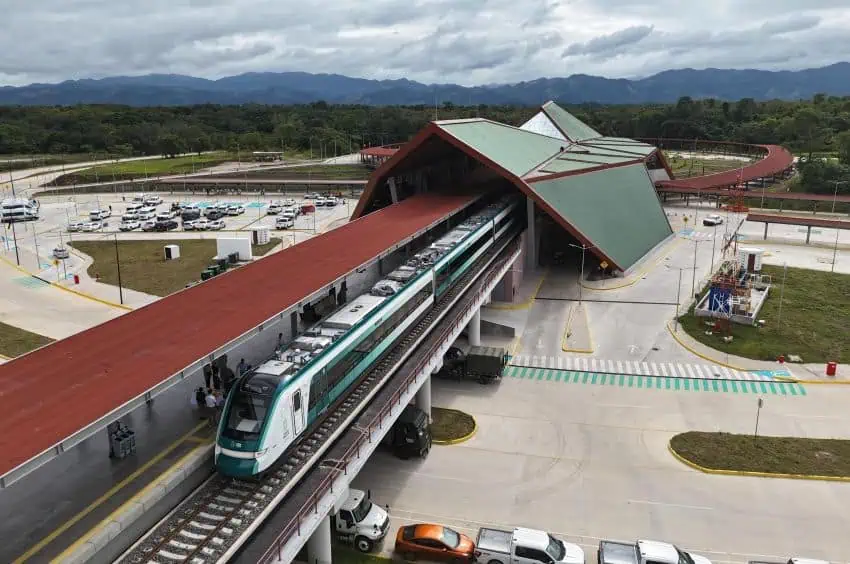
Even though major projects such as the Maya Train and the new Pemex refinery on the Tabasco coast are now largely completed, Sheinbaum believes that her government’s investment in other infrastructure projects — including highway, rail, water and housing ones — will help spur growth in Mexico.
“If there wasn’t public investment, there would probably be the reduction in economic growth” that the IMF is forecasting, she said on Tuesday.
On Thursday, Sheinbaum highlighted the economic benefits of private investment as well.
The World Bank and IMF “probably don’t take into account” the US $3.6 billion that brewing company Grupo Modelo is going to invest in Mexico or other private investment currently in the pipeline, she said.
Sheinbaum said that the Finance Ministry — which is forecasting that the Mexican economy will grow by 1.5-2.3% this year — “does take into account all these variables” and therefore comes up with “a completely different result.”
“… The economy of Mexico is strong and the entire cabinet is working so that Plan Mexico becomes a reality,” she added.
Need-to-know economic data for Mexico
By Mexico News Daily chief staff writer Peter Davies ([email protected])
Source: Mexico News Daily