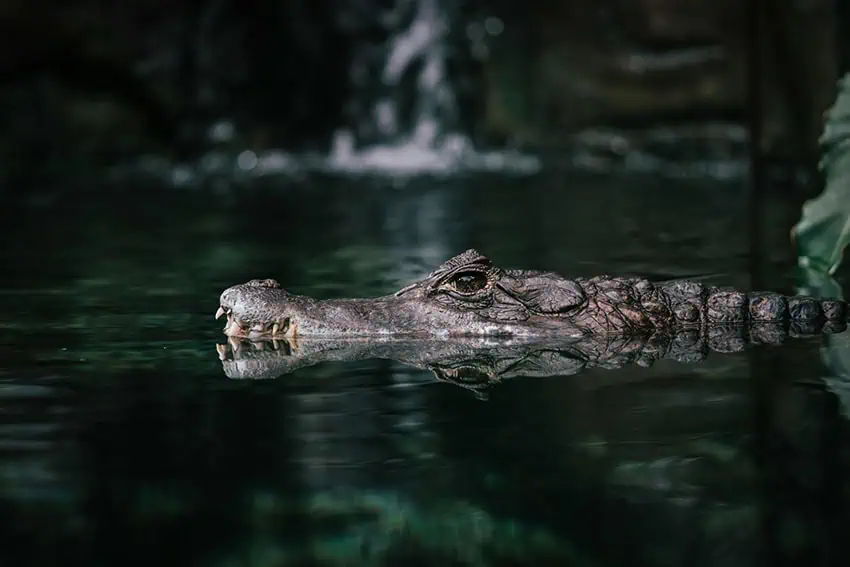
Researchers from McGill University in Montreal, in collaboration with Mexican scientists, have identified two previously unknown crocodile species inhabiting two islands off the Yucatán Peninsula.
Found on the renowned tourist island of Cozumel and within the Banco Chinchorro Biosphere Reserve 210 kilometers to the south, both new species remain unnamed, pending formal taxonomic description.
Banco Chinchorro is an atoll reef — a ring-shaped coral formation with a central lagoon — off the southeast coast of Quintana Roo that’s popular with divers and snorkelers.
The findings serve to fuel Mexicans’ longstanding cultural fascination with crocodiles, from pre-Hispanic times, when crocodiles were powerful symbols of fertility, rain and creation, to modern times, when out-and-about crocodiles always seem to make the news, whether they’re on the beach or crossing downtown streets or on the lam.
The recent findings were published in Molecular Phylogenetics and Evolution. Funding was provided by the Canadian Foundation for Innovation (CFI) and the Natural Sciences and Engineering Research Council of Canada (NSERC), along with Mexico’s National Commission of Natural Protected Areas (Conanp) and the Mexican Fund for the Conservation of Nature (FMCN).
The discovery, announced last week in a news release from McGill’s Faculty of Science, stemmed from genetic and anatomical analyses of isolated populations, revealing stark differences from mainland American crocodiles, the type usually found in Mexico. Crocodylus acutus is its binomial name.
The findings have upended long-held assumptions about the American crocodile and underscore urgent conservation needs.
“Biodiversity is disappearing faster than we can discover what we’re losing,” said lead researcher Hans Larsson, a biology professor at McGill. “Most crocodile species are already endangered, and rapid shoreline development threatens nearly every population.”
When researchers compared DNA sequences and skull morphology across Caribbean, Central American and Mexican Pacific crocodiles, they found the island populations were genetically distinct.
“These results were totally unexpected,” said José Avila-Cervantes, the study’s lead author and a former McGill graduate student. “We assumed Crocodylus acutus was a single species ranging from Baja California to Venezuela. Our study is the first to extensively explore genomic and anatomical variation in these animals.”
Each newly identified species has fewer than 1,000 breeding individuals, researchers added.
While current populations appear stable, their restricted habitats — Cozumel’s mangroves and Banco Chinchorro’s coral atoll — leave them vulnerable to coastal development and tourism.
Banco Chinchorro, a UNESCO Biosphere Reserve, offers stronger protections, but Cozumel’s fragmented ecosystems require immediate safeguards, researchers noted.

“The rapid loss of biodiversity can only be slowed if we know what species are most at risk,” Larsson said. “Limiting land development and implementing careful conservation strategies on Cozumel and Banco Chinchorro will be key to ensuring their survival.”
The research team included scientists from El Colegio de la Frontera Sur, a public scientific research center that addresses sustainable development and environmental and social challenges in Mexico’s southern border states.
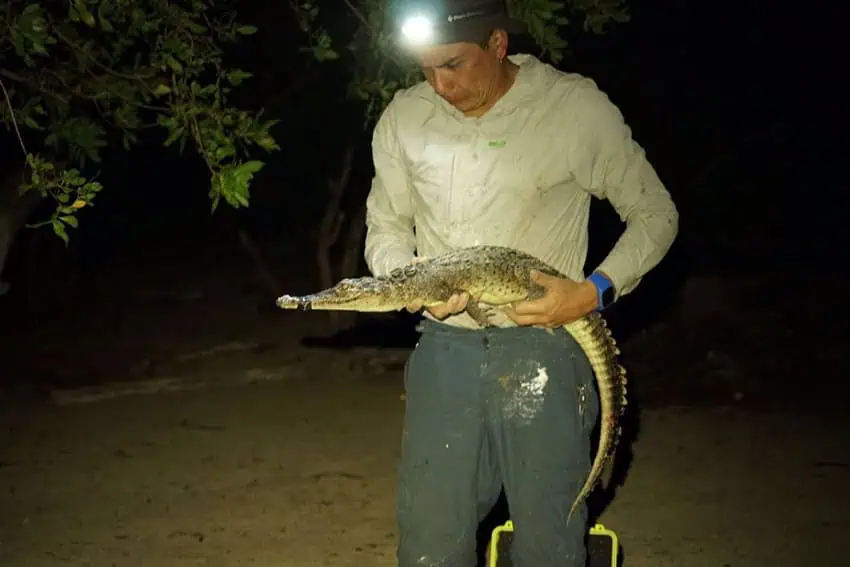
The team captured and released crocodiles to collect blood, scale and tissue samples.
The study highlights how island isolation drives evolution, with ocean currents and habitat barriers fostering unique species.
With reports from Aristegui Noticias, ADN40 and Tribuna de la Bahia
Source: Mexico News Daily