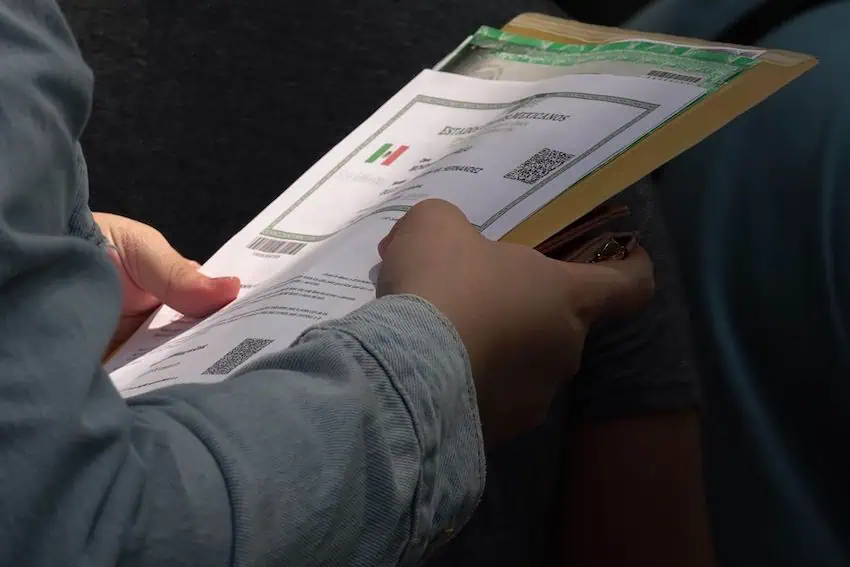
Mexico’s Congress last month approved reforms to existing laws that allow for the creation of an identity document that contains biometric data, including fingerprints and iris scans.
Supported by President Claudia Sheinbaum and the ruling Morena party, the reforms to the laws enabling the creation of a CURP biométrica (biometric CURP) took effect on July 17 after the publication of a decree in the federal government’s official gazette the previous day.
The CURP, or Unique Population Registry Code, is an existing national identification code for all citizens and legal residents of Mexico. The biometric CURP is an enhanced version of the existing CURP, which was created in 1996.
There is significant controversy about the creation of a new identity document that contains biometric data, with critics raising a range of concerns about the collection and storage of personal information.




Here’s an explainer on the biometric CURP, which will be issued as a physical and digital document.
What prompted the decision to create a biometric CURP?
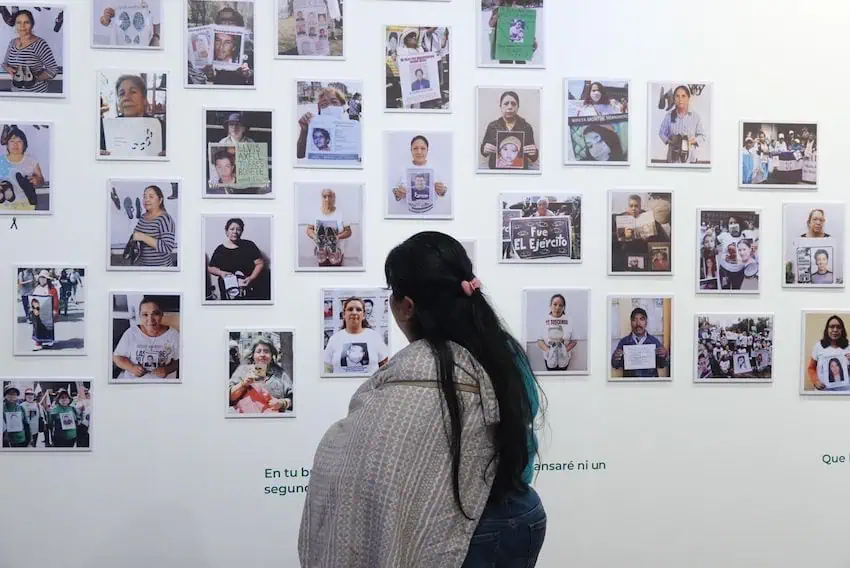
The federal government’s main stated reason for the creation of a biometric CURP is to help combat Mexico’s missing persons crisis. Investigators will be able to access the biometric data of people who disappear in the future, provided that they applied for, and were issued with, a biometric CURP. That ability will ostensibly aid efforts to locate and identify those people or their remains.
Mexicans and foreigners who are currently classified as missing in Mexico obviously don’t have biometric CURPs, and therefore, the creation of the new identity document would not assist the search for those people.
More than 100,000 people are officially classified as missing in Mexico. President Sheinbaum has said that addressing the missing persons problem is a “national priority” for her government.
The creation of a biometric CURP is also aimed at the fight against organized crime and drug trafficking. In addition, it seeks to prevent the crime of identity theft.
The news outlet Deutsche Welle reported that the government has presented the biometric CURP as “a modern and efficient tool to strengthen security and the provision of services.”
The creation of the biometric CURP has also been framed as complementary to the government’s efforts to modernize Mexico’s bureaucratic systems and thus make them faster and more efficient.
What laws were changed to allow the creation of a biometric CURP?
The General Forced Disappearance Law and the General Population Law were both modified to allow for the creation of a biometric CURP.
What information will the biometric CURP contain?
A biometric CURP will contain the following information/data about the person it pertains to:
- Names and surnames
- Date of birth
- Sex
- Place of birth
- Nationality
- A photograph
- A digital signature
- Fingerprints
- Iris scans
Each person with a biometric CURP will have an alphanumeric code containing 18 letters and numbers, as is the case with a regular CURP.
Where will the data be stored?
The biometric CURP data will be stored in a “Unique Identity Platform,” which will be linked to other government databases containing a range of information about citizens and residents, including financial data.
What will citizens and residents of Mexico use their biometric CURP for?
Citizens and residents of Mexico will be able to use their biometric CURP to carry out a range of procedures and to access government and private services.
According to the newspaper El País, a biometric CURP will be needed for things such as registering for government social programs, completing banking procedures, enrolling in educational institutes and accessing medical care in the public health system.
The news website Expansión reported that the biometric CURP will also be used to validate individuals’ identities on some websites, including government ones.
According to the legal information website Justia México, a biometric CURP could also be used to validate a person’s identity when carrying out immigration procedures, such as those carried out by foreigners at National Immigration Institute (INM) offices.
Will it be mandatory for individuals to obtain a biometric CURP?
There is currently confusion and uncertainty about whether it will be mandatory for citizens and residents of Mexico to obtain a biometric CURP.
President Sheinbaum said last week that the government cannot “force” anyone to obtain a biometric CURP, but added that she believes that it is “important” to get one as the new identity document will “help in many issues,” including in addressing the missing person’s crisis in Mexico.
Interior Minister Rosa Icela Rodríguez has also said that obtaining a biometric CURP will not be mandatory.
However, laws that were changed to allow the creation of a biometric CURP stipulate that citizens and residents of Mexico will have to obtain one.
Not having a biometric CURP could potentially limit individuals’ capacity to carry out some (or many) bureaucratic procedures and access government and private services. Therefore, for many people, having a biometric CURP could become essential and, in effect, mandatory.
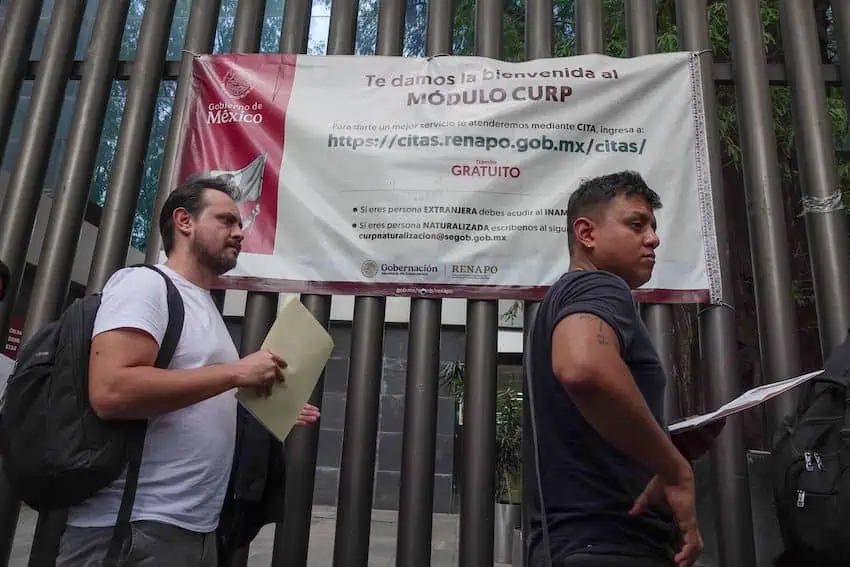
El País reported earlier this month that the biometric CURP will be “compulsory” starting in February 2026 and that the “conventional version” will cease to be accepted for “procedures and services that require identification.”
It is unclear whether the government will have the capacity to issue biometric CURPs to all citizens and residents who want, or need, one by that time.
When will individuals be able to obtain a biometric CURP?
Starting Oct. 16, individuals will be able to apply for a biometric CURP at Civil Registry offices and offices of the National Population Registry (Renapo).
People will also be able to apply for a biometric CURP online via the government’s Llave MX platform.
There will be no cost associated with applying for and obtaining a biometric CURP.
Some biometric CURPs have already been issued in certain municipalities in Veracruz, and in Mexico City and México state, where the identity documents have been issued to citizens in a pilot project.
To obtain a biometric CURP, individuals will have to present a range of documents, including their birth certificate, their current CURP and their INE voter’s card or passport.
Children will also be able to obtain a biometric CURP, provided they apply for one in the company of a parent or legal guardian.
What concerns are there about the biometric CURP?
Digital rights activists have raised concerns about “the collection, use, sharing and storage of personal data,” according to Context, a media platform affiliated with the Thomson Reuters Foundation.
“… Rights groups worry the changes will enable a mass surveillance system with little accountability,” Context reported.
Congress’s recent approval of other laws has increased the Mexican government’s capacity to surveil citizens. For example, the National Investigation and Intelligence System Law, which was approved by the Senate on July 1, gives the federal Security Ministry broad powers to access people’s personal and biometric data as well as their financial information, among other sensitive data.
José Flores, director of the Network in Defense of Digital Rights (R3D), a non-governmental organization, is among the activists who have raised concerns about the biometric CURP.
According to Context, he said that the biometric ID card will grant authorities access to a detailed footprint of a citizen’s activities, without requiring a court order.
“This puts us in a massive surveillance ecosystem with no provisions to identify wrong use of data, data breaches, identity theft or acts of corruption,” Flores said.
Citing “rights campaigners,” Context reported that recently-approved laws “do not outline how citizens can be notified when their data is viewed by authorities.”
“This means [biometric CURP] card holders do not know who is accessing their personal data or how it is being used,” Context said.
Senate grants Security Ministry broad data access powers, sparking ‘police state’ fears
Santiago Narváez, an R3D researcher, told Deutsche Welle that the “centralization of biometric data in Mexico is occurring in a context of high corruption, frequent leaks and lack of independent controls.”
Unlike a password, Narváez highlighted that a person’s fingerprints and irises cannot be changed if they are leaked (or hacked) and fall into the wrong hands.
“It’s a permanent risk,” he said.
Given that the biometric CURP will be used to access government and private services, “every office, every company” with access to people’s biometric data is “a possible focus of attack,” Narváez said.
For their part, families of missing persons have rejected the assertion that the creation of the biometric CURP will assist the location of disappeared people.
At a protest in early July, search collectives displayed placards with the message “Spying is not searching,” according to Deutsche Welle.
María Salvadora Coronado, whose husband disappeared in 2011, said that the creation of a biometric CURP and the recent approval of other laws “place us at greater risk because they [the government] will know where we are, what we’re doing, what we’re buying.”
“There are madres buscadoras [searching mothers] who have been murdered,” she noted.
How has Sheinbaum responded to the concerns?
Sheinbaum — the leading proponent of the biometric CURP initiative — has highlighted that the existing CURP system has been in place for an extended period of time, and rejected claims that the biometric CURP will become a means of spying on people in Mexico.
The president has repeatedly rejected claims that the government intends to spy and/or surveil ordinary citizens.
Last Thursday, she highlighted that banks already request biometric data from their customers for security reasons.
“They ask you for it in the banks’ apps, even your face,” Sheinbaum said.
She said that people can “have the certainty” that their personal and biometric data will be “safe.”
The government’s digital infrastructure has “all the necessary cyber-security systems,” Sheinbaum said.
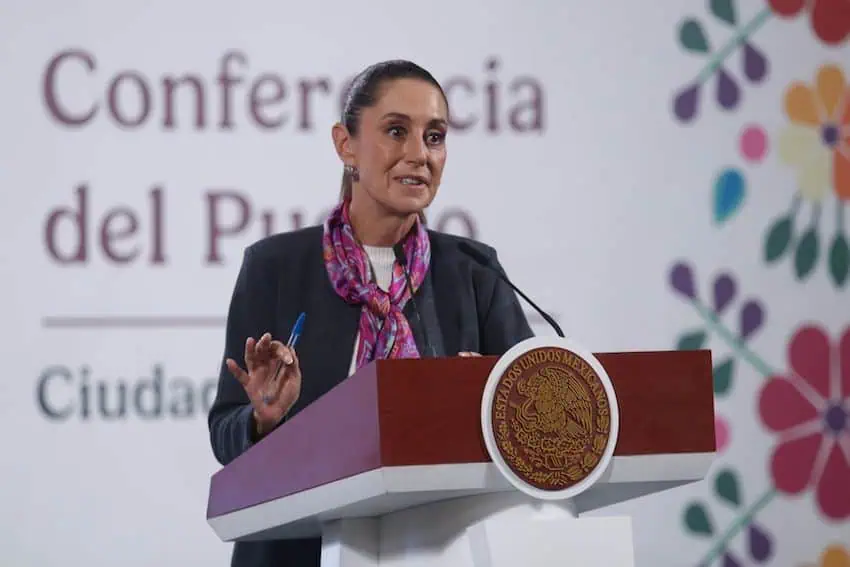
She also said that people can rest assured that there will be no “misuse” of their personal and biometric data.
The federal government has stressed that the biometric CURP will not replace citizens’ INE voter card, the primary form of personal identification in Mexico.
Could foreign governments seek biometric data from Mexico?
Yes.
Earlier this year, United States Secretary of Homeland Security Kristi Noem said that she had asked Sheinbaum “specifically to share biometric information [of migrants] with us.”
“And she’s willing to discuss that even though that in her country would be a little bit controversial,” Noem said in late March.
Sheinbaum subsequently said that she had not agreed to anything requiring the transfer of biometric data to the United States.
She also highlighted in early April that Mexico did “not have a biometric data ID system” at that time.
How will people’s biometric data be protected?
According to Justia México, “biometric personal data will be protected in accordance with the provisions of applicable laws and legal provisions on the protection of personal data.”
Do Mexican citizens support the addition of biometric data to their CURPs?
In a poll carried out this month, the El Financiero newspaper asked 500 Mexican adults whether they agreed or disagreed with the incorporation of biometric data to the CURP identity document.
Forty-eight per cent of respondents said they agreed, while 49% said they disagreed. The remaining 3% of those polled said they didn’t know whether they agreed or not.
El Financiero also asked the survey participants about how much confidence they had in the government’s capacity to safely store people’s biometric data.
Just under one-quarter of respondents (24%) said they had “a lot” of confidence in the government, while exactly one-quarter said they had “some” confidence.”
Twenty-one per cent of respondents said they had “little” confidence in the government, while 28% said they had no confidence in its biometric data-storing capacity.
With reports from Expansión, Context, El País, Deutsche Welle, El Universal, Infobae, Sin Embargo and El Financiero
Source: Mexico News Daily