As a consequence, fighting wars will continue to demand of soldiers at all levels physical fitness, but also mental resilience.
The first is easy enough to objectively verify, though it is arguable what the “highest male standard only” means and if it will be an appropriate threshold. Armed forces with no combat experience can still put in place fitness protocols that ought to meet the physical rigours of combat.
The second is more challenging to train and defies quantification and objective verification.
Consider the mental determination of Dipprasad Pun, a sergeant of the Royal Gurkha Rifles in the British Army, who single-handedly repelled a Taliban attack from up to 30 fighters, on the night of Sep 17, 2010. The military context encourages and celebrates such acts of resilience, but cannot by itself guarantee that this resilience is universal throughout the culture.


Of course, while physical and mental fitness is necessary to meet the rigours of combat, they are no guarantee of combat success without the intellectual skills of leadership, doctrines and tactics.
DO COUNTRIES NEED SOLDIERS OR WARRIORS?
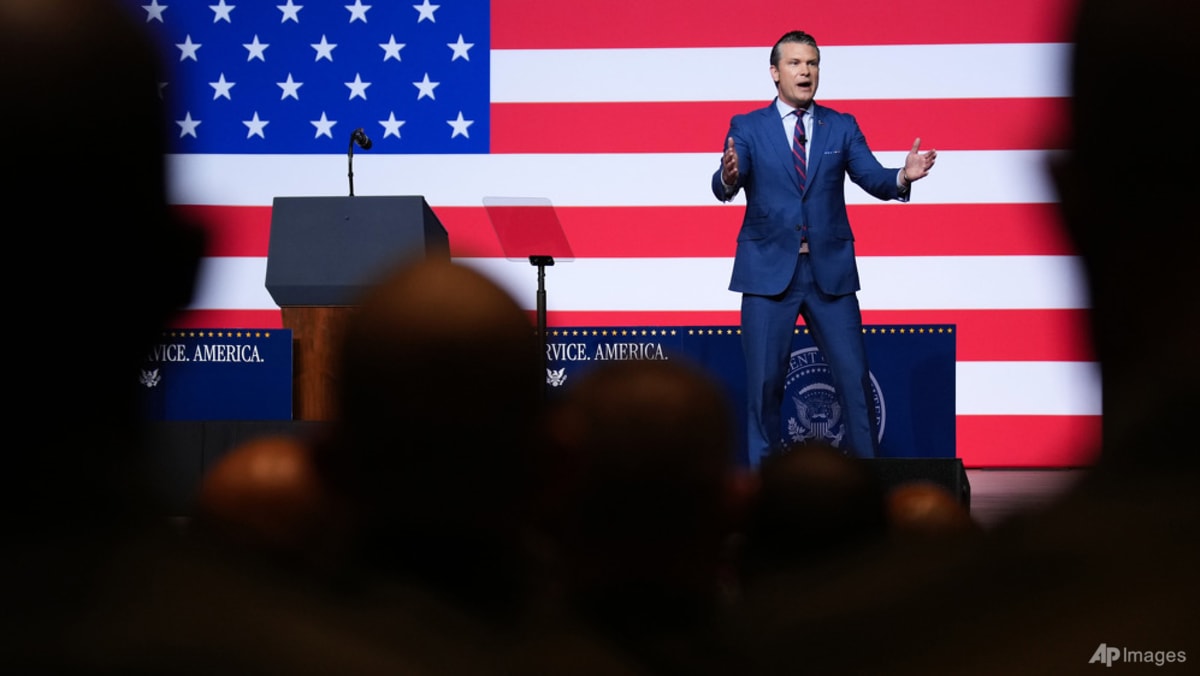
Eliot Cohen, who had served in the George W Bush administration as senior adviser to Secretary of State Condoleezza Rice, had previously criticised Mr Hegseth’s emphasis on the “warrior ethos”. As he argued: “Warriors are people who exult in killing … and whose behaviour on and off the battlefield often veers into atrocity.”
Soldiers, on the other hand, are “servants of the state … bound by discipline, the rule of law … They serve a common good, and duty, not glory, is their prime motivation.”
Ultimately, there is still a distinction between being a soldier and being a warrior.
Bernard F W Loo is a Senior Fellow at the Institute of Defence and Strategic Studies, the S Rajaratnam School of International Studies, Nanyang Technological University, Singapore.
Source: CNA