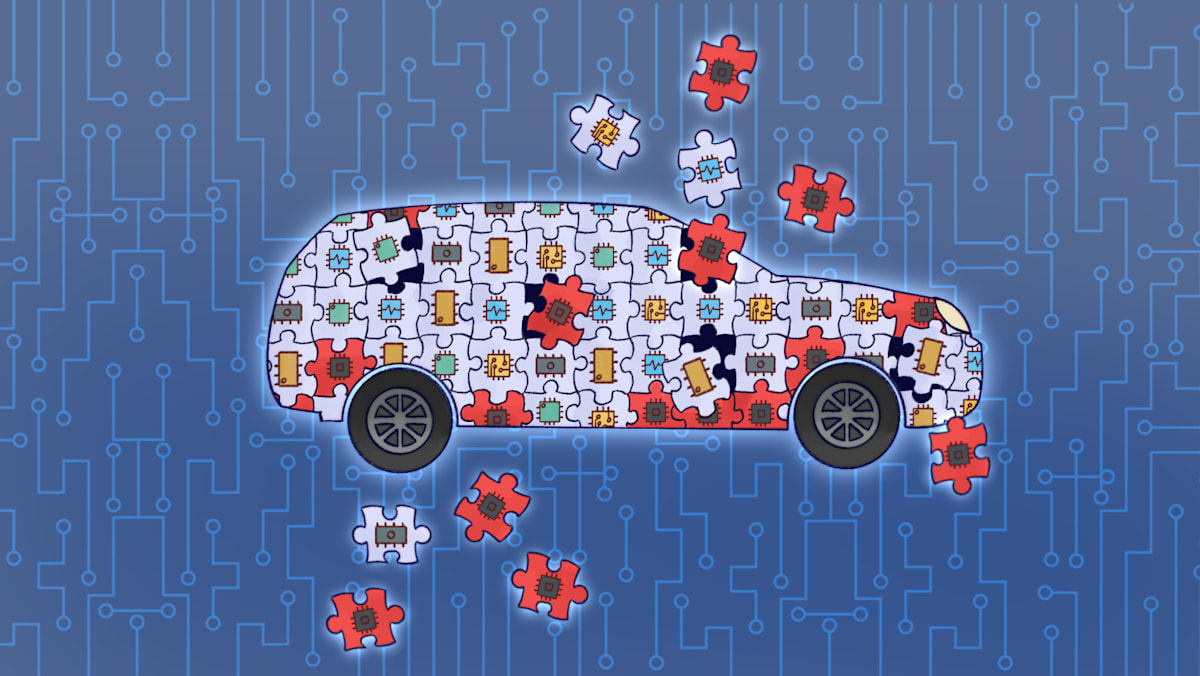
SHENZHEN: Chips are what make today’s cars smart – managing everything from power, braking, steering and the software behind every screen.
Pop open the hood of China’s latest smart vehicles and a growing share of those chips now comes from domestic suppliers, according to officials and industry observers, as the country’s drive to slot more homegrown semiconductors into cars gains traction.
But analysts say progress remains uneven, with adoption concentrated in core control functions rather than advanced computing platforms that power assisted driving and digital cockpit systems.
And while Beijing contends with a simmering rivalry with Washington and other parts of the West, experts told CNA the hurdles to wider adoption are mostly ecosystem-related, not geopolitical.



The push is unfolding alongside broader efforts to localise China’s semiconductor supply chain, including measures encouraging chipmakers to rely more heavily on domestic equipment.
While chips used for core control systems are relatively mature, advanced processors depend on lengthy certification, deep software integration and stable long-term supply – capabilities that domestic players are still building, analysts said.
Those constraints are most acute in high-end computing and software integration, said David Zhang, secretary general of the International Intelligent Vehicle Engineering Association (IIVEA).
“When automakers adopt local chips, they often have to invest far more time and resources in Research and Development (R&D) integration. This is not something that can be solved quickly, as foreign chips benefit from toolchains refined over many years,” he told CNA.
“HISTORIC LEAP”
The global chip crunch during the COVID-19 pandemic exposed how fragile automotive supply chains could be, and the extent to which Chinese carmakers relied on overseas suppliers.
In the aftermath, Chinese automakers and chip firms have spent recent years working to build a more resilient supply chain and strengthen self-reliance.
Japanese media outlet Nikkei Asia reported in May 2024, citing people familiar with the matter, that China’s Ministry of Industry and Information Technology had encouraged leading automakers to raise domestic chip sourcing to around 20 per cent to 25 per cent by the end of 2025. The ministry has not publicly confirmed the guidance.
Latest indications of progress this year have come from high-profile product launches by leading domestic EV makers.
XPeng debuted its in-house Turing AI chip in the G7 SUV in June and later rolled it out in the updated P7 sedan, describing it as one of its most powerful on-vehicle computing platforms to date.
In November, GAC Aion, a major Chinese electric vehicle maker whose cars are widely used in ride-hailing fleets, said its premium Hyper GT model had entered production, calling it China’s first intelligent new-energy vehicle using 100 per cent domestically designed chips.
Source: CNA