BEIJING: China’s economy grew at one of the slowest rates in decades last year, according to official data released Monday (Jan 19), as officials struggle to overcome persistently low consumer spending and a debt crisis in the country’s property sector.
While the 5 per cent expansion was in line with Beijing’s annual target – a low-ball figure analysts have likened to a political comfort blanket – observers warned it was driven largely by exports and masked weak sentiment on the ground.
Analysts had forecast 4.9 per cent growth, and the economy grew 5.0 per cent in 2024.
Gross domestic product (GDP) in the fourth quarter slowed to a three-year low as domestic demand softened, and while the full-year pace hit Beijing’s target, trade tensions and structural imbalances pose significant risks to the outlook.


China’s economy grew 4.5 per cent in the fourth quarter from a year earlier, data from NBS showed on Monday, slowing from the third-quarter’s 4.8 per cent pace as consumption and investment dragged.
Analysts polled by Reuters had forecast fourth quarter GDP would expand 4.4 per cent from a year earlier.
The world’s second-largest economy showed remarkable resilience in 2025, helped by smaller-than-expected US tariff hikes and exporters’ efforts to diversify away from the United States, allowing policymakers to keep stimulus to modest levels. But demand at home further weakened since late last year as confidence has remained low amid a prolonged property crisis.
“The impact of changes in the external environment has deepened,” said National Bureau of Statistics (NBS) official Kang Yi.
China’s mighty manufacturing machine provided the much-needed economic lift. The nation last week reported a record trade surplus of nearly US$1.2 trillion in 2025, driven by booming exports to non-US markets as producers diversified to offset tariff pressure from Washington.
Last year, China’s inroads into global markets went further than ever before, leading to a record trade surplus of US$1.2 trillion, 20 per cent higher than in 2024 and equivalent to the size of a top 20 economy, such as Saudi Arabia.
While shipments to the US fell by a fifth, they rose sharply to the rest of the world as producers conquered new markets to insulate themselves from US President Donald Trump’s aggressive tariff policies to counter Beijing’s challenge to American hegemony.
“We’re doing well in Europe and Latin America and we don’t need that market,” said Dave Fong, who co-owns three factories in southern China making everything from school bags to climbing gear and industrial machinery. About 15 per cent of his orders used to come from the US, but that’s now down to a trickle.
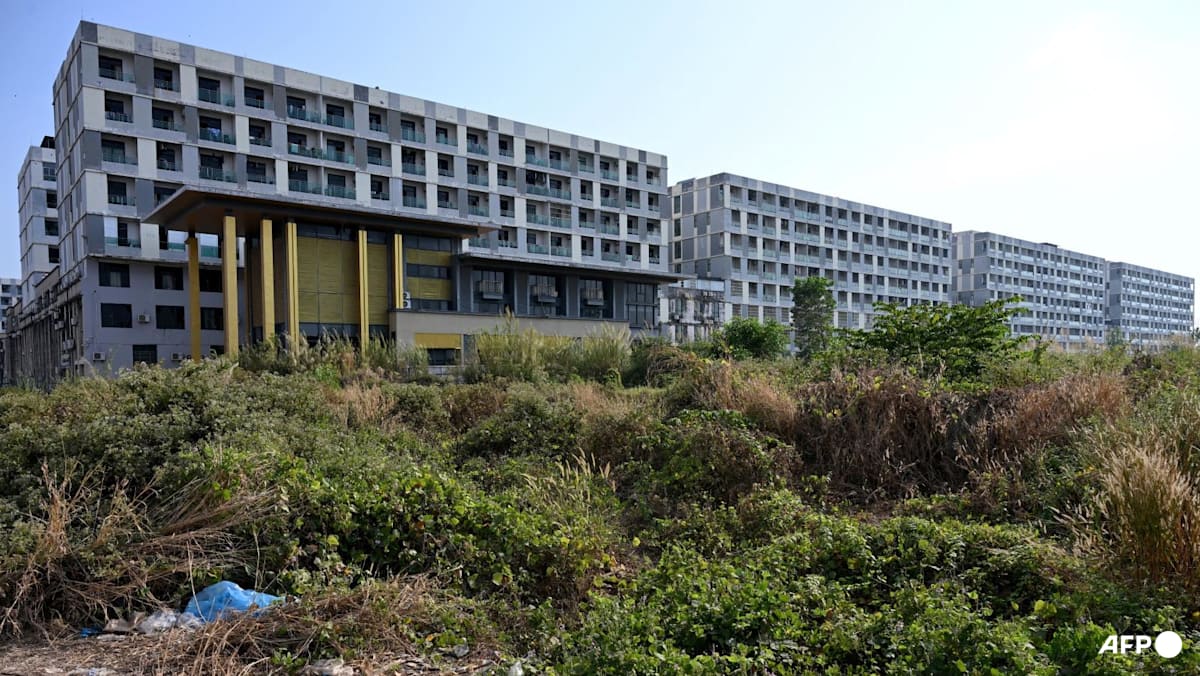
But the reliance on external demand underscores vulnerabilities in China’s economy, which is grappling with weak domestic spending amid a prolonged property slump and persistent deflationary strains.
On a quarterly basis, GDP grew 1.2 per cent in October to December, compared with a forecast 1.0 per cent increase and a 1.1 per cent gain in July-September.
Policies and measures to boost consumption would continue into 2026, Kang noted, including a trade-in scheme for old household appliances.
“The gradual implementation of policies to clear unreasonable restrictions in the consumption sector will support consumption growth,” he said.
Source: CNA