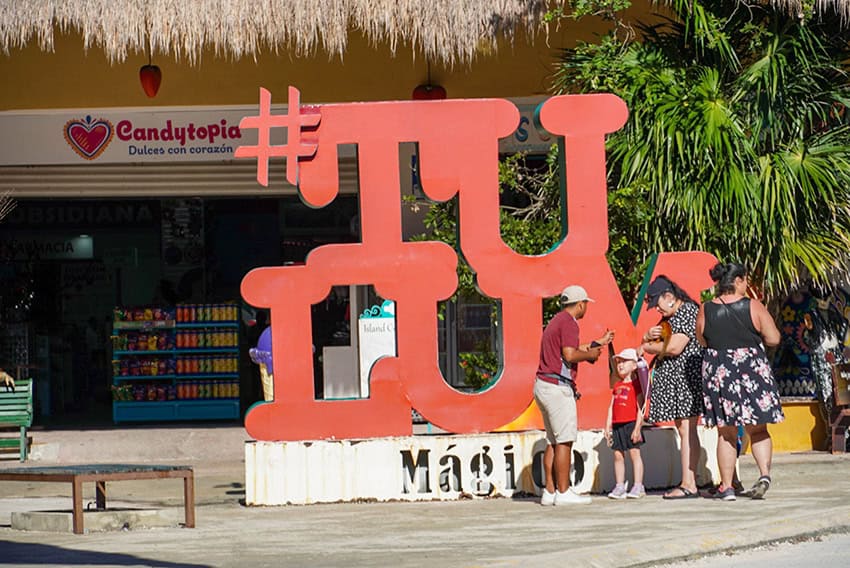
I frequently find myself writing about Tulum. Here are a few of my recent articles:
I think it makes a fascinating case study to observe and learn from on so many levels. In many ways, Tulum provides us insights into the perils and pitfalls of herd mentality and group thinking that is so prevalent on social media today. Allow me to explain.
I have been going every year to Tulum now for 25 years. That much consistency, over that long of a time period, makes me sound old — but also makes me a pretty good authority on the place. Over these 25 years, I have witnessed multiple distinct phases that I will simplify as follows:
- Phase I – Very few people knew about Tulum other than hippies and the locals that lived there.
- Phase II – In addition to hippies, European backpackers and yogis started going.
- Phase III – As more Europeans went, U.S. and Mexican hipsters started going.
- Phase IV – As more U.S. and Mexican hipsters went, lots of tech bros, models and hipsters worldwide started going (peak Tuluminati).
- Phase V – Lots more not-so-hip Americans and Mexicans started going.
- Phase VI – Tech bros, models and hipsters stopped going.
- Phase VII – Many Americans and Mexicans stopped going.
And so here we are, now in the still-being-defined Phase VIII, in which the vast majority of those that at one point hyped up Tulum as the “it place” are now no longer going there and many others are intensely criticizing it.

What’s striking to me is how predictable this pattern has become — I’ve seen it with San Miguel de Allende, Puerto Escondido and now Tulum. The algorithm-driven narrative always follows the same arc: discovery, hype, oversaturation, backlash. Each phase being driven not by on-the-ground reality, but by whatever generated the most engagement — views and clicks.
So now what? Where does Tulum go from here? Last week I spent a week there to check firsthand, get my own sense for where things are going, and explore the trustworthiness of the “Tulum now sucks” narrative that has become so prevalent on social media. I just couldn’t take another person confidently telling me that they had heard Tulum is now ruined. Rather than relying on viral TikToks, Instagram reels or confidently wrong tourists, I wanted to see first hand what the economic indicators, infrastructure development and actual resident experiences would tell me.
Here are some of the key observations from my trip:
1. A few days before I got there, a massive fancy new La Comer grocery store opened in town. This is in addition to the huge new Soriana Hiper and Bodega Aurrera supermarkets that opened last year. Just two years ago, the Chedraui store in town nearly doubled in size and became a Super-Chedraui. Next year, both a Walmart and a new shopping mall will open in town. This is all of course in addition to the recently opened Tulum International Airport and Maya Train which has a stop both in town and at the airport.
2. Tulum is most definitely hurting from a significant decline in the number of tourists, especially during the summer and fall months of this year. Many businesses have shut down and closed, significant numbers of people have lost their jobs and countless new construction projects have been halted. That being said, there were still signs of life everywhere with many new construction projects still continuing.
3. Tourist friendly policies are returning. The AMLO administration created Jaguar National Park, which for a short period of time was charging an eye-popping 500 pesos per person entrance fee, has changed its policies. The park is now free to walk in (driving in costs 60 pesos per person if you are Mexican or a resident). The staff treats you well and smiles when you arrive. Parking within the park is free. The restaurants and beach clubs in the park don’t charge a minimum consumption fee (and proudly tell you so).
Tourism Ministry reverses Tulum mayor’s restrictions, re-opens free beach access
4. Prices are coming back down to earth in many establishments (but not all). The cost of parking is down by half or more in many places. Minimum consumption fees at non-park beach clubs are down significantly. Restaurant prices in some areas are even down. Places seem to actually want your business versus before when entry seemingly was often based on good looks and connections.
5. “Normal human beings” are returning to the beach. Families, retirees and locals of all economic classes are using it again. I saw local boys playing beach soccer, local girls playing beach volleyball, people practicing yoga and local couples making out at sunset — all the kind of normal signs of life that I hadn’t seen in years.
6. The beach vibe is becoming more Mexican again. Gone are the “Zimbabwe tiger prawns,” “Alaskan king crab legs” and “Australian beef” dishes of US $100 or more that I used to see on menus. An increasing number of restaurants are again serving local Mexican food: tacos, guacamole, fresh local fish. Gone are many of the snooty model-like waitresses from around the world — back are smiling, friendly local staff. Gone are many of the techno and dance music DJ scenes, back are places playing Caribbean or Mexican music — both live and streamed.
On our last evening, I was getting gas at a local station and found myself talking to a young woman named Veronica who was filling our tank. She had moved from rural Chiapas to Tulum three years ago. I asked her how she was doing.
“It’s been hard on all of us,” she said. “We are really hoping for a strong January.” I asked her how her family has been coping with the downturn, and she said “we have had enough to eat, so we have all been ok.” She seemed embarrassed, ashamed as she said it. That was hard to see. I couldn’t help thinking about how she had picked up and moved from her quiet hometown with the idea of living a better life in Tulum. Now that she is here, going back is no longer an easy option.
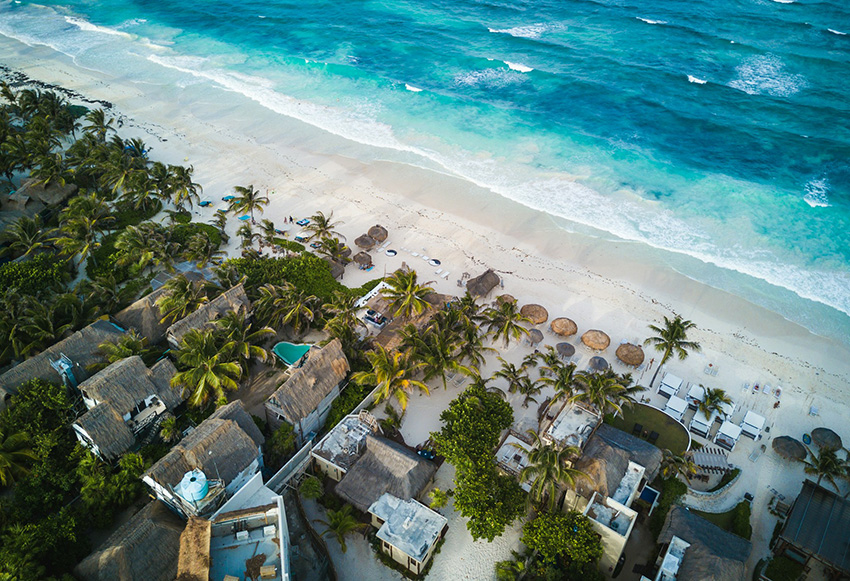
Social media is often far too quick to lift up a place (or a person, or a brand), only to then quickly pivot and move on. And far too often, the goal is to get more views, more clicks and more ad revenue. It’s more important than ever for us to keep this in mind, as there are real people that are impacted by the lifting up and tearing down of places by social media. People like Veronica and her family that followed the dream of a better life to Tulum. People like Veronica who have seen their dream taken away by social media influencers wanting to now divert clicks to the next location that they have “discovered” or by others who benefit from the narrative that “Tulum now sucks.” The social media influencer quickly moves on, but Veronica and her family cannot.
As we left Tulum, I said to my wife, “How ironic is it that when Tulum was amazing, hardly anyone knew about it. Then, when Tulum became too crowded, too expensive and too full of itself, the world raved about how amazing of a place that it had become. Now that Tulum is in many ways returning to its beautiful, magical old self again, it is being called terrible by the next wave of social media influencers looking for clicks.”
Ironic indeed. And a very good reminder to get informed by reliable sources and get out and discover places for yourself versus letting some social media influencer tell you where to go and what to do. As a yoga teacher friend of ours, Mariana, who has lived in the area for over a decade said to us with a smile on our last morning: “I have no doubt that Tulum is coming back — it is too special of a place not to.”
Travis Bembenek is the CEO of Mexico News Daily and has been living, working or playing in Mexico for nearly 30 years.
Source: Mexico News Daily