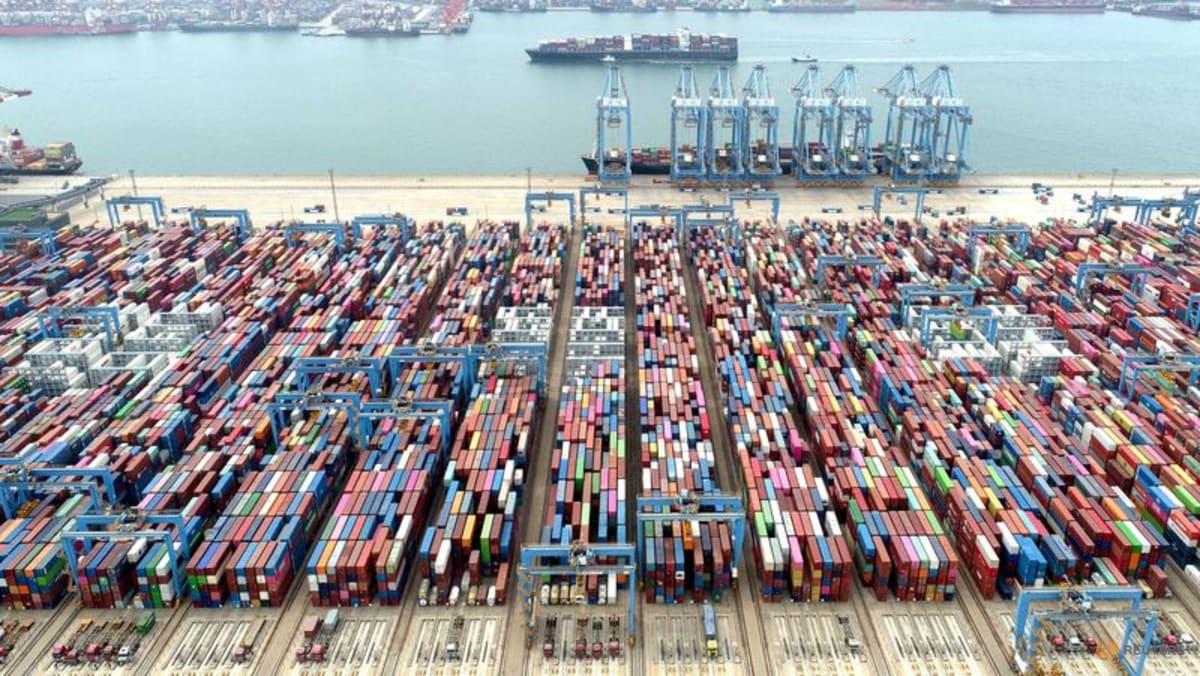
However, the exemption of China-built vessels announced on Tuesday has provided relief to cargo owners and carriers, given Chinese shipbuilders’ dominant share in the global industry.
About 36 per cent of the global fleet consists of China-built vessels, with the share rising to 48 per cent for dry bulk carriers, as well as 30 per cent for container ships and 23 per cent for crude oil tankers currently in trade, Jayendu Krishna, director at Drewry Maritime Research, said on Tuesday.
This gives operators greater flexibility and allows them to adjust vessel deployment, but operational challenges remain as shipowners may not have enough time to revise schedules, Krishna added.
Tankers, especially very large crude carriers, will be hit hardest as most of those in service were built in South Korea or Japan. The port fee scheme is likely to boost short-term demand for China-built vessels, Haitong Futures shipping analyst Lei Yue said on Tuesday.



Meanwhile, US port fees could subject the world’s top 10 carriers to US$3.2 billion in charges by 2026, with China’s state-owned Cosco Group’s fleet the most exposed, according to calculations by shipping data provider Alphaliner.
But Beijing has left room to negotiate, as its rules state that “the scope, rates and effective dates of the special port fees will be dynamically adjusted as needed”.
“If the US cancels the port fee, China’s fee will also be withdrawn. If the US reduces the fee rates, China will follow suit accordingly,” Ren Yanbing, a maritime lawyer and partner at law firm Dentons’ Guangzhou office, said on Tuesday.
This story was first published on SCMP.
Source: CNA