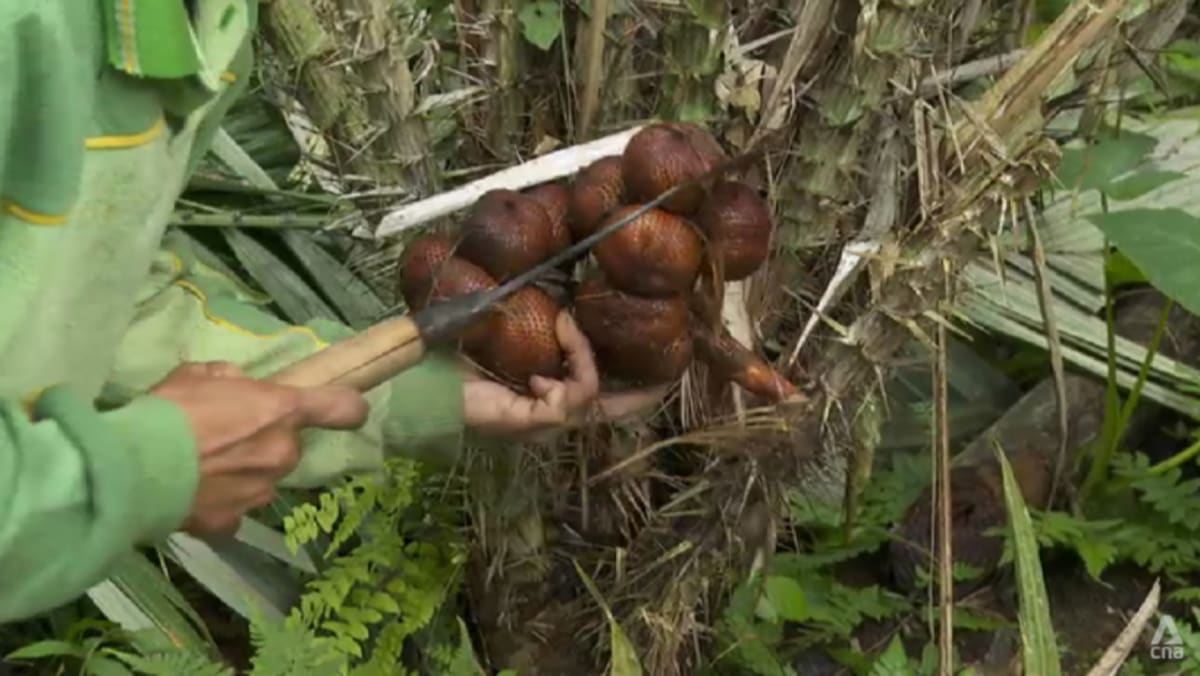
BALI: Tucked away in Karangasem, the driest region on the island of Bali, is a prized agroforestry system cultivating the salak fruit.
Also known as snake fruit, it grows in clusters at the base of the salak palm tree, a species native to Indonesia. The fruit’s moniker is earned by its reddish brown, scaly and slightly spiky skin.
Inside, the edible white pulp is crunchy, tangy, sweet and slightly acidic.
The island’s largest salak orchards cover nearly 1,500ha across the villages of Sibetan and Jungutan. Together, they make up the Sibetan customary village.


Cultivating the fruit requires the support of shade plants and rainwater collection areas. So, the agroforestry system combines other crops in a five-strata system.
The resulting landscape plays an important role in absorbing carbon, reducing run-off and increasing groundwater filtration.
It also serves as a crucial water catchment area for rice fields stretching some 1,000ha in surrounding villages.
The comprehensive system is the first in Indonesia to be recognised on the list of Globally Important Agricultural Heritage Systems by the United Nations’ Food and Agriculture Organization (FAO).
Source: CNA