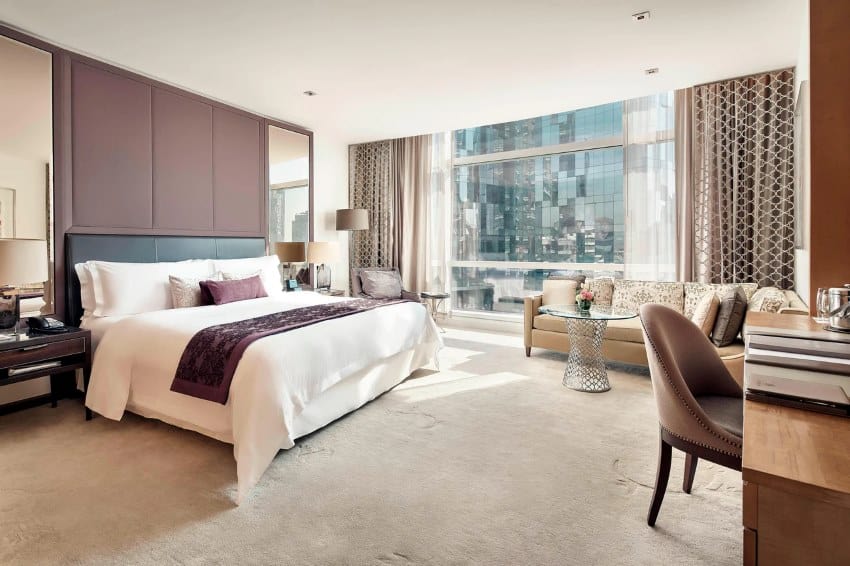
More than 3,000 new hotel rooms will be developed in Mexico City ahead of the 2026 FIFA World Cup, the general director of the Mexico City Mixed Fund for Tourism Promotion Carlos Martínez Velázquez said on Tuesday.
“All luxury hotel brands are looking at Mexico City as a tourist investment hub and are building 3,300 rooms for the FIFA World Cup in 2026,” Martínez said, according to the news site Forbes México.
There are currently 61,500 hotel rooms in Mexico City, meaning that accommodation offerings will need to increase significantly for the arrival of an anticipated 5.5 million visitors during the Cup — scheduled to take place in Mexico, the United States and Canada June 11–July 19, 2026.
Martínez said he is working with the Minister of Planning and Territorial Planning of Mexico City Alejandro Encinas Rodríguez on an infrastructure roundtable to accelerate hotel real estate investment in the city.


A Mexico City mobility plan is also being developed for the Cup and will be presented by the city’s mayor, Clara Brugada, according to Martínez.
“Mexico City is ready to receive tourists since there are enough hotel rooms and digital platforms ready to accommodate all visitors,” he said.
Insufficient capacity
Contrary to Martinez’s optimism — and despite the planned hotel expansions — there are fears of insufficient capacity to accommodate the influx of tourists during the highly popular sporting event. The Mexico City government is therefore assessing potential options on the city’s outskirts.
The government is looking at neighborhoods such as Tláhuac, Xochimilco, Magdalena Contreras and Coyoacán for accommodation possibilities, according to the Director of Special Projects at Mexico City’s Tourism Ministry Hannah de la Madrid.
“I think what’s going to happen is a mosaic of options that we had not even considered… Mexicans are creative, and we have a natural talent for finding the “how to,” de la Madrid told the news site El Universal.
Could Airbnb fill the gap?
Rental sites such as Airbnb are also expected to provide alternative accommodation for tourists during the World Cup.
However, in October, the government modified Mexico City’s Tourism Law to tackle rising long-term rental prices in the city. The new rules establish a 180-day-per-year limit on online vacation rentals, which in the city’s demanding housing market had become de facto long-term rentals for those who could afford the prices — i.e. the wealthy and those with favorable foreign currency exchanges to the peso — and had taken many would-be rental homes and apartments off the market.
Airbnb has filed an injunction against the changes, to which the government has not yet responded.
The law is expected to deter people from putting their properties on short-term rental sites if it goes into effect.
“Temporary accommodation is a natural complement to these large events, and without it, it will be difficult to serve all these visitors who will come to Mexico City,” Airbnb’s Director of Public Affairs Jorge Balderrama told the news site El Financiero, adding that Mexico City does not currently have the necessary hotel infrastructure to accommodate World Cup visitors.
While the government must address rising rental prices, it must also address the influx of visitors, Martínez said.
“They are within their right as a city we must protect, above all. All these platforms generate an increase in the use of municipal services. What is being worked on is to review that the regulation is optimal for the city. We do not want to generate ‘tourismophobia,’” Martínez told El Financiero.
With reports from Forbes México, El Universal and El Financiero
Source: Mexico News Daily