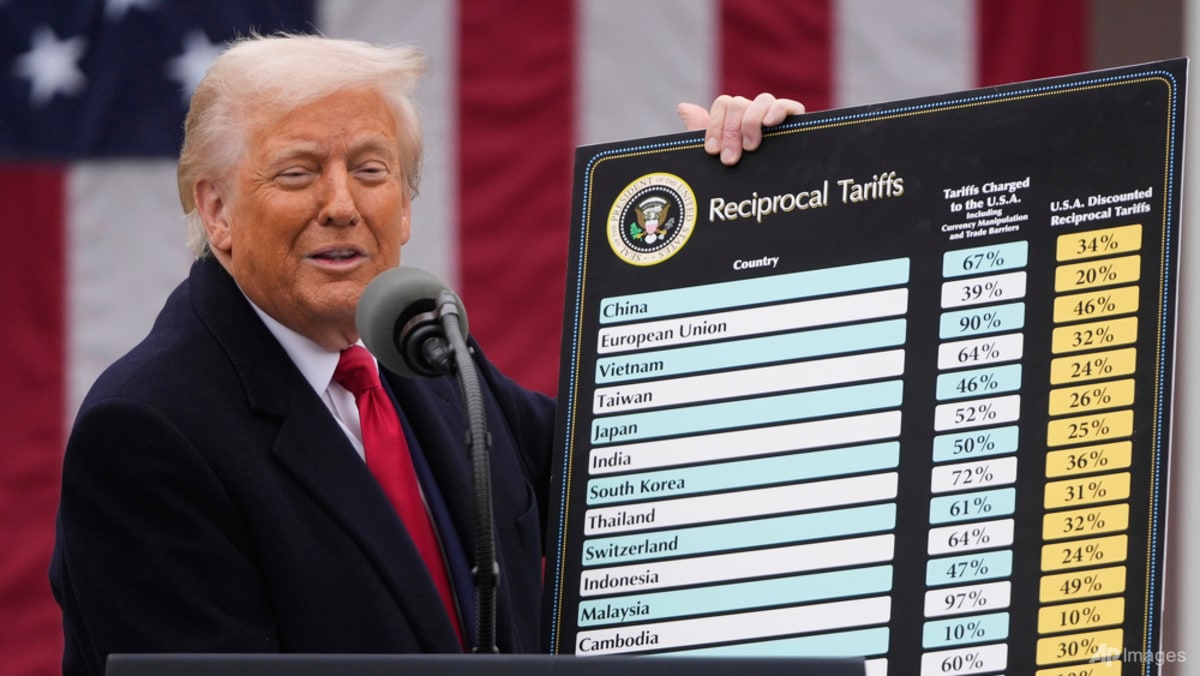
As unpalatable as the Trump approach has been, Southeast Asian countries have made some wise strategic choices. These include negotiating bilaterally rather than acting as a bloc, and resisting political pressures at home.
The message Southeast Asian countries have sent is clear: The US matters to us and we are not a threat. We understand transactional relations and we know how to cut a deal. This has helped build political goodwill in Washington.
For now, the multi-pronged approach of negotiating for relief, and promising to buy more from America and to lower trade barriers has borne fruit. Not only has Mr Trump cut tariffs on most Southeast Asian countries since Liberation Day, he has kept tariffs on semiconductors and electronics off the table – at least for now. The respite gives the region comparative advantage over other countries like China and India and caps downside risks.
According to Maybank Research, Southeast Asia can benefit because American companies could potentially buy from the region rather than elsewhere, especially from Vietnam, Singapore, Thailand, Indonesia and Malaysia. Tariff exemptions for semiconductors are particularly important for Vietnam, Malaysia, Singapore and the Philippines where the sector accounts for a significant proportion of total exports to the US.


Despite dire predictions after the Liberation Day announcement, the region’s exports to the US have risen just as China’s have shrunk. That trend may change if the US and China conclude a deal and if US economic growth slows, but for now, comparative advantage has worked for Southeast Asia.
To protect their workers and industries, Southeast Asian countries have complemented international economic diplomacy with fiscal support. Singapore, Malaysia, Indonesia, Thailand and Vietnam have announced measures ranging from cash support to tax relief, cheaper credit and grants to buffer against potential damage. These will cost local taxpayers but may reap longer-term benefits.
Hence, Association of Southeast Asian Nations (ASEAN) countries are projected to grow by 4.6 per cent in 2025, according to research organisation AMRO. In August, Singapore updated its 2025 GDP growth forecast to 1.5 to 2.5 per cent, up from 0 to 2 per cent.
Source: CNA