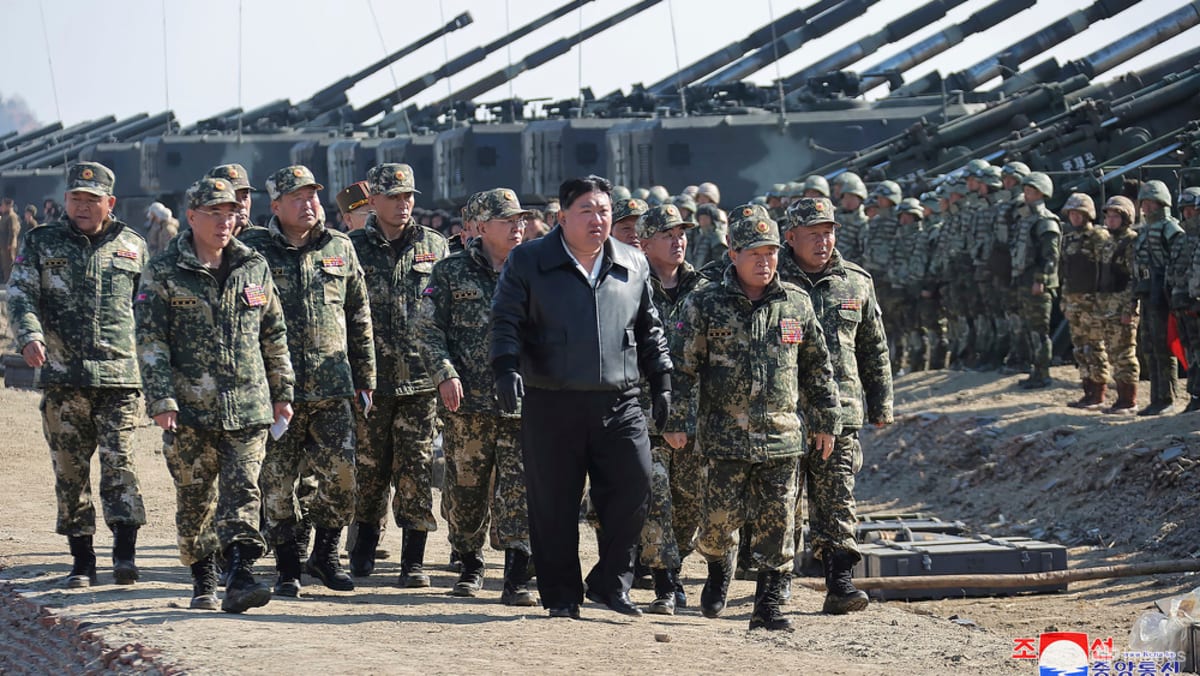
REVIVAL OF NORTH KOREA’S DEFENCE INDUSTRY
North Korea acknowledged the dire state of its conventional arsenal. In 2017, it laid out five modernisation priorities for its force and declared that the push for a nuclear missile deterrent was “complete”.
However, a lack of expertise and capital meant modernisation was not prioritised over nuclear forces. North Korea’s conventional arsenal still relies on decades-old Cold War era weaponry that is no match for that of the South.
But North Korea’s fortunes changed when it inked an alliance treaty with Russia in June 2024. Thanks to an influx of Russian capital, estimated at between US$5.6 billion and US$9.8 billion, North Korea’s defence industry is being revived to meet Russia’s needs for its war against Ukraine.
North Korean arms factories are producing a diverse array of weapons systems for export, including artillery shells, self-propelled guns, short-range ballistic missiles and rocket launchers. Pyongyang keeps some of these systems for domestic use too.
Russian expertise and the experiences of North Korean soldiers fighting in Kursk are guiding North Korea’s conventional modernisation. North Korean troops familiarised themselves with the use of drones in modern combat and encouraged the government to accelerate a new AI drone programme and new air defence platforms.
First-hand experience with North Korean artillery shells on the battlefield also prompted development of a new type of shell. Russian mechanised assaults against Ukraine demonstrated the importance of electronic warfare and additional armour for modern tanks, which North Korea’s fleet of T-54/55 and T-62 tanks lack. North Korea introduced new tanks with modern electronic warfare equipment in its military parade in October.
Source: CNA