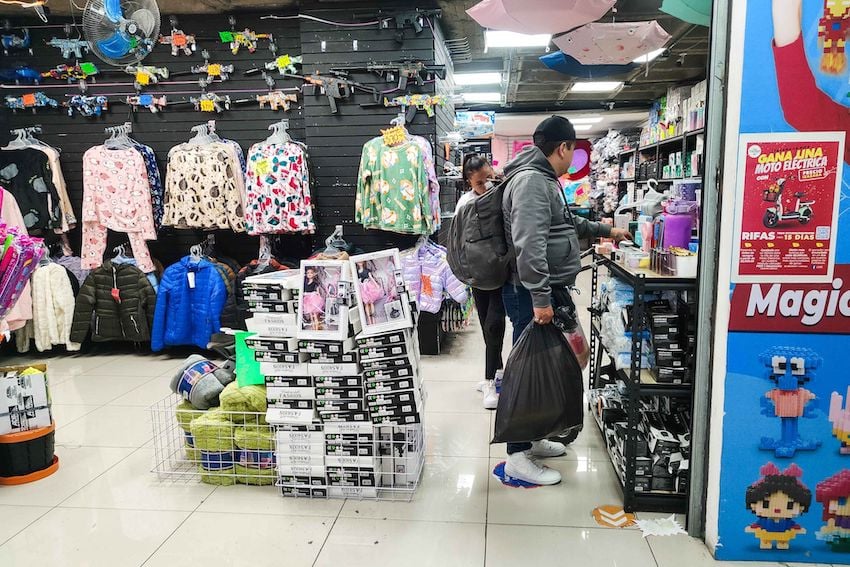
Mexico’s lower house of Congress approved on Wednesday a bill that seeks to impose new or higher tariffs on imports from China and other countries with which Mexico doesn’t have free trade agreements.
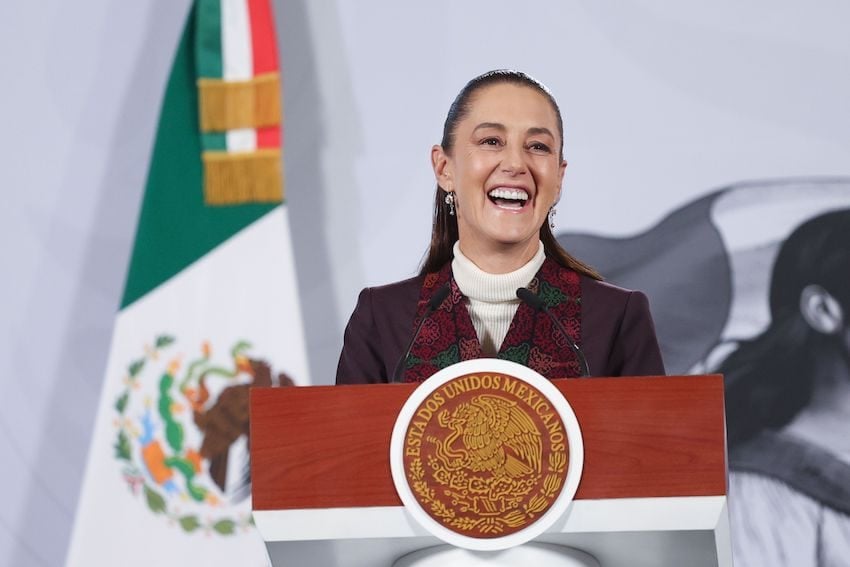
Submitted to Congress by President Claudia Sheinbaum in September, the bill was significantly modified — i.e., softened — by a lower house committee before the full Chamber of Deputies voted on the initiative early Wednesday.
#ALMOMENTO | El Pleno aprueba el dictamen por el que se reforman diversas fracciones arancelarias de la tarifa de la Ley de los Impuestos Generales de Importación y de Exportación. pic.twitter.com/RCVGtwi8UB
— H. Cámara de Diputados (@Mx_Diputados) December 10, 2025


A total of 281 deputies from the Morena and Green parties voted in favor of the proposed reform to the Law on General Import and Export Taxes, while 24 Citizens Movement (MC) lawmakers opposed the bill. There were 149 abstentions, with deputies from the National Action Party (PAN), the Institutional Revolutionary Party (PRI) and the Labor Party (PT) declining to support or oppose the bill. The PT, an ally of the ruling Morena party, didn’t back the bill as a show of solidarity with China, of which it is a strong supporter.
The legislation also passed the Chamber of Deputies en lo particular — i.e., after the consideration of individual articles of the bill. It will now be considered by the Senate, which is also dominated by Morena.
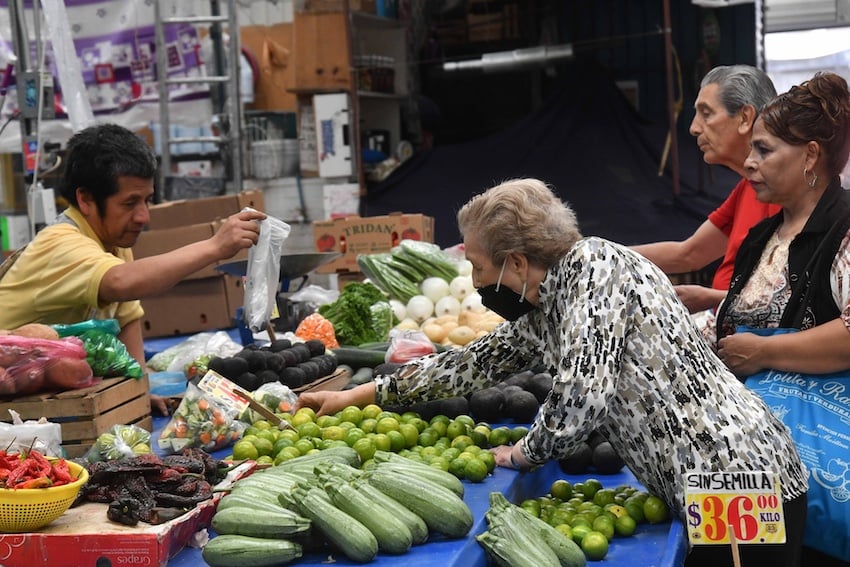
The bill proposes modifications to 1,463 tariff categories (or products) covering more than a dozen sectors, including auto parts, light vehicles, plastic, toys, textiles, furniture, footwear, clothing, aluminum and glass. The proposed tariffs range from 5% to 50%. Tariffs will be imposed on more than 300 products for the first time if the Senate approves the bill passed by the lower house.
The Mexican government is seeking to provide greater protection for Mexican industry — which includes sectors that struggle to compete with cheap imports — and increase domestic output.
“We believe that supporting [Mexican] industry is to create jobs,” said Deputy Ricardo Monreal, Morena’s leader in the Chamber of Deputies.
The government is also aiming to reduce reliance on imports from Asian countries, especially China, a country with which Mexico has a significant trade imbalance.
Among the other countries that will be affected by the proposed higher tariffs are India, South Korea, Thailand, Indonesia, Brazil, South Africa and the United Arab Emirates. The government estimated earlier this year that the proposed tariffs would generate additional revenue of 70 billion pesos (US $3.8 billion) per year.
Morena party lawmakers asserted that the higher tariffs won’t cause inflation to increase. Morena Deputy Claudia Selene Ávila said that the proposed tariffs only seek to protect goods that Mexican industry has the capacity to produce. She also said they comply with World Trade Organization rules.
“We’re looking after the internal market. Protectionism is necessary and is a temporary issue, subject to constant revision,” Ávila said.
“Trade is not being closed down, but a level playing field is being created in order to compete under symmetrical conditions,” she said.
Imposing higher tariffs on imports from China will likely go some way to appeasing the governments of the U.S. and Canada ahead of the 2026 review of the USMCA free trade pact. Both countries have critically questioned Mexico’s economic ties with the world’s second-largest economy.
China tariffs could backfire on Mexican industry, chamber warns
United States President Donald Trump has even accused Mexico of being a transshipment hub for Chinese goods — i.e., a tariff-free or low-tariff backdoor to the United States market. The Mexican government denies the allegation and has stressed that its proposed tariffs weren’t designed to specifically target China.
Horacio Saavedra, a Mexican diplomat, told the news outlet La Silla Rota that the proposal to increase tariffs on China and other countries with which Mexico doesn’t have free trade agreements represents “an alignment with U.S. trade policy” and will allow Mexico to be better positioned for next year’s USMCA review.
“China concentrates almost 70% of the trade deficit Mexico has with nations with which it doesn’t have trade agreements,” he said.
“The [tariff] measure responds to the shared concern of Mexico and the United States about practices that have affected national industries, especially textiles, clothing and certain manufacturing sectors,” Saavedra said.
Modifications to the bill
Sheinbaum’s tariff bill was approved by the Chamber of Deputies’ Economy, Trade and Competitiveness Committee on Monday.
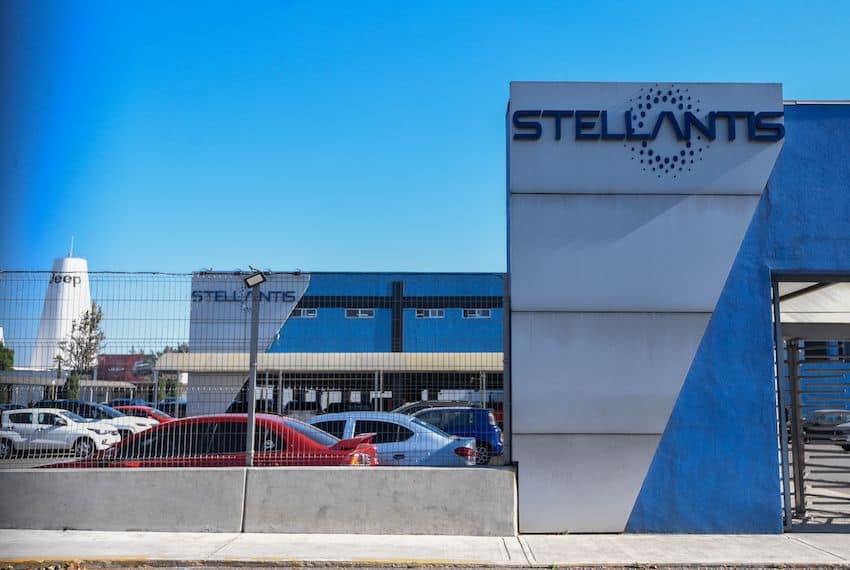
The president of the committee, PAN Deputy Miguel Ángel Salim Alle, said that around 60% of the bill was modified before its approval. Those changes softened the proposal originally put forth by Sheinbaum. For example, the maximum tariff on cars imported from China and certain other Asian countries won’t be 50%, as originally planned, but rather 35%.
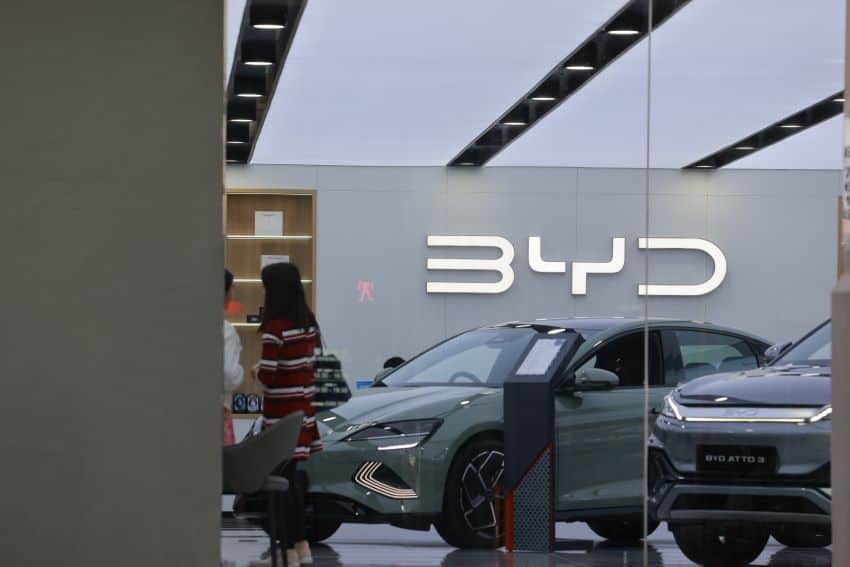
Chinese cars, including electric vehicles made by automakers such as BYD, have become very popular in Mexico in recent years. They currently face a 20% tariff when entering the country.
The Mexican Auto Industry Association (AMIA) expressed support for the plan to increase the tariff on imported cars from China and certain other Asian countries, even though Chinese automakers may have the capacity to absorb and offset the higher duty their vehicles will be subject to.
“We completely agree [with the proposed increase],” said AMIA president Rogelio Garza.
“… For all those who invest in Mexico, produce in Mexico and create jobs in Mexico, this is very good news,” he said.
The lower house’s Economy, Trade and Competitiveness Committee also voted in favor of tariffs lower than those proposed by Sheinbaum for many other products. Some further modifications to the bill were made on the floor of the Chamber of Deputies, including one that would allow the Economy Ministry to intervene and modify the proposed tariffs if necessary in order to “guarantee the supply of inputs in Mexico in competitive conditions.”
Lawmakers said that additional modifications to the Law on General Import and Export Taxes could be made down the track if necessary.
Salim said that the committee he leads took into account feedback on the original bill from business groups and other representatives of strategic sectors. The Chinese government came out strongly against the tariff plan submitted by Sheinbaum and urged Mexico to reconsider it.
Concerns and criticism
Reginaldo Sandoval, the PT’s leader in the lower house, said that the legislation wouldn’t support the diversification of Mexico’s trade relationships — a goal of Sheinbaum — but rather lead to greater dependence on the United States for imported goods.
He also said that the higher tariffs could cause inflationary pressures in the short term and wouldn’t necessarily lead to a resurgence of Mexican industry, as such a development depends on a variety of factors, including investment and the availability of labor.
Adrián González Neveda, another PT deputy, was critical of the trade treatment Mexico has received from the United States, which this year has imposed tariffs on a range of Mexican goods. He said his party supports closer trade ties with the BRICS bloc, which includes Brazil, Russia, India, China and South Africa (as well as six other countries).
“We don’t agree with increasing tariffs on China, Brazil, Taiwan, South Korea. At this time, we don’t think it’s the message we should send to the world and these possible partners,” González said.
PRI Deputy Erubiel Alonso said that higher tariffs will increase costs for everyday goods and hurt small and medium-sized businesses.
“How many producers, teachers, bureaucrats, taxi drivers, Uber and Didi drivers don’t have a light car and are seeking a loan [to get one]? Well, they now have the news that the vehicle will cost 35% more,” he said, referring to the proposed tariff on cars from countries such as China, South Korea and India.
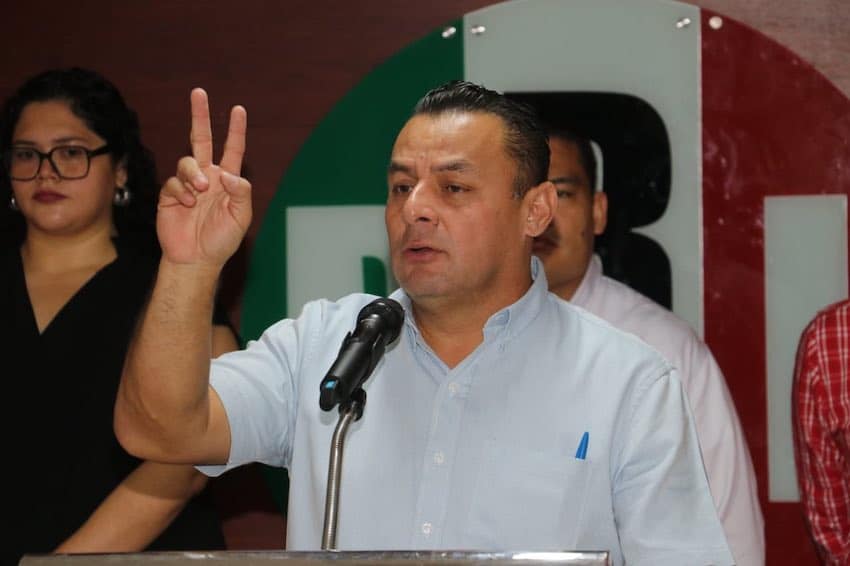
PAN Deputy Marcelo Torres Cofiño pointed out that Mexico’s export industry — whose revenue exceeded US $600 billion in 2024 — is highly dependent on imported inputs, including from China and other Asian countries.
“Forty per cent of exports depend on imported inputs. With these high tariffs, you’re raising — without serious sectorial analysis — the price of auto parts, machinery, chemicals, textiles, electronics, steel and metal that are essential for the value chains in the north of the country,” he said in remarks directed at Morena lawmakers.
“Where’s your impact analysis for [small and medium businesses]? Where is the breakdown [on the impact] by region, by sector, by the size of the company? It doesn’t exist,” Torres said.
With reports from La Jornada, Reforma, Reuters, El Economista and Expansión
Source: Mexico News Daily