For those of you already wishing to tune me out based on the title alone, please stick with me and let’s look at some facts and figures that will help to connect the dots on my argument.
The foreign-born population of Mexico — and Americans in particular — have been getting a lot of attention lately.
(Please don’t scold me for using the term “American.” I am aware that all people born in the Americas are technically Americans but right or wrong, most people refer to people born in the United States as Americans and I will do the same in this article.)
Some would say the fuse was first lit with foreigners complaining about local music on the beach in Mazatlán or others asking for “salsa que no pica.” Here in San Miguel de Allende, the tension is usually around foreigners complaining about the fireworks and the stress it causes on their dogs. Imagine for a moment a foreign-born population moving into the United States and complaining about how a local long-standing tradition negatively affected their dogs … How well would that go over?
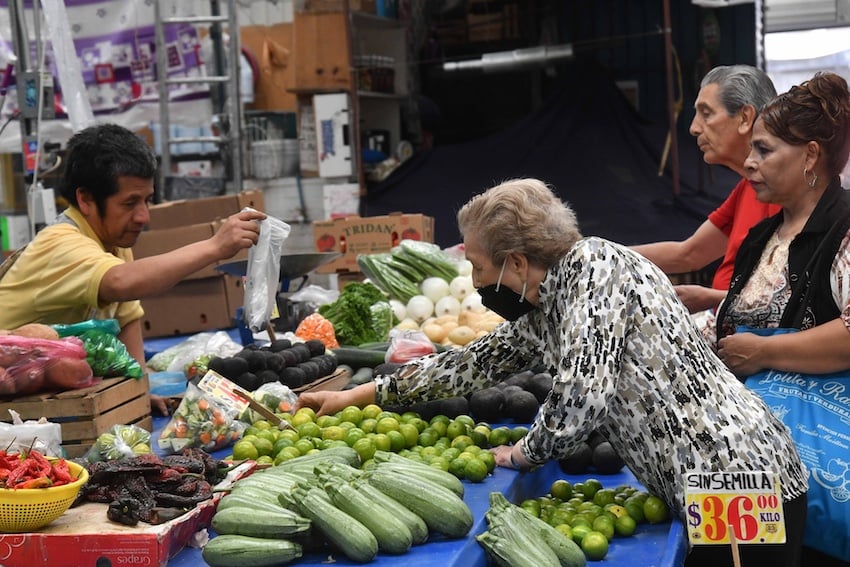

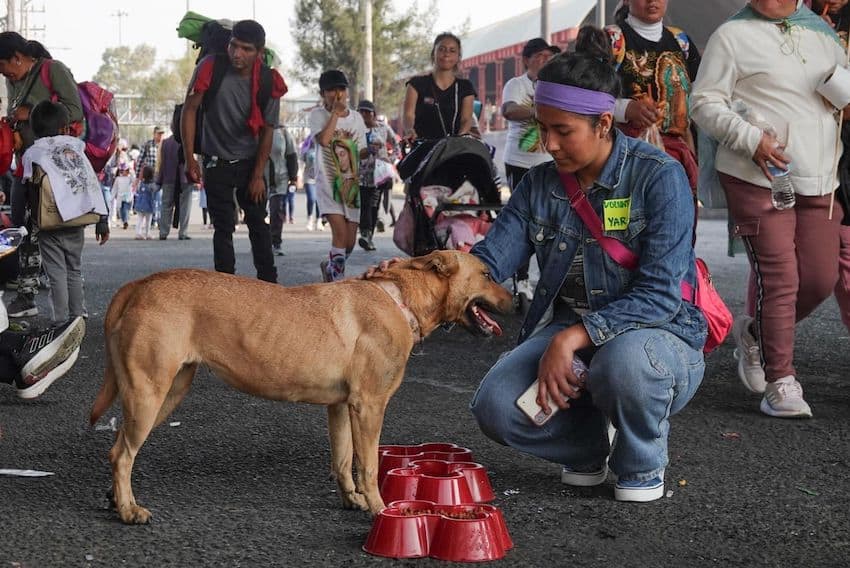
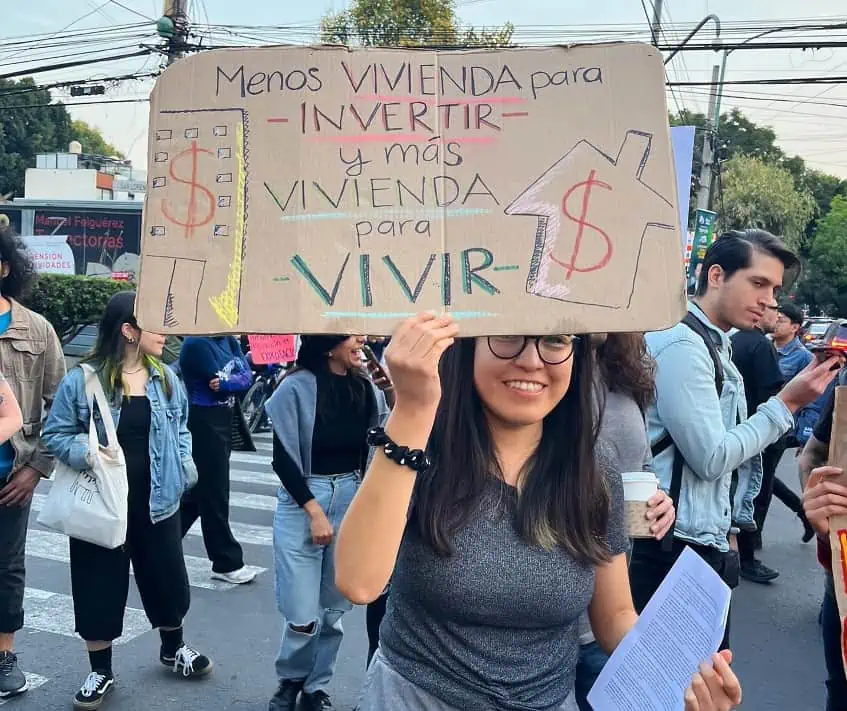
Tensions, of course, have heated up recently with anti-gentrification protests in certain neighborhoods of Mexico City — as well as valid complaints about rapidly rising rents, English-language menus and increasingly bland salsas. But as is often the case in emotionally charged issues, facts and figures tend to be overlooked. So let’s take a minute to review some of them with respect to the foreign population and foreign visitors in Mexico.
Mexico has a population of 132 million people, of which an estimated 1.6 million are American, 400,000 are Canadian, and another several hundred thousand are from Central America, South America, Europe and the rest of the world. Reasonable estimates would be a maximum of 2.5 million foreign-born people in the country — less than 2% of the population. Americans make up around 1.2% of the population in Mexico.
For some perspective, the foreign-born population in the United States is now over 53 million or nearly 16% of the population. People of Mexican origin living in the United States make up almost 12% of the U.S. population. The foreign-born population in Canada is now 8.4 million or nearly 22% of the population. In other words, the foreign-born population in the United States is eight times more than Mexico’s while Canada’s is 11 times more. Other big countries with large economies in Europe also have significant foreign-born populations. To name a few, Germany’s foreign-born population is 21%, the United Kingdom’s is 17%, and in France it’s 14%.
A major influx of foreign-born residents does not come without its problems and challenges. We have seen first hand across the globe how a large inflow of foreigners (especially when it happens quickly) has caused problems with housing availability and costs, the labor market, and at times led to social issues. In many countries, a rightward move in politics has occurred, with anti-immigrant or closed border candidates increasingly winning elections. That being said, most would agree that immigrantion has a net positive affect on a country — due to everything from an influx of labor, an increase in GDP, and an increased richness of culture in everything from food to traditions to music. Imagine for a moment the U.K. without Indian food! 🙂
So let’s look specifically at Americans in Mexico. To begin with, they are spread out across the country. Even San Miguel de Allende, which has been “ground zero” for gringo-gentrification in Mexico for decades, is still less than 10% American. Think about that for a minute: The Mexican city with the highest percentage of Americans and a nearly 100 year history of American residents is still at only 10% … compared to the ENTIRE United States being 12% Mexican. The exact number of Americans living in Mexico City is difficult to estimate, but even if you take the very highest estimates, it is still far below one half of one percent of the city’s population!
But there’s another important aspect to the foreign-born population discussion, beyond the raw numbers: What impacts are the foreigners having? In the case of immigrants in the United States and Canada, most people would agree that they are often coming to work, earn more money and give a better life to their families. Arguments have been made that they are “taking jobs from locals,” but they tend to be quite weak and with little evidence. That being said, immigrants are likely suppressing wages in some areas and certain industries. They are also often putting a strain on everything from housing to schools to medical resources to government services. In other words, they provide a clear economic benefit, but also create some very real and difficult strains on local communities.
In the case of Americans and Canadians in Mexico, the vast majority historically have come to retire. They buy or rent a home and spend their retirement money locally. They are rarely taking the job of a local, and likely not putting a strain on public schools, public housing, government services, or public healthcare. They are certainly contributing to housing prices rising in many areas. They likely don’t pay any payroll or income taxes (as they often aren’t working) but they pay property taxes on their homes and IVA taxes on items that they buy.
I looked into the number of foreign tourists coming into the country as a percentage of total population to see if that might be part of what makes it “feel like” there are more foreigners in Mexico. In 2024, Mexico had nearly 45 million international tourists — 34% of the population. That compares to 72 million international tourists to the U.S., representing 21% of the population. Canada’s 2024 international tourist arrivals were almost 20 million, or 48% of the population. In Spain, which has experienced a backlash in tourism levels, the number of international tourists as a percentage of the total population is a whopping 193%! In the UK it is 61%, France 146% and Italy 116%. Based on this data, Mexico in comparison still receives a relatively low number of international tourists given the size of its population.
A final consideration and very important reality check — Mexico’s economy is not growing. In GDP growth it has underperformed compared to the U.S. for years, and current expectations for this year, 2026 and even 2027 are for flat growth at best. With tariff threats on Mexican-made goods and a U.S. push for reshoring of manufacturing in the U.S. (versus in Mexico), growth might even be negative for years to come.
In the wake of Trump’s tariff chaos, Mexico’s economy needs a rethink: A perspective from our CEO, Part 1
In a previous article, I argued that Mexico’s economy needs a rethink. I think a big part of that rethink needs to focus on how to attract significantly more foreigners (and yes, Americans) to the country to vacation, live, work and invest. A focused plan to attract two times more tourists and five times more foreign residents would have a hugely positive impact on Mexico in terms of investment and economic growth. This influx of foreigners most certainly would not come without its share of headaches, but an economy that has a large young population and no economic growth will have other significant issues. For those of you that disagree with my thinking here, what would you suggest to get the economy going again and improve living standards for many?
Mexico City based MND writer María Meléndez wrote the following in a recent article on gentrification in her neighborhoods: “I have seen how dedicated many foreigners are in their efforts to learn Spanish, integrate into our communities, show respect, and gain a better understanding of this country.”
Another side of the story: A Mexican perspective on gentrification
I think that is such an important point. As the foreign-born population coming to Mexico to live, work and vacation likely continues to grow, it will become more important than ever for them to take María’s comments seriously. For sure there will be issues — cost of living increases, being offered bland salsa options in restaurants, increasingly being asked if we have any allergy restrictions, and too many people (including myself) wearing shorts in the cities. That being said, I have no doubt that the net impact of a lot more Americans (and foreigners in general) in Mexico would be a positive one.
You can be assured that Mexico News Daily will do our part in helping these new arrivals better understand and respect the country and its wonderful people.
Travis Bembenek is the CEO of Mexico News Daily and has been living, working or playing in Mexico for nearly 30 years.
Source: Mexico News Daily