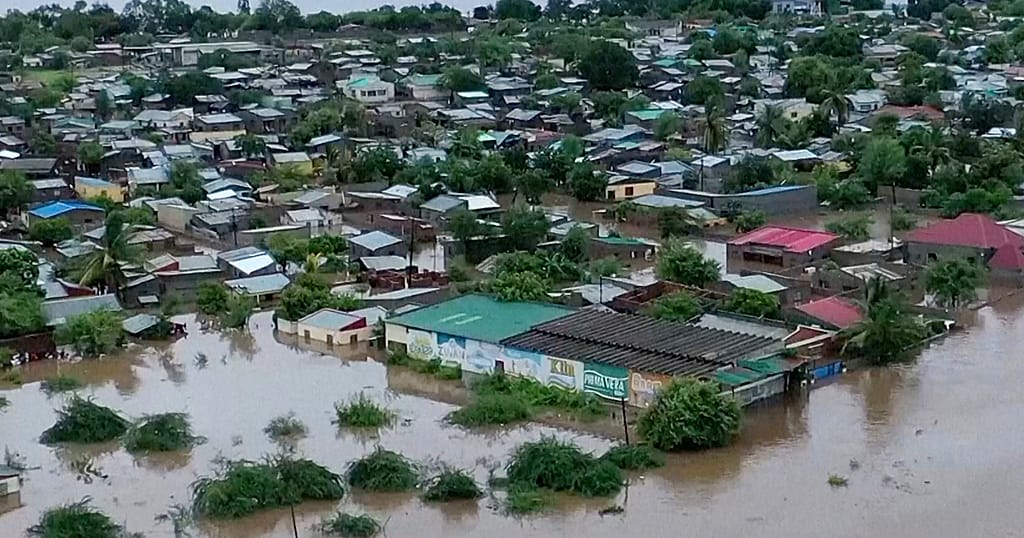
At least eight people have died in Mozambique since 21 December due to the heavy rainfall, according to the National Institute for Disaster Management (INGD).
The Southern African country has endured weeks of heavy rain, with residents of low-lying areas near the capital, Maputo, urged on Friday to move to higher ground.
More than 230,000 people have been affected by the flooding, the UN’s migration agency says. “We are rescuing people and distributing food aid,” Mozambican President Daniel Chapo said Friday, adding that the situation is still being assessed.
In the Boane district, 30 km west of Maputo, resident Lucas Carnosse told AFP he walked to work “despite the very high water level” after waiting more than three hours for a special truck service. That service is due to be suspended, said Valentim Mateteo, who supports emergency teams on the ground: “The water is very deep. The truck cannot pass.”
Some women decided to cross using makeshift boats: a 10‑minute journey costing nearly three euros – a large sum for vegetable sellers from Matola, a twin city of Maputo, who had come to buy supplies. “It was the first and last time. I was very scared. The return trip was extremely difficult, and the current is very strong,” said one of them, Sonia Andre.
Local authorities have struggled to meet growing needs for transport and evacuations. Many households remain isolated in high‑risk areas with no safe way to leave, AFP observed.
Boane district is already cut off by road, and water levels continue to rise at the nearby Pequenos Libombos dam. District administrator Lázaro Bambamba acknowledged the severity of the crisis: “The situation in Boane is difficult. Land communications have been cut.”
Authorities say schools have been identified to shelter displaced families and are urging residents to leave flood‑prone zones.
South Africa deaths
South African authorities on Friday found two more bodies after deadly floods destroyed homes, roads and bridges, and blocked access to the famous Kruger National Park for a second day. Parts of Mozambique are also underwater.
Heavy rains have hit northeastern South Africa since late last year, killing at least 30 people in the two affected provinces. The South African Weather Service kept parts of the region on maximum alert Friday, warning of “more torrential rains causing widespread flooding.”
The two bodies were discovered about 300 km north of Johannesburg, bringing the death toll in Limpopo province alone to 11 since December, provincial premier Phophi Ramathuba told reporters. Neighboring Mpumalanga has recorded 19 deaths since severe downpours began in November.
“The damage to our homes, our infrastructure and, tragically, the loss of human life is immeasurable,” Ramathuba said, adding that water and electricity infrastructure had been badly hit.
Kruger National Park has been closed to visitors since Thursday, with tourists and staff airlifted out as access roads are flooded. At least two camps have been shut and evacuated, said SANParks spokesperson JP Louw. Dramatic SANParks footage shows vast sections of the reserve submerged under fast-moving muddy water, with only trees and the tops of buildings still visible.
Source: Africanews