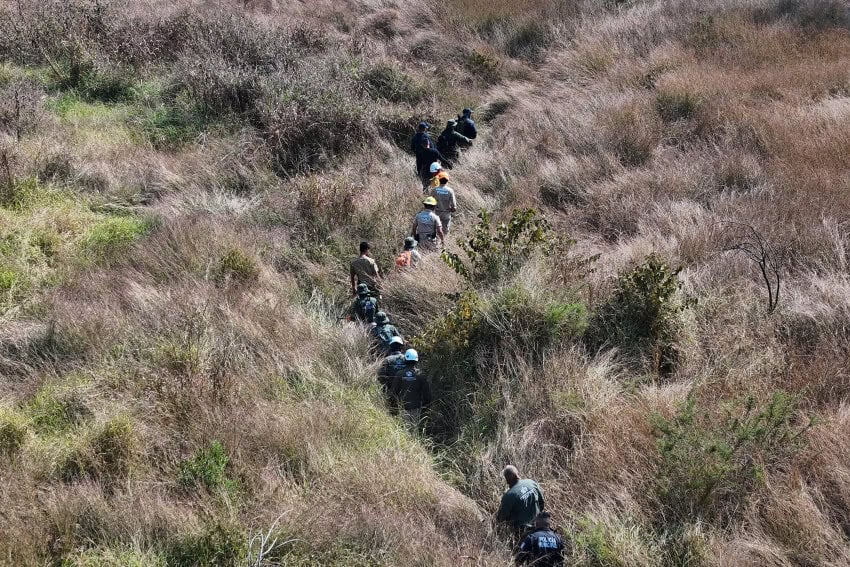
Mexico’s disappearance crisis is so vast, so scattered and so complex that traditional investigative tools have repeatedly failed to keep pace. For years, the most reliable searchers have not been state institutions but the families themselves — the madres buscadoras who learned to read the landscape through grief-sharpened intuition: disturbed soil, insects that shouldn’t be there, a patch of unusually green vegetation.
Now, in Jalisco, those grassroots observations are being transformed into an emerging forensic science — one that treats nature itself as a map of clandestine burial patterns.
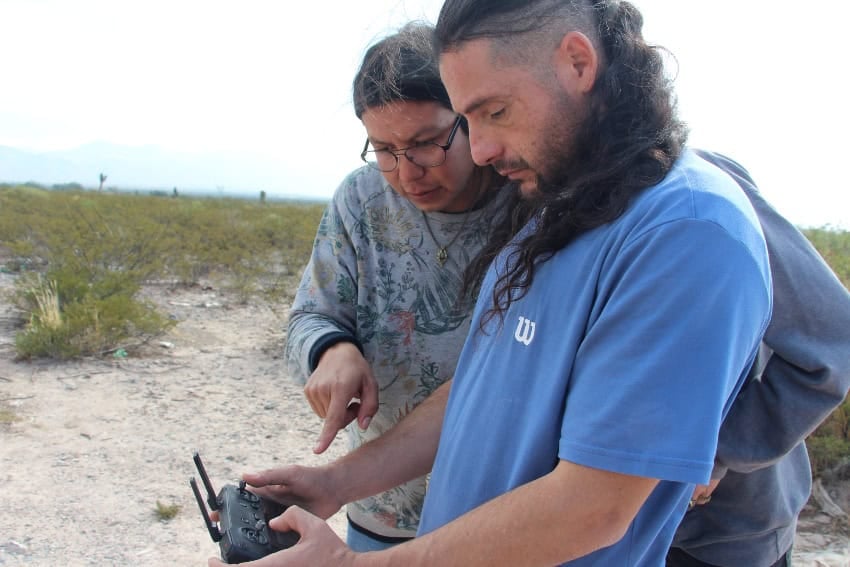
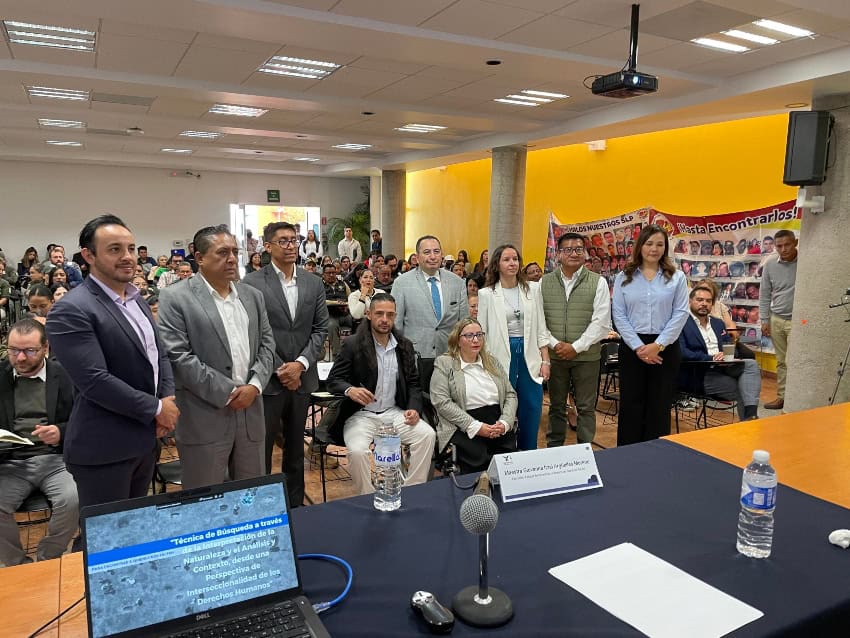
Last week, that work was the focus of a technical conference at the State Supreme Court of San Luis Potosí, where more than 100 officials, human rights advocates and relatives of the disappeared gathered to hear Dr. Tunuari Roberto Chávez González, a biologist and Director of the Area of Analysis and Context for Jalisco’s State Search Commission (COBUPEJ).
“Mexico is boiling,” he told the audience, displaying a map livid with yellow, orange and deep-red thermal gradients. “Not only because of climate change but also because of so much pain and so much rage.”



Chávez coordinated the book “Interpretar la naturaleza para encontrar a quienes nos faltan” (“Interpreting nature to find the missing”), a synthesis of years of experimental research into how the decomposition of bodies transforms the surrounding ecosystem — and how those transformations can be detected, mapped and analyzed.
The ultimate goal: more findings, more identifications and less territory to search blindly.
A scientific approach rooted in the natural world
The basic premise is stark: a clandestine grave changes its environment. Nitrogen released during decomposition can alter soil chemistry; certain insects arrive in predictable succession; some plants flourish while others die back; even the ground surface may cool or warm in anomalous ways detectable through thermal imaging.
“Every grave corresponds to a pattern. We look for natural patterns to find the grave, and then forensic patterns to confirm identity.”
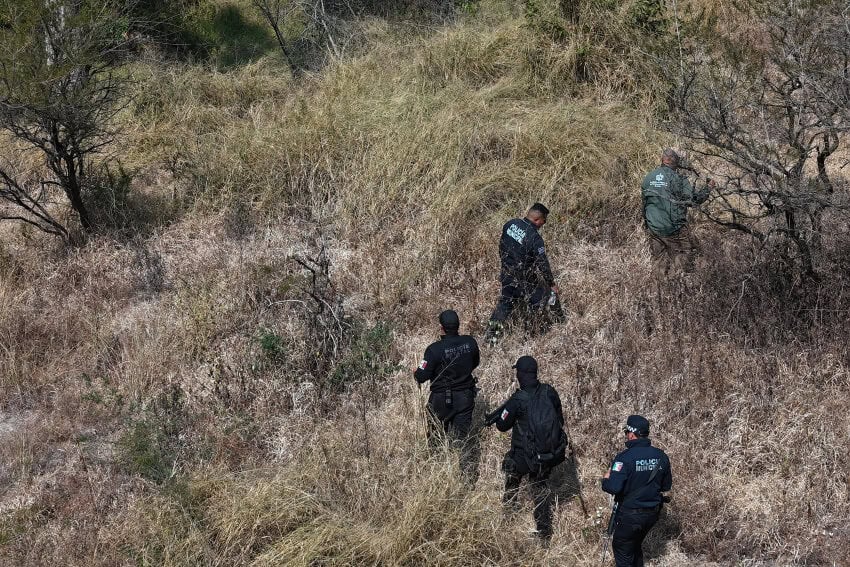
To test these ideas, the Jalisco commission constructed two controlled research fields, each containing 16 simulated graves using 65-kilogram pigs — the global standard biological proxy for human decomposition. Over months and years, researchers documented how vegetation differed above buried remains, how insect colonies developed, how nitrogen levels in soil shifted, and how all of this looked through multispectral and thermal cameras.
“The plants themselves take advantage of that nitrogen to become greener, for example,” Chávez said, describing one of the most easily observed surface indicators.
The findings help refine probabilistic models — maps that highlight areas where clandestine graves are statistically more likely to be found based on environmental signatures.
These methods are no longer theoretical.
According to Chávez, around 25 people who had been unidentified for years have been identified and returned to their families using this systematic approach. Another 450 to 460 identification hypotheses are currently being analyzed.
Grassroots knowledge becomes scientific method
Two days after the Supreme Court presentation, the research returned to its roots: Guadalajara. There, in a public discussion at the Feria Internacional del Libro (FIL), Latin America’s largest, the book was presented before an audience that included academics, geospatial analysts, forensic scientists and families of the disappeared.
Víctor Hugo Ávila Barrientos, head of Jalisco’s State Search Commission, opened with an acknowledgment that resonated across the room.
“This first edition is based precisely on the knowledge of the searching mothers, and what we did was provide scientific and technical backing to knowledge already proven in the field.”
This merging of institutional science and grassroots expertise is one of the project’s most innovative — and politically sensitive — features. For years, colectivos de búsqueda (search collectives) have been the ones discovering clandestine graves, often outpacing state institutions. Many of their field strategies have now been formalized into data collection methods.
Panelists at FIL underscored both the progress and the obstacles. The technologies used — high-resolution satellite imagery, geophysical instrumentation, thermal mapping and molecular analysis — remain expensive and sometimes hard to deploy in remote areas.
“Scientific knowledge has to move forward, but institutions like ours are operational, not research institutions. Applying this knowledge requires real resources,” said Alejandro Axel Rivera Martínez of the Jalisco Institute of Forensic Sciences.
A crisis that continues to grow
Mexico’s official registry includes more than 115,000 people reported missing — a number widely understood to be an undercount. Jalisco alone has more than 15,000, one of the highest figures in the nation.
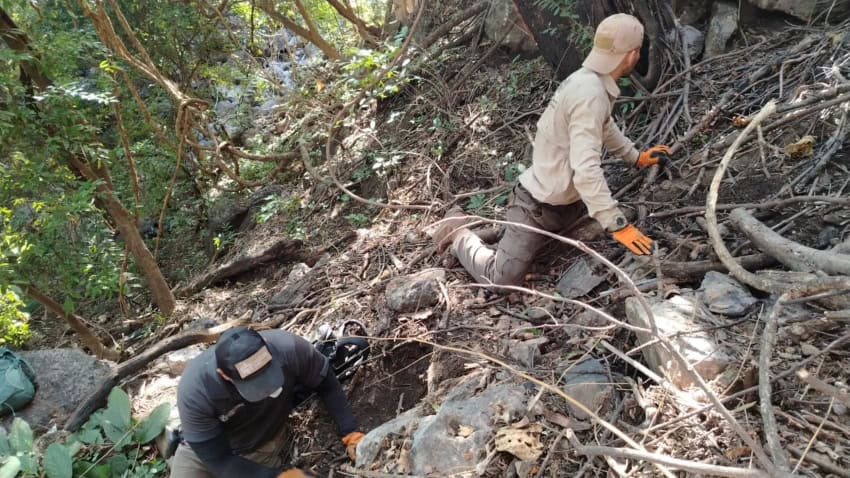
The scale of the crisis is so profound that some states have largely abandoned systematic searches. Others depend heavily on families to lead the way.
In that context, Jalisco’s experimental model has drawn attention from other states facing similar surges in disappearances. The approach does not replace traditional investigation, but it adds new layers of probability, helping narrow search areas that once seemed impossibly vast.
Chávez emphasized that the human dimension remains central.
Behind every soil sample and pixel of multispectral imagery, he is keenly aware of the families waiting for answers — and families asking difficult questions.
A mother’s question, and a scientist’s answer
In one training session with search collectives, a mother raised a question that Chávez says he has never forgotten.
“In one of the sessions, a mother asked whether this meant she would be looking for her son still alive. From a technical point of view, the answer is that if a body has changed its form of life — if her son is no longer in the form in which she last saw him — then in some sense she would be looking for him in the flower. But it would be in the most lush, most beautiful flower, because it is the one that has different nutrients and water.”
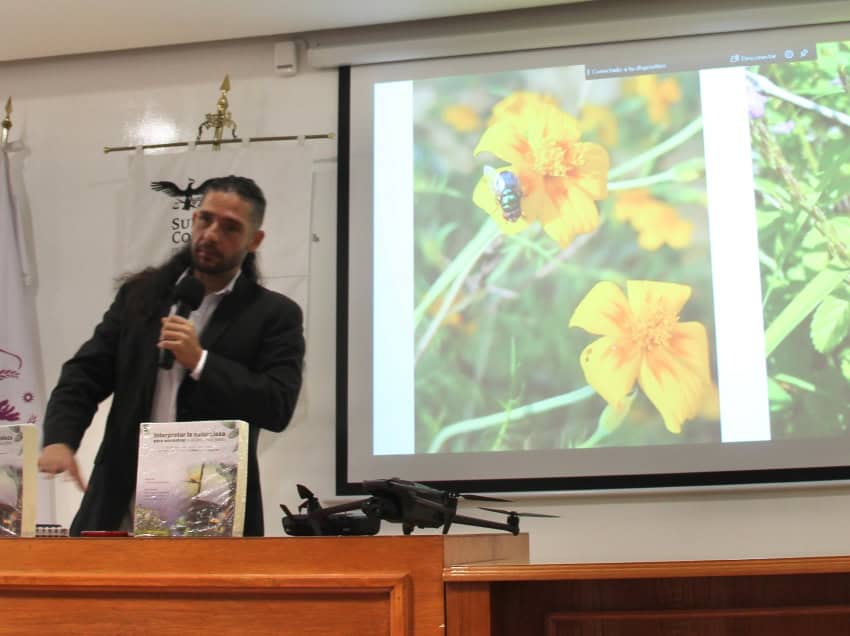
For many families, the idea is not metaphorical. It is a way of understanding that even in death, their loved ones continue to exist — materially, biologically — in forms that nature makes visible to those who know how to look.
During his Supreme Court presentation, Chávez projected a line from Norwegian painter Edvard Munch that has become something of a guiding phrase for the project.
“From my decomposing body, flowers will grow, and I will be in them. That is eternity.”
A shifting paradigm in the search for Mexico’s missing
The idea that ecosystems can hold forensic clues is not new — but applying it systematically, at scale, inside a government search commission is groundbreaking.
In a country where thousands of clandestine graves remain undiscovered and where families continue to search in desert washes, forests and fields and city edges, the integration of biology, geology, entomology, satellite analysis and grassroots field knowledge represents a new way forward.
It’s not a replacement for traditional investigation, not a substitute for justice, but a tool — grounded in science and shaped by the people who need it most.
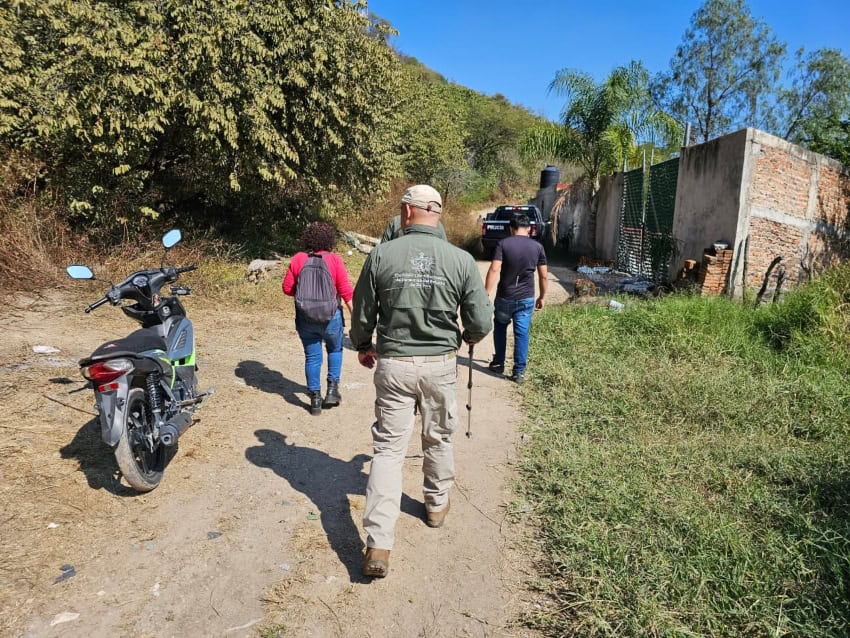
As Mexico continues to grapple with the magnitude of the disappearance crisis, researchers like Chávez say the work must keep evolving, informed both by scientific rigor and by the lived experience of the families of victims.
Because in Mexico, the landscape itself remembers.
Tracy L. Barnett is a freelance writer based in Guadalajara. She is the founder of The Esperanza Project, a bilingual magazine covering social change movements in the Americas.
Source: Mexico News Daily