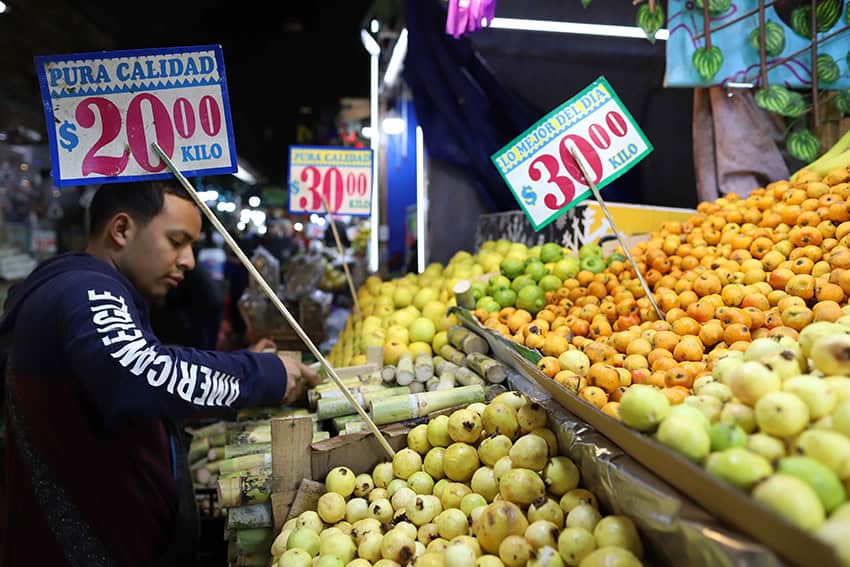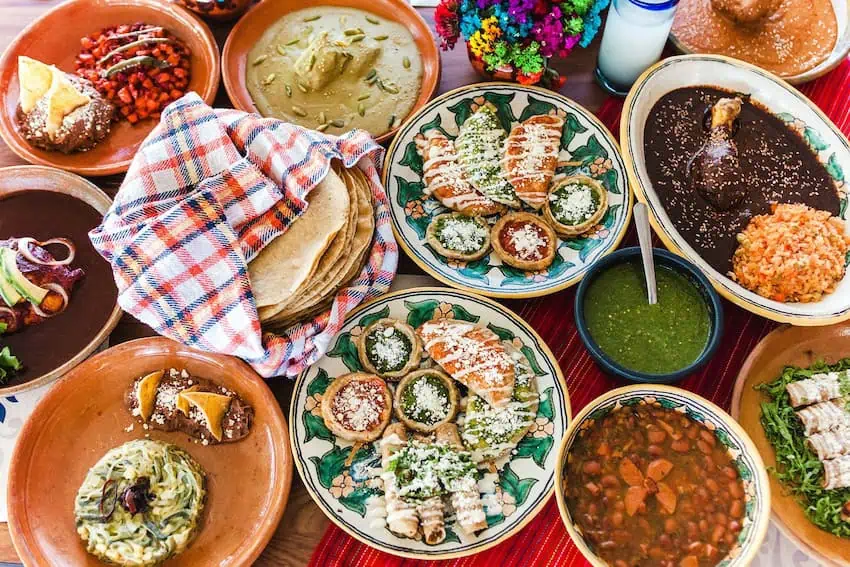
Oaxaca and it’s extraordinary culinary heritage is evident not only in its wealth of traditional food markets but also in the many signature Mexican dishes it has produced. For example, no less than seven varieties of mole, the crown jewel of Mexican gastronomy, hail from Oaxaca. Tlayuda and queso Oaxaca are also regional inventions, of course, and although mezcal may or may not be, Oaxaca is certainly the ancestral homeland of this iconic Mexican spirit.
The seven moles of Oaxaca
Moles in Oaxaca don’t have an individual originator like Andrea de la Asunción of mole poblano fame. Instead, the state’s seven sacred moles—mole negro, mole rojo, mole verde, mole amarillo, mole colaradito, mole chichilo, and mole manchamanteles—seem to have evolved naturally following the fusion of Spanish ingredients like cinnamon, black pepper, and anise with traditional pre-Hispanic ones like chocolate, chiles, tomatoes, tomatillos, and herbs such as hoja santa.
Mole negro, the most emblematic and widely celebrated of Oaxaca’s moles, is also the most complex, boasting on average about 30 ingredients, including four chilies—chilhuacle negro y rojo, and chiles mulato and pasilla oaxaqueña. Three of these are almost exclusively regional, a distinguishing feature in all Oaxacan moles, as chilies like chilhuacle, pasilla oaxaqueña, chile de agua, chilcostle, tuxta, and costeño are little grown outside of the state.
Mole rojo and amarillo are generally considered the spiciest of these moles, thanks to a higher proportion of spicy chilies such as chilhuacle amarillo, costeño, and chile de árbol. Meanwhile, mole negro is noted for its sweeter, more chocolate-forward flavors, and the others for the inclusion of distinctive ingredients. Mole verde, for instance, is made with pumpkin seeds, tomatillo, cilantro, and jalapeño; manchamanteles often includes chorizo and fruits such as pineapple and peach; and chichilo boasts homemade beef stock and texture-thickening masa.


Tlayuda, the Mexican pizza

If Italy didn’t develop pizza until after the importation of Mexican tomatoes (true story) in the 16th century, why didn’t Mexico invent it first? The answer is that it did (kinda), although it’s called tlayuda (evolved from the Nahuatl words tlao-li, meaning husked corn, and uda, for abundance), and features a 16-inch toasted version of a tortilla standing in for bread dough.
No, there’s no pepperoni and sausage, but meaty toppings like tasajo, cecina, and chorizo are popularly added, as are cheesy quesillo (more on this later), asiento, and refried beans. So too are tomatoes, avocado, lettuce, and cilantro.
Served in markets and on street corners, tlayuda is an Oaxacan street food fixture that was voted the best street food in Latin America in a 2020 Netflix poll. In some areas of Oaxaca, the dish includes ingredients such as ants and grasshoppers. Chapulines, of course, are an Oaxacan specialty, too, and often sourced from alfalfa and cornfields around the fertile valleys of Oaxaca (city, not state).
Originally generated from Oaxaca’s Zapotec and Mixtec cultures, using nixtamalized tortillas toasted on clay comals, tlayudas began to include more ingredients once the Spanish arrived in Mexico. Today, asiento (unrefined pork lard) and refried beans provide the base (like tomato sauce on pizza), followed by cheese (sometimes melted), chorizo, avocado and tomato slices, and other regional specialty items.
Since 2010, it has been one of the Oaxacan dishes designated by UNESCO as an Intangible Cultural Heritage.
The creation of queso Oaxaca
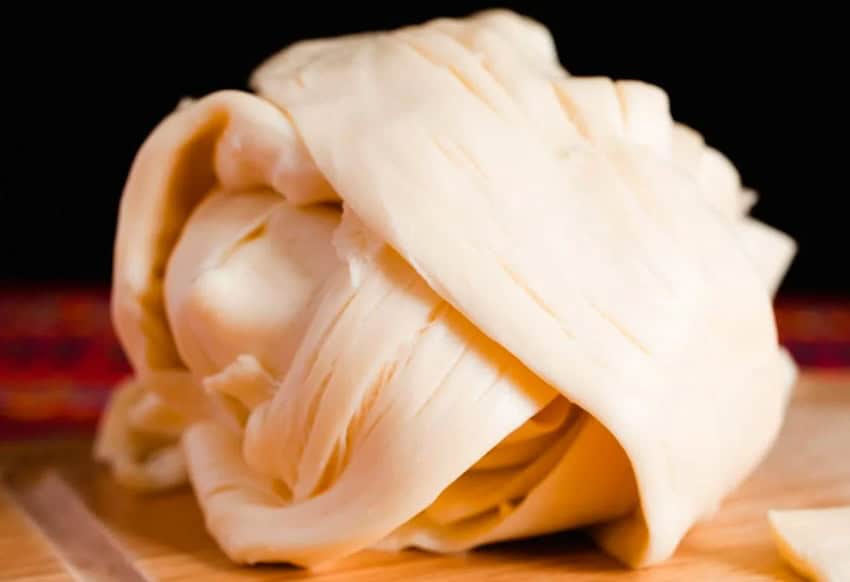
Leobarda Castellanos García was only 14 years old when she accidentally invented distinctive queso Oaxaca in Reyes Etla during the 19th century. Amazingly, she’s not the youngest culinary inventor of note during that century: Armando Martínez Centurión reportedly invented the torta in Mexico City in 1892 when he was only 11.
According to local legend, she allowed the milk to overcurdle and then tried to correct her mistake by adding hot water. The resultant pasta filata (or stretched curd) cheese, which Leobarda called quesillo, was stringy, stretchy, chewy, and delicious. Its fame quickly spread to Puebla, where it acquired the name queso Oaxaca to designate its place of origin.
Reyes Etla remains the ancestral home of queso Oaxaca, an exquisitely melty cheese distinguished by the strands wrapped to achieve its ball-of-yarn-like appearance. As many as 50 families still make cheese there traditionally, although the popularity of queso Oaxaca nationwide has since spawned a host of imitators.
Interestingly, queso Oaxaca is the only pasta filata cheese of note in Mexico, but there are several worldwide, including from Italy, mozzarella, provolone, and burrata. However, the Greeks made the first example circa 500 BCE.
The ancestral homeland of mezcal

Oaxaca may not have been the first state in Mexico to produce mezcal, but it has certainly established itself as the best and most prolific. Today, nine states are legally allowed to make mezcal under its denomination of origin, but Oaxaca alone distills over 90% of the country’s total.
The history of the fermented agave drink pulque dates back well over 1000 years, but distillation techniques likely weren’t introduced until after the Spanish colonization of Mexico in the early 16th century. However, researchers at the Instituto Nacional de Antropología e Historia (INAH) have hypothesized that Indigenous inhabitants of Mexico may have distilled mezcal with kilns as far back as 400 BCE.
The documented history of mezcal production in Oaxaca comes from tax records and begins about the middle of the 18th century, although the spirit has probably been produced locally for far longer. Certainly, time-honored methods are still used to make mezcal in Oaxaca, notably in artisanal expressions.
As Graciela Ángeles Carreño of the artisanal Oaxacan brand Real Minero recently told National Geographic: “We are constantly being told what mezcal should or could be by outsiders, but what people need to understand is that mezcal isn’t just a trend or something to be sold—it’s part of who we are. We make mezcal in clay pots and bury it underground not because it makes us more money (it doesn’t) or because it’s easy (it’s not), but because it’s how our fathers and grandfathers did it, and how we want our children to do it.”
Chris Sands is the Cabo San Lucas local expert for the USA Today travel website 10 Best, writer of Fodor’s Los Cabos travel guidebook and a contributor to numerous websites and publications, including Tasting Table, Marriott Bonvoy Traveler, Forbes Travel Guide, Porthole Cruise, Cabo Living and Mexico News Daily. His specialty is travel-related content and lifestyle features focused on food, wine and golf.
Source: Mexico News Daily