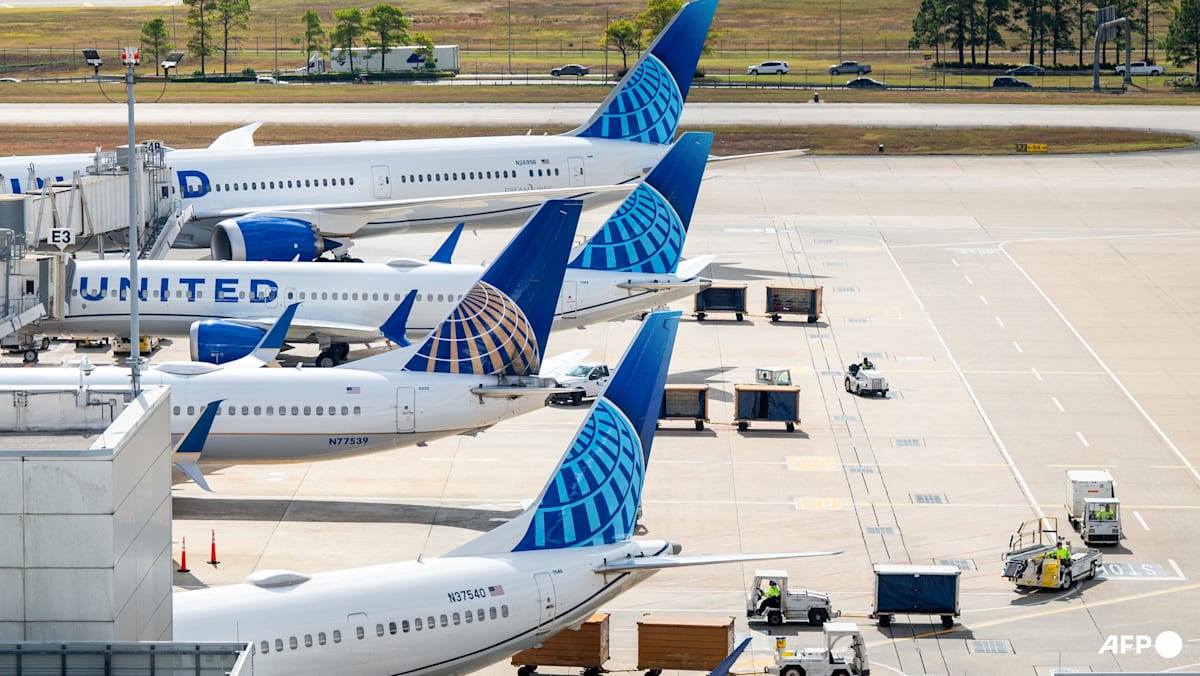
Air travellers are starting to feel the pain of the US government shutdown, as shortages of air traffic controllers cause flight delays and cancellations across the country.
On Nov 5, federal transportation officials announced that the US will cut flight capacity by 10 per cent at 40 high-volume airports across the country, though international routes will be spared, to alleviate pressure on the aviation system.
Here’s what to know about the flight cutbacks and why ending the shutdown likely won’t resolve all the problems.
What’s happening at US airports?
The cuts announced on Nov 5 will reduce domestic flight volumes by around 10 per cent if implemented as planned, in a process that is expected to take a few days.



Since the shutdown began, the US Federal Aviation Administration (FAA) has had to slow traffic into major US airports, including the three main ones serving the New York metropolitan area – John F Kennedy International Airport, LaGuardia Airport and Newark Liberty International Airport – due to the controller shortfalls.
The staffing issues have also led to delays and cancellations at airports serving Washington, Boston, Nashville, Austin, Houston and the Dallas-Fort Worth area – to name a few.
Staffing shortfalls normally cause about 5 per cent of delays, according to Transportation Secretary Sean Duffy, but that number has routinely been higher since the shutdown began on Oct 1, sometimes topping 50 per cent.
Oct 31 was a particularly rough day for air travel. Half of the 30 busiest facilities didn’t have enough staff, the FAA said, and nearly 80 per cent of air traffic controllers were absent at New York-area facilities.
Source: CNA