“All this stuff was designed by an architect and somebody thought this through. Motels are concrete, real buildings, so there’s no romanticisation. Crossbreed architecture happens at all levels.”
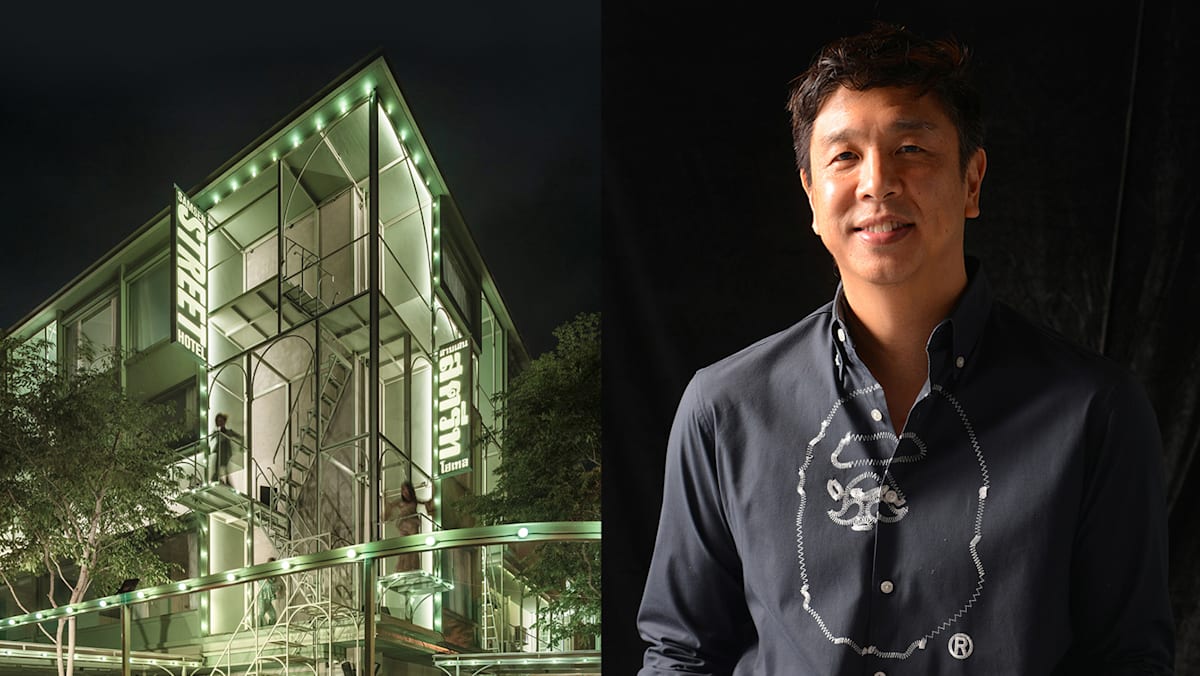
When he was given the green light to makeover the previous iteration of Samsen, Chat decided not only to strip it of its former life, but also to introduce a more open design language with the street. To do this, he incorporated a porous, pastel-green structure, connected through stairs and platforms to allow guests to sit on and watch the world go by.
One look and it becomes immediately obvious that it takes its cues from construction worker housing, which are ubiquitous around Bangkok. Chat specifically remembers one that he saw by a condominium site, along a freeway he took when he drove his son to school. Initially concealed behind a big piece of green tarpaulin, it was revealed when the cover-up was taken down.
“It was the most beautiful thing I’d ever seen: platforms with hanging clothes, cooking being done, people hanging their legs. It was just full of life. That was a clue to how I could practice and create a more authentic, local architecture.”




At Samsen, the scaffold design is extended to the front of the hotel onto the lawn, deliberately kept open so that passers-by can look in and guests can hang out and interact with the neighbourhood. On weekends, street concerts are held, with performers standing one on top of the other on the platforms like a vertical stage.
Other projects that he has worked on recently is the Indigo Loom House, an art and textile learning centre in the city of Sakon Nakhon that is a crossbreed of the Thai stilt house, the textile loom and other weaving apparatus. Through it, he had the chance to be acquainted with the craft community, providing them with a well-designed space catering to their needs, while also sustaining employment for the elderly women who live there.
Another project is a multi-phased sports community club called RQ in Bangkok. The first stage saw him resort to adaptive reuse to turn a mid-century bungalow into a family-friendly restaurant and playground.
Source: CNA