Over the past few weeks, I’ve watched a Mexican series on Netflix, “Las Muertas.” It’s a Luis Estrada series, meaning it’s a dark comedy that leaves you both amused and uneasy.
I’ve reviewed a few of his movies here before. Each one, really, is a Mexican classic. Watching them, you’d think he’s utterly without hope about our ability to shed our cultural habits of the sins of corruption and contempt. That’s the part that makes me uneasy. To watch his work, your only conclusion could be that corruption is baked into the culture. Like a cancer, it’s never completely eradicated; it hides in the cells and emerges opportunistically.
The problem of extortion in Mexico

If you’ve got a strong stomach (and a tolerance for nudity and sex scenes that are both hot and off-putting), it’s a fantastic show to watch. I mean, I wouldn’t let my kid watch it. Not because of the sex scenes, but because of its bleak view of humanity. Why let her in on this cynical view of the world so soon?
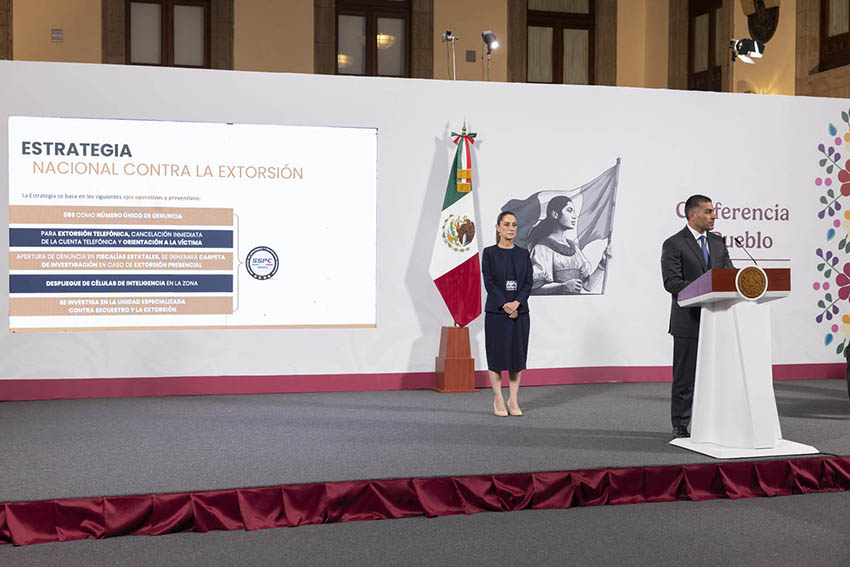
I’ve been thinking about “Las Muertas” as I’ve read about Sheinbaum’s desire to curb extortion. Clearly, extortion is a problem in Mexico. “Pay me and I won’t destroy you.” In fact, many businesses consider it a cost of doing business in the first place.




What exactly is extortion? Well, it’s forcing people to give you money by threatening them. “Pay up or else.” In Mexico, this often takes the form of “cobro de piso” (officially a “floor charge”), which is when criminal gangs, typically, charge businesses a sort of “tax” for “protection.” Protection from whom? Honestly, from the people charging the cobro de piso.
The poorest are most vulnerable
It breaks my heart that there are so many people willing to take advantage of others. It breaks my heart more that there are people who think they have a right to take advantage of others. They’re preying on the most vulnerable, of course. A fruit seller is paying 1,000 pesos of his meager earnings a week. Liverpool is not. The more money you have, the more protected you are.
That’s not all, of course. Extortion is increasingly attached to very scary scams. In the absence of any real authoritative controls in prisons, for example, prisoners with nothing but time on their hands and phones can spend all day trying their luck at tricking people into believing that a loved one has been kidnapped. “Pay up to this bank account, or else.”
How these prisoners have access to phones and their bank accounts in the first place is beyond me. Okay, it’s not really beyond me — it just amazes me about how confidently and brazenly those behind bars can act and with such few repercussions. Sheinbaum’s administration is doing what it can — signal jammers, security scanners — it will take more than that, of course.
Bribery and extortion are two sides of the same coin

In the show “Las Muertas,” the idea of “money as social and legal lubricant” wasn’t so much happening around extortion, but around bribery. Alas, they are two sides of the same coin, and sometimes indistinguishable.
In the show, the women got away with so much because they bribed every government official they could. “Money and extra special treatment at the brothel? You’ve got yourself a deal!”
Unfortunately, in Mexico, bribes still very much work. A common example that nearly every Mexican I know has encountered is being stopped by the transit police. Even for minor infractions, the threat is often that they’ll need to have the car towed off right then and there. “Or ...”
To get out of such a fate, most drivers pay the police a mordida — a bribe. But is it really a bribe if they have to pay it to keep their vehicle?
Extortion is forced upon the payer; bribery is voluntary from the payer.
Laws and the difficulty in enforcing them
Then there’s the icky in-between kind, like bribes to traffic cops and bureaucratic workers. “You know, I could focus on getting this paperwork through a lot faster if I didn’t have to work a second job to afford my poor mother’s medicine …”

For so long in Mexico, under-the-table money has been the lubricant both for getting out of frictional situations and into the kinds of situations you want.
And as I’ve written before, the “on-the-ground” law in Mexico takes place at the local level, not the federal. Mexico City can turn out however many laws it wants, but without the cooperation of local governments, how can they be enforced?
So though Mexico City might say, “Okay, everyone, don’t let extortion happen in your towns and cities.” But if the same people meant to enforce the law are benefiting from extortion schemes, how effective can that be?
Making extortion a federal crime
What’s the new proposal, then? Rather than being a state crime, extortion would now be a federal crime. That means it’s no longer a crime against the victim only; it’s a crime against society.
In addition to that, the burden would be on the victim to report it. This is smart. Who’s going to report a crime when they’ve been told they’ll be killed if they report a crime? It’s not like they could trust the police to protect them — they’re often in collusion with the very criminal gangs they’re supposed to be protecting people from. It sounds cowardly, but police officers are people too, with families and fears. And they certainly don’t get trained or paid enough to go above and beyond in selfless ways, so what are we expecting?
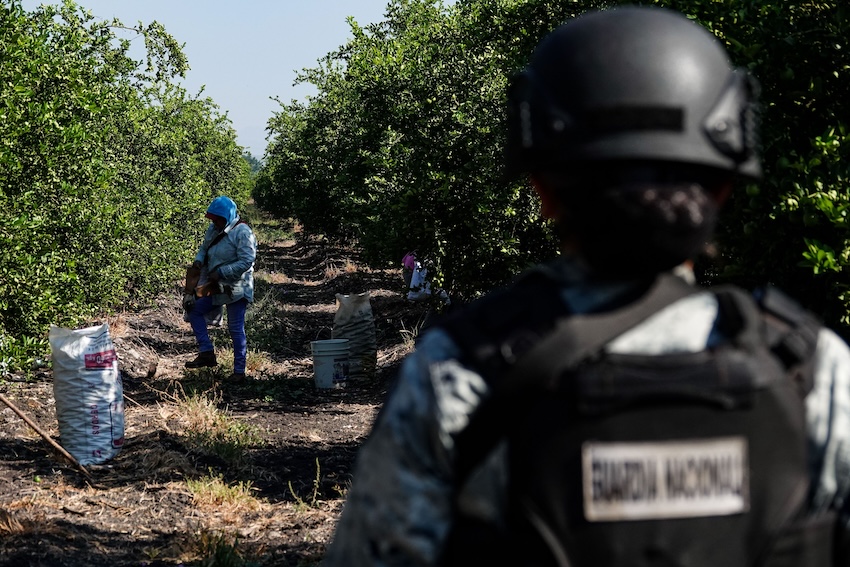
But this law would up the ante: “Officials who are convicted of failing to report known extortion crimes face up to 20 years in prison, and prison authorities or public servants who facilitate extortion could be jailed for up to 25 years.”
Well!
Extortion is disgusting; I do not approve of it under any circumstances. But you have to ask: Why is it so prevalent? And given the prevalence of extortion and bribery, why do so many people think this is the only viable business they might be able to maintain?
For answers to these questions, might I suggest a Luis Estrada movie?
Sarah DeVries is a writer and translator based in Xalapa, Veracruz. She can be reached through her website, sarahedevries.substack.com.
Source: Mexico News Daily