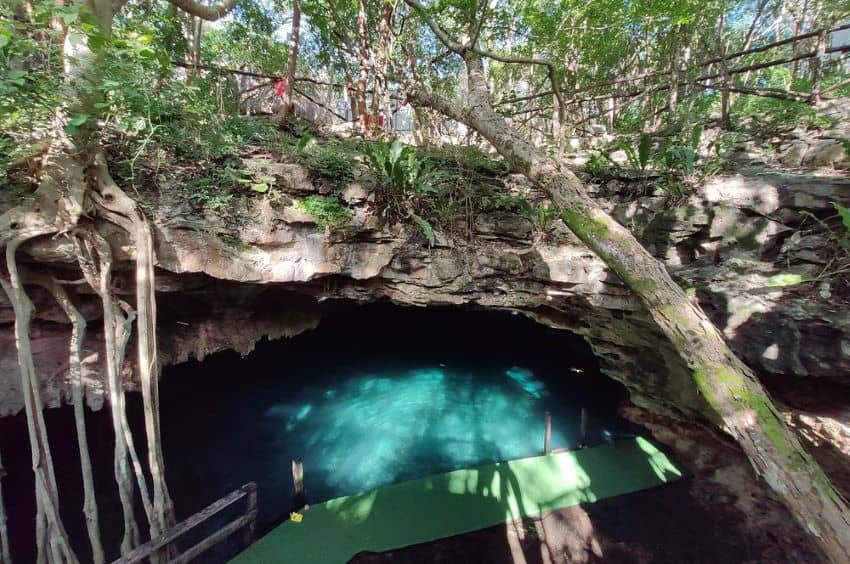
Archeologists in Mexico have found fossils of extinct animals in a cenote in Umán, Yucatán, including those of a giant sloth and prehistoric horses.
Speleologist (cave researcher) Cristián Selun said the fossils date back to the ice age, between 7,000 and 10,000 years ago. This discovery sheds light on the prehistoric fauna that inhabited the region.
“The first bones that we saw were those of the sloth,” scuba diver Arnaldo Marruco told news outlet NMás. “It was in other nearby areas that we found more bones, including a jaw, which was of a different size.”
According to scientists, the horses are of the Equus conversidens species while the giant sloth belongs to the species Nothrotheriops shastensis. The sloth weighed 300 kilograms and measured three meters long.




The remains were discovered in 2023 in the Dzombakal cenote in the San Antonio Mulix community of Yucatán. However, the results of their identification and analysis were only recently released by a team of scientists led by paleontologist Jerónimo Avilés Olguín in collaboration with the National Institute of Anthropology and History (INAH).
According to Selun, the bones must be identified and compared with others found in Quintana Roo. The on-site verification process takes time, “especially because human bones have also been found here,” he said.
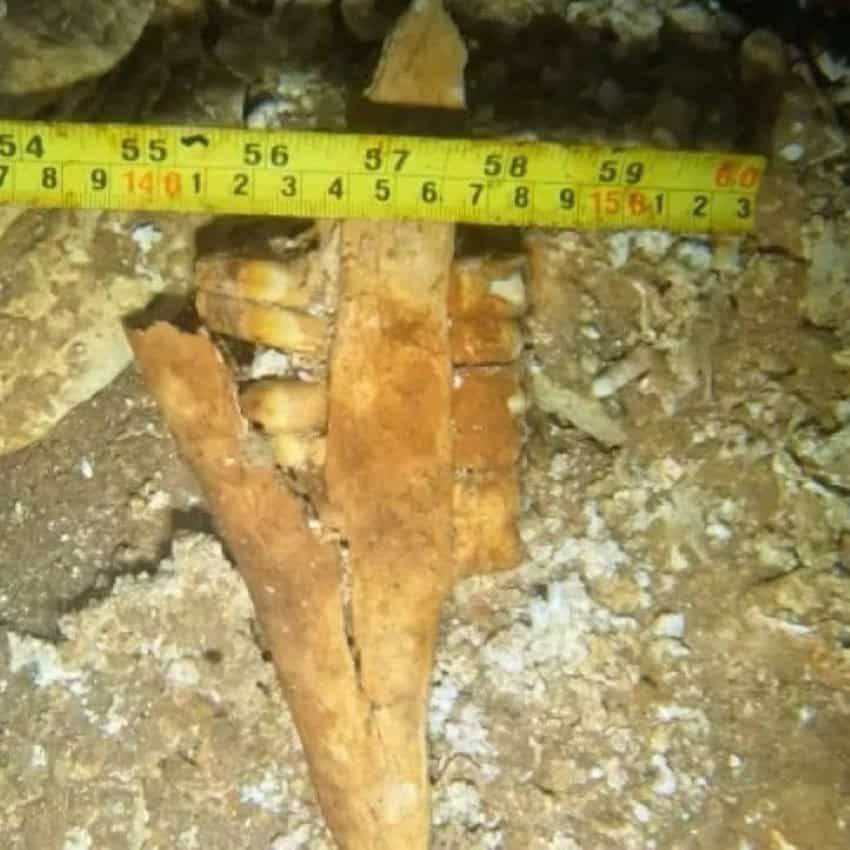
To date, scientists have found more than 20 pieces of fossilized bone in the area, including vertebrae, jaws, arm and leg bones and other fossil remains. However, this is the first time a giant sloth has been discovered in Yucatán.
“It was a very large animal. We found the long parts of the legs, very large ribs and shoulder blades,” Marruco said.
These fossil fragments are protected by INAH since extracting them is forbidden. They’re also monitored and cared for by the community’s inhabitants, who have pledged to preserve the prehistoric findings.
With reports from NMás, Debate and López Dóriga
Source: Mexico News Daily