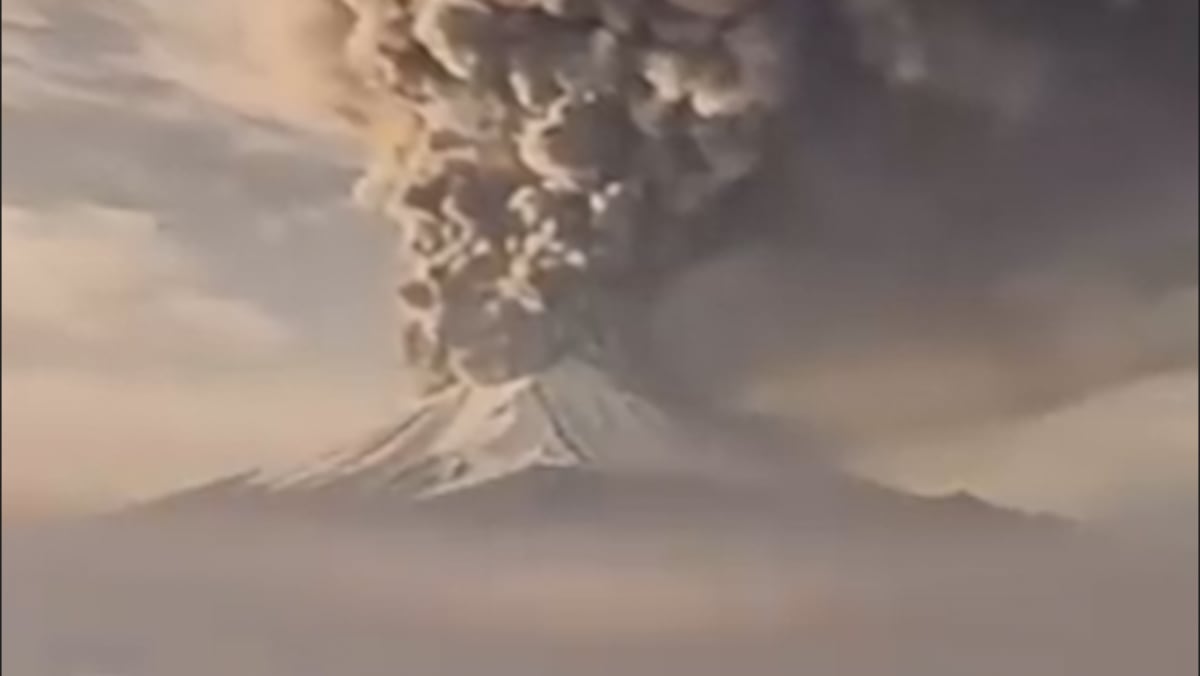
The Tokyo government said in a statement that there are currently no signs of Fuji erupting. “The simulation is designed to equip residents with accurate knowledge and preparedness measures they can take in case of an emergency,” it explained.
But the videos have caused anxiety and confusion among some residents.
“Are there actually any signs of eruption?” said Shinichiro Kariya, a 57-year-old hospital employee. “Why are we now hearing things like ‘10cm of ash could fall,’ even in Tokyo? I’m wondering why this is happening all of a sudden.”
Hiromi Ooki, who lives in Mishima City, which has prime views of Fuji, said she planned to buy emergency supplies the next day. “Nature’s power is so great that maybe it’s better if it scares us a little,” she said.



Representatives of both the Tokyo Metropolitan Government and Japan’s Cabinet Office Disaster Prevention Division said they had not received complaints from Tokyo residents about the videos.
University of Tokyo professor and risk communication expert Naoya Sekiya said the government has for years modelled scenarios for volcanic eruptions and earthquakes, but added that does not mean Fuji is about to erupt.
“There’s no particular significance to the timing,” Sekiya said.
Japan is highly vulnerable to natural disasters because of its climate and topography and is known for its meticulous disaster planning which spans earthquakes, typhoons, floods, mudslides and volcanic eruptions.
The Japan Meteorological Agency last August issued its first-ever “megaquake advisory” after a powerful quake struck off the southeastern coast of the southern main island of Kyushu.
Of the world’s roughly 1,500 active volcanoes, 111 are in Japan, which lies on the Pacific “Ring of Fire.”
Fuji, Japan’s tallest peak, used to erupt about every 30 years, but it has been dormant since the 18th century.
Source: CNA