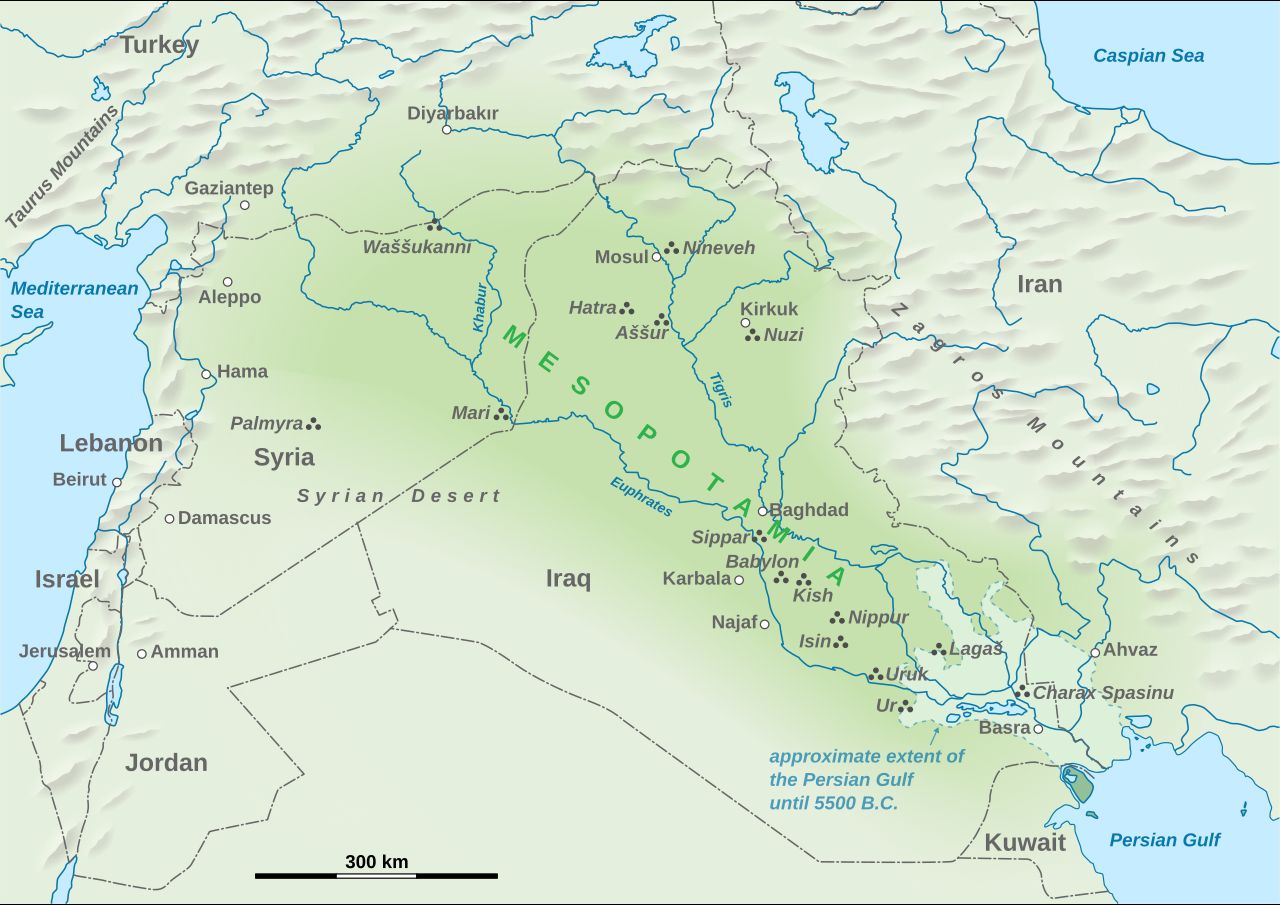
Ancient Mesopotamia
Ancient Mesopotamia, located between the Tigris and Euphrates rivers, is widely regarded as the birthplace of some of humanity's earliest cities, writing systems, and legal codes.
Often called the "cradle of civilization," this region between two great rivers gave rise to innovations so foundational that many of them remain essentially unchanged in concept thousands of years later.
The Cradle of Civilization
Mesopotamia, meaning "land between rivers" in Greek, refers to the region between the Tigris and Euphrates rivers, where some of the world's earliest cities and civilizations developed.
The Invention of Writing
The Sumerians, one of Mesopotamia's earliest civilizations, developed cuneiform, one of the earliest known writing systems, initially used for tracking agricultural transactions and trade.
Early Legal Codes
Mesopotamian rulers developed some of history's earliest known legal codes, most famously the Code of Hammurabi, which established written laws and punishments across Babylonian society.
A Succession of Empires
The region saw a succession of powerful empires over millennia, including the Akkadian, Babylonian, and Assyrian empires, each contributing to the area's rich cultural and political legacy.
Foundational Innovations
Beyond writing and law, Mesopotamian civilizations are credited with early innovations including the wheel, organized irrigation agriculture, and some of the earliest known systems of mathematics and astronomy.