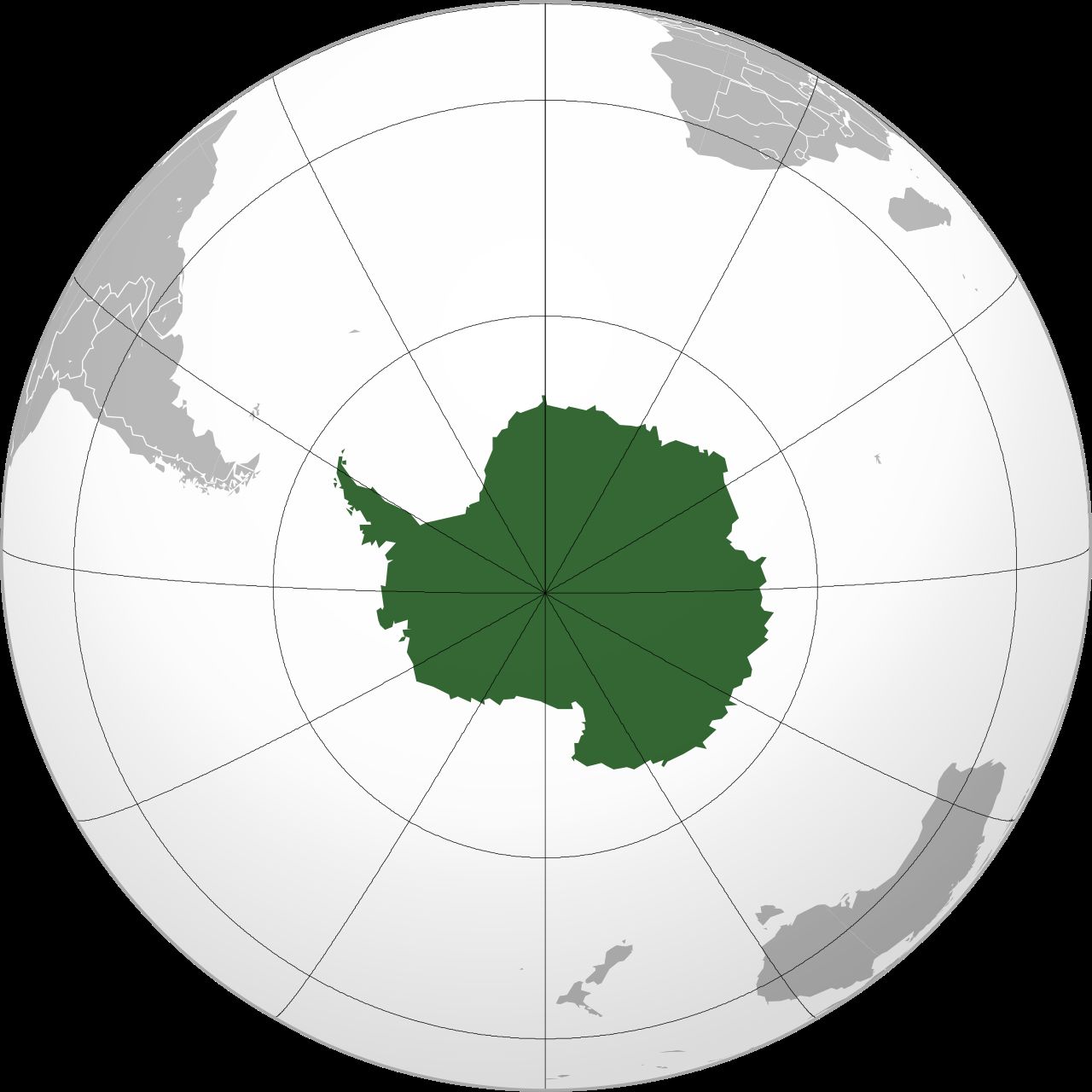
Antarctica
Antarctica is Earth's southernmost continent, almost entirely covered by ice, and governed under an international treaty that reserves it for peaceful scientific research.
Despite being covered almost entirely in ice, this continent technically qualifies as a desert, and an international treaty ensures it stays reserved for science rather than military or commercial use.
A Continent of Extremes
Antarctica is the coldest, windiest, and driest continent on Earth, with recorded temperatures dropping below -128°F (-89°C) at its most extreme, and despite being covered in ice, it technically qualifies as a desert due to its minimal annual precipitation.
Earth's Largest Freshwater Reserve
The continent holds approximately 70% of the world's fresh water, locked within its massive ice sheets, which in some places exceed two miles in thickness — a reserve of such scale that its potential melting is a major concern in discussions of global sea level rise.
A Treaty for Peace and Science
The Antarctic Treaty, signed in 1959 by 12 nations and now including more than 50 signatories, designates the continent as a scientific preserve, explicitly banning military activity, weapons testing, and mineral resource extraction.
A Window into Earth's Climate History
Scientists conduct extensive research in Antarctica, particularly through ice core drilling, which extracts cylindrical samples containing tiny air bubbles trapped in ancient ice, providing a detailed atmospheric record stretching back several hundred thousand years.
No Permanent Residents
Antarctica has no permanent human population or indigenous inhabitants, with its only human presence consisting of rotating scientific research station staff, whose numbers swell to a few thousand during the austral summer and shrink dramatically during the harsh winter months.