Climate Change
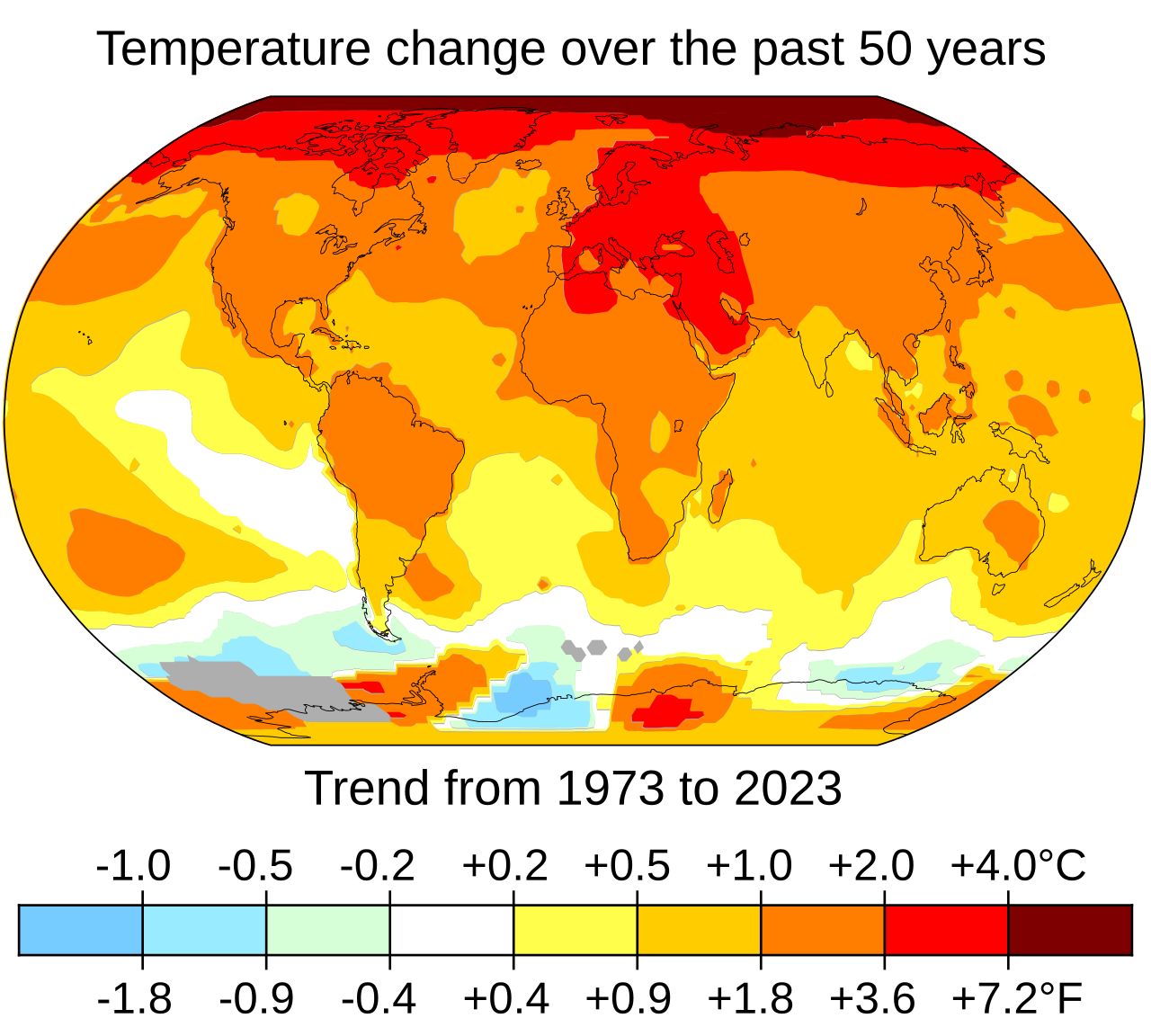
Climate change refers to long-term shifts in global temperatures and weather patterns, which scientists have determined are being significantly accelerated by human activity, particularly the burning of fossil fuels.
Gases released largely since the Industrial Revolution are trapping more heat in the atmosphere than at any point in recorded history, a shift with consequences stretching from melting ice sheets to shifting rainfall patterns.
Accelerated Since Industrialization
Since the Industrial Revolution, human activities — especially burning coal, oil, and natural gas — have dramatically increased the concentration of greenhouse gases, particularly carbon dioxide, in Earth's atmosphere, trapping additional heat and raising global average temperatures.
The Greenhouse Effect
Greenhouse gases work by trapping heat that would otherwise radiate from Earth's surface back into space, a natural process essential for maintaining habitable temperatures, but one that has been significantly intensified by human emissions over the past two centuries.
Visible Effects Worldwide
The effects of climate change are increasingly visible worldwide, including rising sea levels from melting polar ice, more frequent and intense extreme weather events, and shifting ecosystems that threaten biodiversity and agricultural stability in many regions.
Threats to Food and Water Security
Climate change poses growing risks to global food and water security, particularly in vulnerable regions already facing water scarcity or agricultural challenges, potentially displacing millions of people through climate-driven migration in coming decades.
International Response Efforts
International efforts to address climate change include the 2015 Paris Agreement, in which nations committed to limiting global temperature rise, alongside rapidly growing global investment in renewable energy sources including solar and wind power as alternatives to fossil fuels.