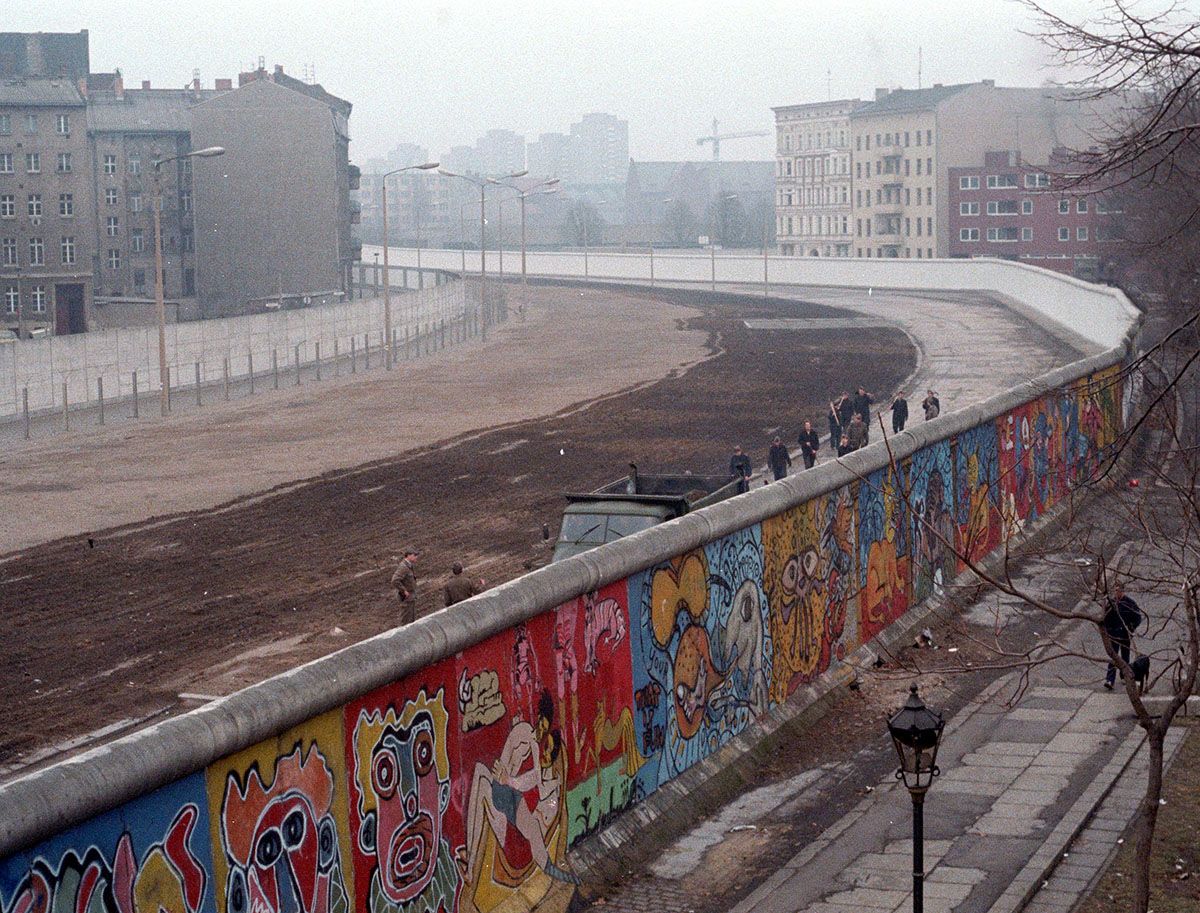
The Fall of the Berlin Wall
The fall of the Berlin Wall on November 9, 1989, marked the symbolic end of the Cold War in Europe, as East German authorities opened the border after weeks of mass protests, leading to German reunification the following year.
A confused government announcement about relaxed travel rules sent crowds rushing to the checkpoints that same night, and within hours a barrier that had stood for nearly three decades was being dismantled by hand.
A Symbol of Division
The Berlin Wall had divided communist East Berlin from democratic West Berlin since its construction in 1961, standing for nearly three decades as the most potent physical symbol of Europe's Cold War divide between East and West.
Mounting Pressure from Within
By 1989, worsening economic conditions and growing mass pro-democracy protests were sweeping across Eastern Europe, placing immense and increasing pressure on East German authorities to respond to widespread public discontent.
Gorbachev's Reforms Loosen Control
Soviet leader Mikhail Gorbachev's reform policies had already significantly reduced direct Soviet intervention in the internal affairs of Eastern Bloc countries, removing a key pillar that had long propped up East Germany's communist government.
A Confused Announcement
The wall's fall was triggered partly by a confused East German government announcement suggesting travel restrictions would be lifted "immediately, without delay," prompting massive crowds to gather at border crossings that same night.
Tearing Down the Wall
Crowds of East and West Berliners gathered at the wall on the night of November 9, 1989, and began tearing it down by hand in a jubilant, spontaneous celebration broadcast worldwide, leading directly to formal German reunification in October 1990.