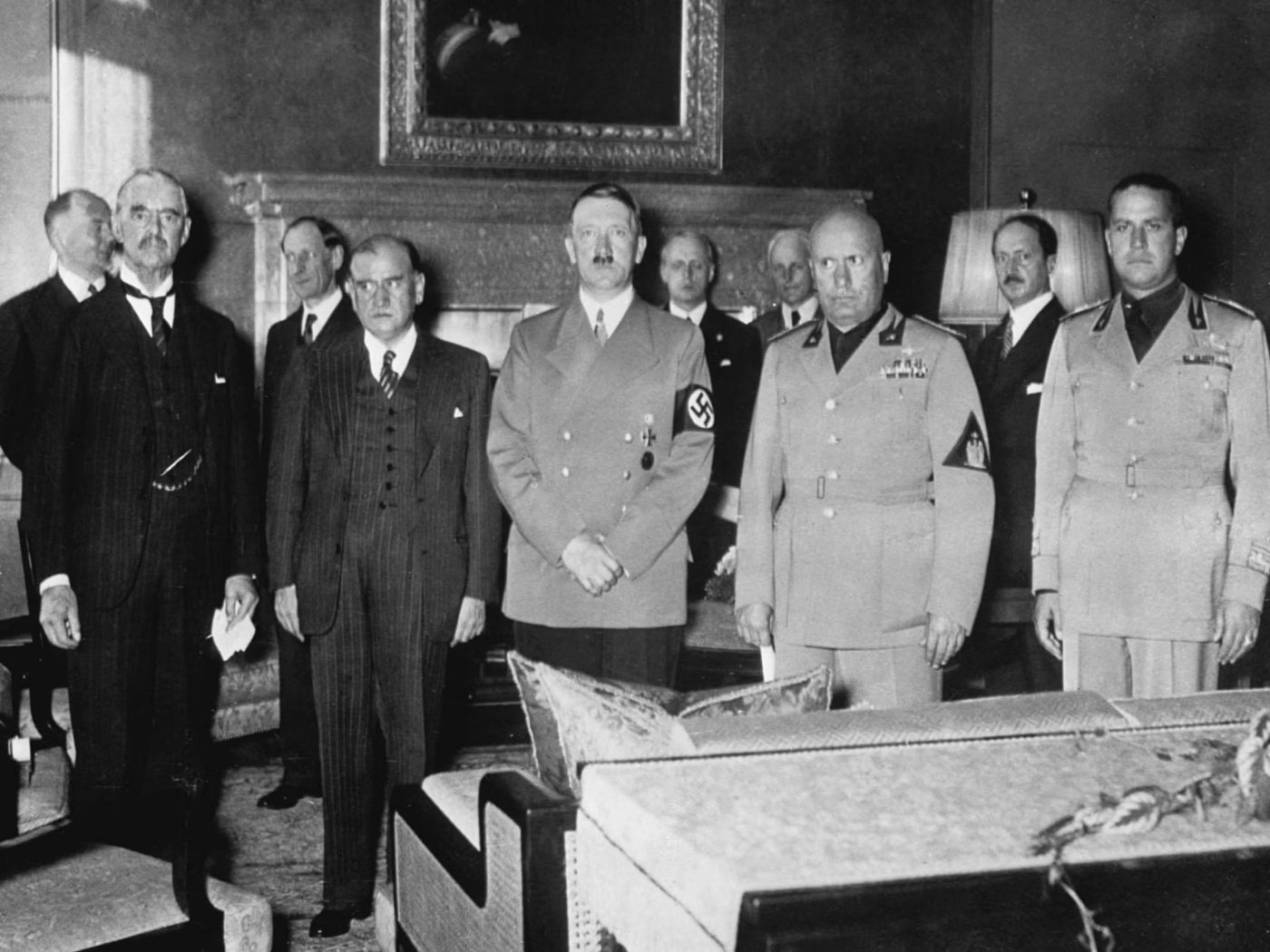
The Munich Agreement
The Munich Agreement was a 1938 diplomatic agreement allowing Nazi Germany to annex part of Czechoslovakia, widely regarded as a failed attempt at appeasement that preceded World War II.
Intended to prevent war through diplomatic concession, this agreement instead became one of history's most cited cautionary examples of how appeasing an aggressive power can simply embolden further aggression.
Appeasing Nazi Germany
The Munich Agreement allowed Nazi Germany to annex the Sudetenland region of Czechoslovakia, an attempt by Britain and France to avoid war through diplomatic concession.
"Peace for Our Time"
British Prime Minister Neville Chamberlain famously declared the agreement had achieved "peace for our time," a claim that proved tragically premature within less than a year.
Emboldening Further Aggression
Rather than preventing conflict, the agreement is widely viewed as having emboldened further German territorial aggression, directly preceding the outbreak of World War II the following year.
A Lasting Cautionary Symbol
The Munich Agreement has become a frequently cited historical cautionary example regarding the risks of appeasement in response to aggressive authoritarian expansion.