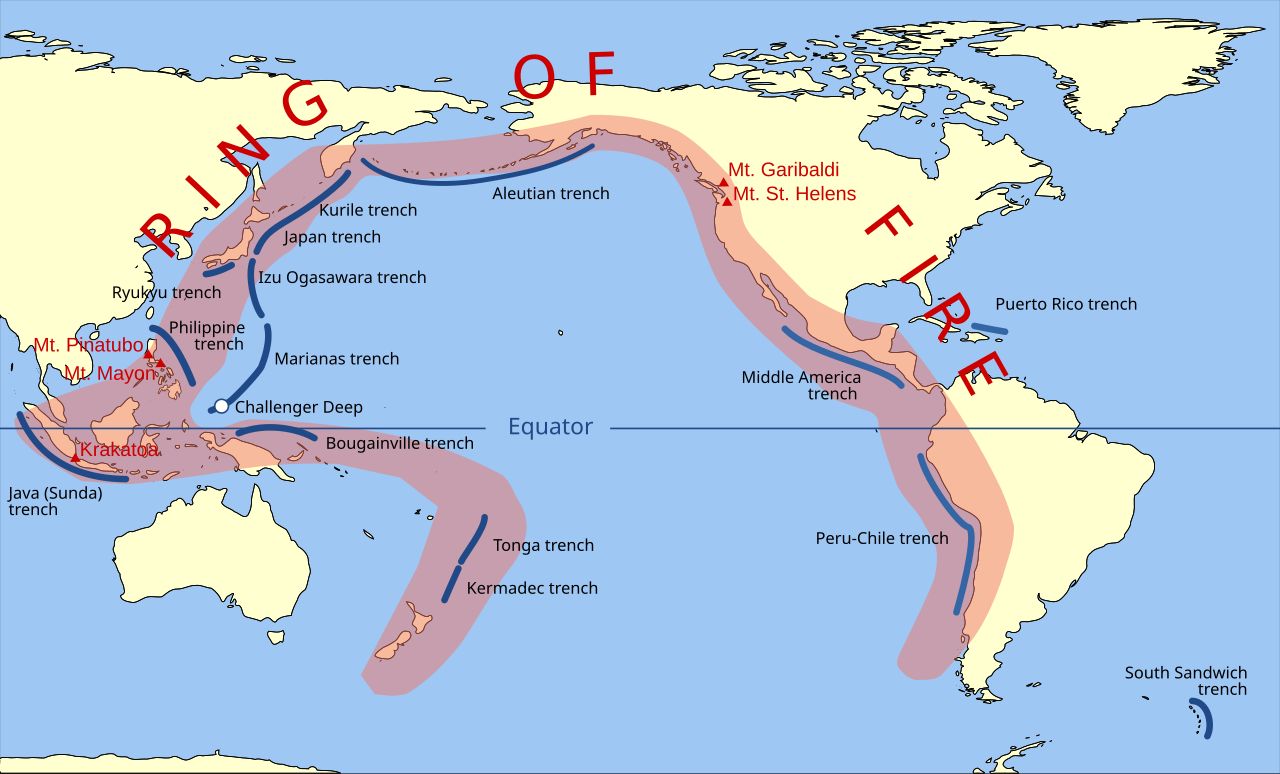
The Pacific Ring of Fire
The Pacific Ring of Fire is a horseshoe-shaped zone around the Pacific Ocean characterized by intense volcanic and seismic activity, home to the majority of the world's active volcanoes and earthquakes.
Tracing a horseshoe shape around the entire Pacific Ocean basin, this zone accounts for the overwhelming majority of the planet's earthquakes and active volcanoes, a direct consequence of colliding tectonic plates.
A Horseshoe of Seismic Activity
The Ring of Fire stretches approximately 25,000 miles around the Pacific Ocean basin, passing through countries including Japan, Indonesia, Chile, and the western United States.
The Majority of the World's Volcanoes
The region contains roughly 75 percent of the world's active and dormant volcanoes, a direct result of the numerous tectonic plate boundaries that converge along the Pacific basin's edges.
Frequent Major Earthquakes
The Ring of Fire also accounts for approximately 90 percent of the world's earthquakes, including many of the most powerful and destructive seismic events in recorded history.
Shaping Human Settlement and Risk
Despite the significant natural hazards, some of the world's most densely populated regions lie within the Ring of Fire, requiring extensive earthquake and volcanic disaster preparedness infrastructure.