For most South Korean actors without connections or know-how, Hollywood is still uncharted territory.
Kim, who typically casts high-profile stars and works with local casting directors for co-productions, also finds actors via social media. “I usually put out an open call on my Instagram,” she said.
But for actors without major agency backing, the right contacts are hard to find. The American and Korean industries operate differently, and US casting information rarely reaches those outside established networks.
Kim said South Korean talent faces a steep learning curve. “I would get questions – should I change my Korean name to a Western name? Do I pay to get an agent? Can I look into the camera when I’m doing an audition?” she said. Even name consistency is an issue: Kim recalled a K-pop artist turned actor whose name appeared five different ways online.
Technical standards also differ. Actor Misun Youm noted American audition tapes require clean white backgrounds, while “in Korea, it doesn’t matter.”
Headshots diverge too: South Korean profiles feature modellike images, while American headshots match character types.
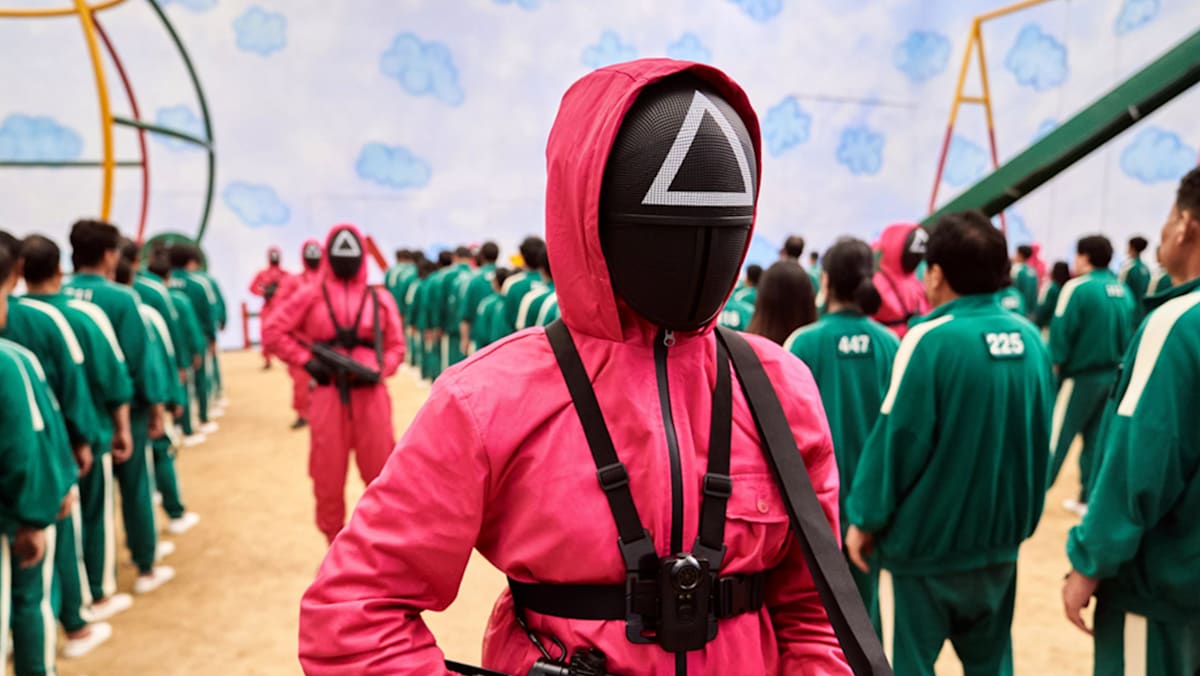
“In Korea, you shoot profile photos like a fashion magazine model,” said veteran actor Shin Ju-hwan, who goes by Julian Shin. He played a masked soldier in second and third seasons of Squid Game, and stars in Taxi Driver Season 3.
Shin found Upstage by chance – his wife, a producer, discovered them on LinkedIn.
His Hollywood dream was partly motivated by colleagues at his former agency – Han Yeri in Minari and Jung Ho-yeon in Squid Game.
“Even though I wasn’t a main character – I was just a ‘soldier’ – people who saw even that brief appearance started leaving comments on my Instagram,” Shin said. “The impact of that show was truly unparalleled.”
LANGUAGE AND ACCENTS
Source: CNA