Malaysia eyes bigger role in rare earths, but industry players warn ambitions may outpace reality

CHINA STILL DOMINANT
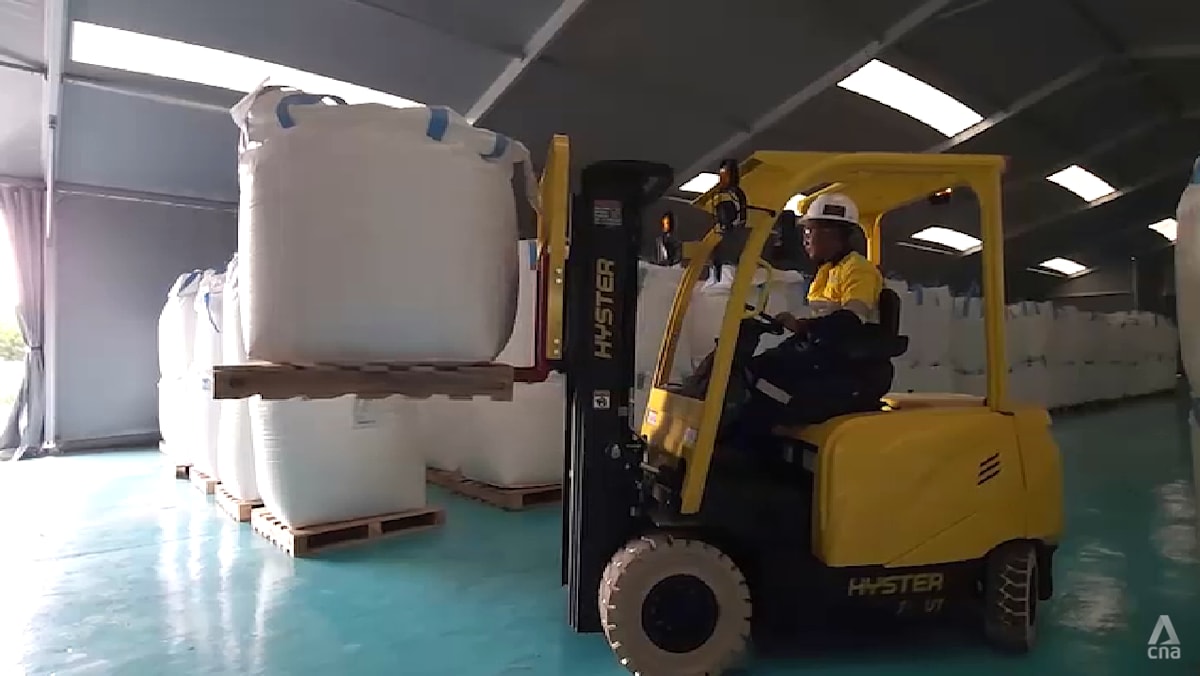
Malaysian mining firm MCRE, which has partnered China Rare Earth Corporation, extracts rare earth elements from ionic adsorption clay (IAC) in the central state of Perak using in-situ leaching, a method where chemical reagents are injected into the soil through tubes several metres deep.
The leached liquid is collected and processed into rare earth carbonate.
MCRE currently produces about 2,000 tonnes of rare earth oxide annually, all of which is exported to China.
Lim said Malaysia’s neutral geopolitical position could be an advantage, but warned that scaling up production exponentially would be tough.


“We must start from a very small scale, because to ramp up to 30,000 tonnes is going to be very challenging,” he added.
In order to achieve the target, Malaysia will need at least 10 more facilities like MCRE
Although Malaysia has the technical capability to develop its own rare earth mining industry using in-situ leaching – considered less harmful to the environment – breaking into a supply chain long dominated by China remains difficult.
Supply chain control, including access to chemical reagents, is critical, said Lim.
“Unless you are able to manage your supply chain otherwise … it’s going to be very risky,” he added.
Industry expert Teoh Lay Hock has urged the government to reconsider its ban on raw rare earth exports to attract upstream investors.
Restricting exports made it difficult for miners to find buyers, discouraging upstream investment, said Teoh, who is technical adviser at the Malaysian Chamber of Mines.
Without a strong upstream sector, he added, Malaysia would struggle to convince midstream and downstream players that it could offer a secure domestic supply.
Teoh said a complete export ban has also contributed to an increase in illegal mining.
To address an industry that remains highly fragmented, he called for stronger coordination between state and federal authorities to harmonise rules and regulations.
Activists have raised concerns that many environmental safeguards and safety guidelines are not adopted by state governments that have the right to issue mining licenses.
Tan Bun Teet from environmental activist group Save Malaysia Stop Lynas is not convinced that the in-situ leaching method causes less damage to the environment.
“The very fact is that when strong chemicals are pumped into the ground, the deeper they go, the more likely they are going to contaminate the underground water,” he said.
“And then to do it in an area where it is regarded as a forest reserve, which is meant to actually capture the source of water supply, and it will be foolhardy to actually explore it on a very large scale.”
Meanwhile, a fisherman who wants to be known as Pak Man urged authorities to closely monitor water quality on a regular basis.
“Sometimes we see the fish behaving as if they are drunk,” he said.
“They’ll come to the surface, looking for air to breathe, maybe because the water is polluted. The next day, we see the fish have died. This must be due to what’s happening upstream.”
Source: CNA