Mexico’s economy is stuck. After sharp contraction in 2020 followed by a post-COVID bounce-back, the economy has slowed to near 1% growth for the past two years. This is significantly below the global growth rate of over 3% and especially troubling given that there are no real external shocks that can be blamed for it.
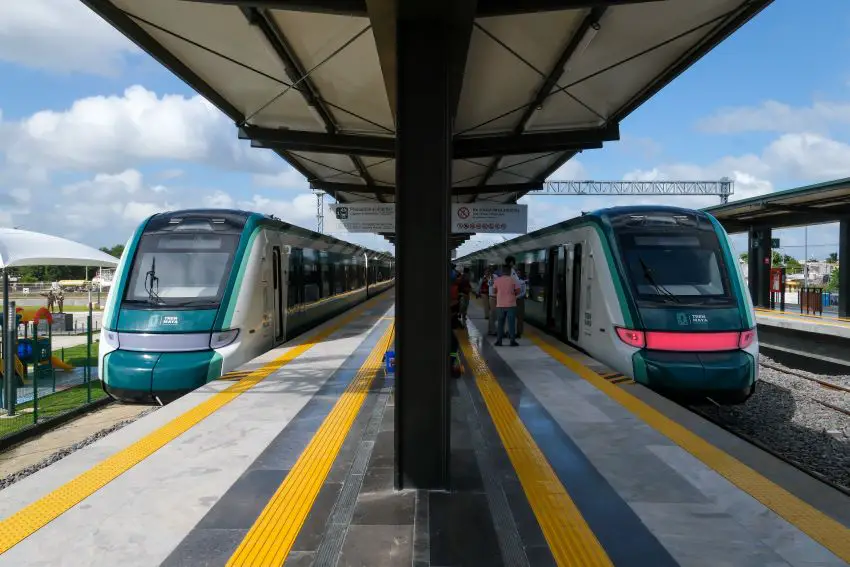
Mexico’s previous president, AMLO, inflated growth rates during his term in part with significant federal government spending. From new airports in Mexico City and Tulum, to the new Maya and Interoceanic trains, to the Dos Bocas mega-refinery, the federal government was doing more than its part to prop up growth. The big question many had about these projects was, “Are they one-time growth spurts, or are they medium or long-term growth enablers that will help fundamentally improve future growth prospects for the country?” Infrastructure projects, if well-thought-out, should be medium/long-term growth enablers. But they do take time, and most certainly these projects are not yet helping to provide a pick up in economic growth.
Foreign direct investment announcements continue to hit record highs, but they also take time to impact the economy and sometimes don’t happen at all. The recent increase in the amount of “new” investment dollars in FDI (versus pure reinvestment of profits) has been an encouraging sign. Tourism numbers are up 13% year-to-date (with spending up over 6%), which is great news. But tourism is not big enough to significantly move the country’s total GDP numbers yet.
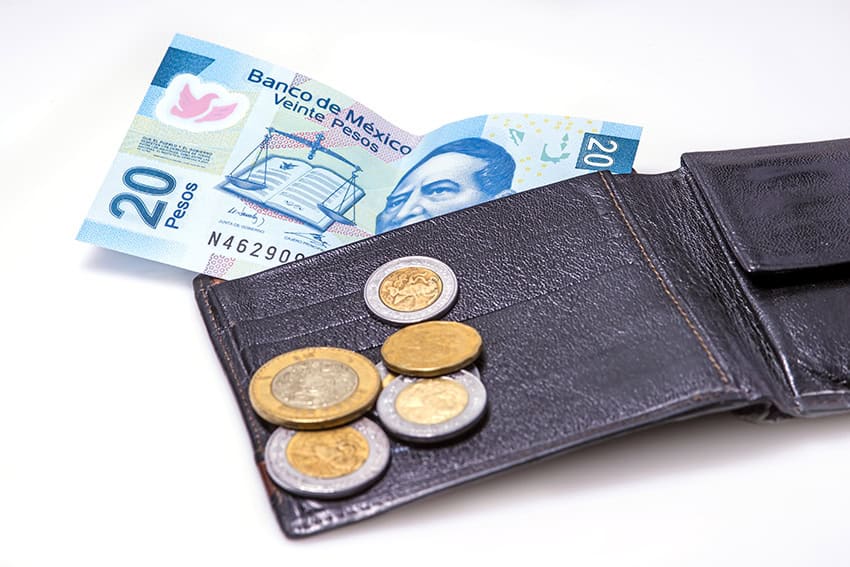
In the past, exchange rate devaluations of the Mexican peso would often provide a consistent growth spurt. Over a 25 year period and up until the COVID pandemic, the peso has averaged an annual devaluation versus the US dollar of roughly 10%. Given Mexico’s relatively low inflation and low wages, this consistently helped ensure that the cost of doing business or investing in Mexico kept getting cheaper, at least in dollar terms. This could be counted on year after year, and provided a good base case for making investments in the country. But given that the peso has actually strengthened while costs have increased now for five years, the certainty around that long-held assumption is over. So while a significant devaluation of 20% or more in the peso would most certainly provide a growth injection, there have been no indications that one is likely. In fact, the peso has continued to strengthen lately, with it recently hitting 18 month highs against the USD.



With the Trump administration making new and ever-changing tariff threats towards Mexico on a near weekly basis, what is Mexico to do? How can the economy get growing again at or above its potential?
1. The most impactful (albeit not very likely) scenario that could get the economy growing again would be a quick and favorable (for Mexico) outcome on the USMCA negotiations. This would provide clarity for businesses and investors on the role of Mexico in the North American supply chain. Too many companies right now do not have certainty as to whether Mexico going forward will have free trade with the U.S., low tariffs, or perhaps even higher tariffs compared to other countries. With that degree of uncertainty, it seems unlikely that Mexico’s economy can get growing upwards of 3% again.
In the wake of Trump’s tariff chaos, Mexico’s economy needs a rethink: A perspective from our CEO, Part 3
2. Another scenario would be for President Sheinbaum to push through reforms allowing for more foreign investment in the areas of energy extraction, production and distribution (current monopolies held by PEMEX and CFE). These economic segments could and should be significant growth drivers of the economy, yet are currently doing nothing to help. If Sheinbaum was able to use her popularity to push through reform in these areas and demonstrate that Mexico is “open for business” in shale gas production, oil extraction, energy production and distribution (natural gas, solar, wind) — it would spark a massive inflow of investment. Given Mexico’s long history of protectionism in these areas, it would not be an easy task. But given her nearly 70% popularity, if anyone is up to it, it’s Sheinbaum.
3. Governments often look for “shovel-ready” infrastructure projects that can get started right away and quickly impact the economy. Sheinbaum has some of these already started with a significant nationwide highway improvement plan. She is also doubling down on passenger train investments throughout the country. Both are good productivity enablers over the medium term, but will not have a meaningful impact in the short term.
4. Public education continues to be a big issue in Mexico, as I have previously written about here. This in turn impacts labor productivity growth and ultimately is a drag on the economy. Sheinbaum needs to prioritize this issue, perhaps by announcing some public-private partnerships that could accelerate education attainment and results. A real commitment in this area would likely be matched by private investment that could provide increased training programs in higher skill jobs that require the ability to use AI and robotics.
5. Tax policies are often used to accelerate investment and growth. Sheinbaum could announce initiatives ranging from accelerated depreciation of capital equipment investments, special tax treatment for AI and robotics investments, and tax incentives for companies that add new hires and invest in training and upskilling their workforce. All of these would steer private capital into areas that could quickly make an impact on the economy.
6. The Sheinbaum administration could create special incentives and economic development areas to further accelerate the growth of Mexico’s service sector. As I have previously written here, I think that Mexico has tremendous untapped potential in many segments of the service economy. New initiatives, new tax policies, and accelerated government approvals in service sectors like education, senior centers, housing (for Mexicans and expats), health care, wellness and tourism would further diversify the economy away from manufacturing and oil. With the right support, all those sectors could be hitting double-digit growth.
Of course, none of these options are easy. But if Mexico is serious about sustainably growing its economy at or above 3%, and in turn serious about improving the lives of its citizens — not only with minimum wage increases but also actual economic growth — it will have to tackle most of them.
Travis Bembenek is the CEO of Mexico News Daily and has been living, working or playing in Mexico for nearly 30 years.
Source: Mexico News Daily