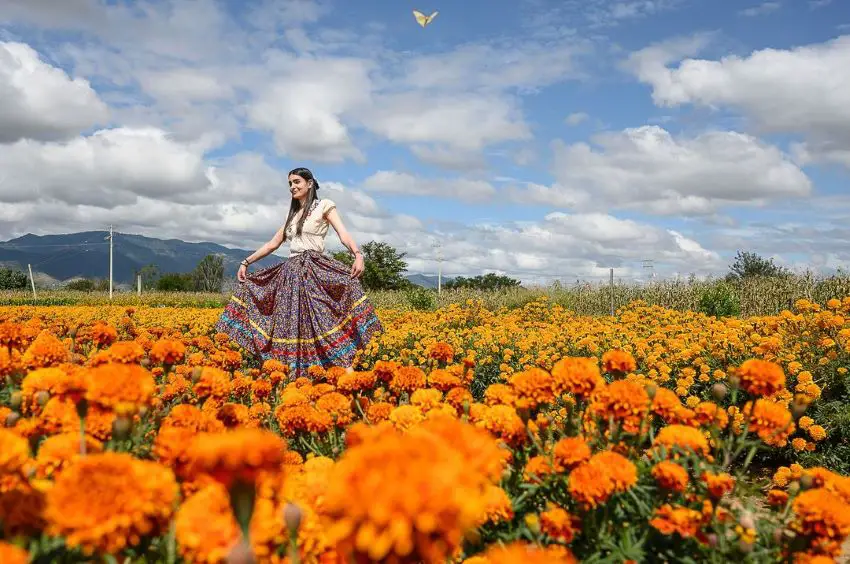
I heard the legend as a child: Xóchitl and Huitzilin met as children. They grew up and played together for years. Over time, an infinite love blossomed between them. When they came of age, they married and lived happily. Their union, however, was short-lived: As a warrior and leader of their people, Huitzilin had to leave for war. Xóchitl was left alone, hoping her husband would return one day. At that moment, Xóchitl didn’t know she would never see Huitzilin again.
This is the Mexica (better known as Aztec) legend of the cempasúchil, the “flower of the dead” in Mexican folk culture.
What is the legend of the cempasúchil flower?
According to the story, a few days after Huitzilin had gone to war, a soldier knocked on Xóchitl’s door. As she welcomed him in, she realized that the man was dressed in ceremonial attire to honor the dead. Ominous news was on his tongue: Her husband had died in battle.
Devastated by grief, Xóchitl decided to climb a high mountain to beg the sun god, Tonatiuh, to let her see Huitzin again. Seeing how distressed she was by her misfortune, Tonatiuh granted her a visit with her beloved.




He turned Xóchitl into a golden-orange flower that shed light during the nights. For months, the flower-woman remained closed, until a hummingbird landed on its stem.
Feeling the bird upon her, she recognized the soft touch of Huitzilin, who had been drawn to her by her scent. Instantly, the field surrounding her blossomed with an orange glow. Thousands of similar shoots emerged from the earth and illuminated the night with a radiance no one had ever seen before. Over the years, people began to call it cempoalxóchitl: the 20-petaled flower.
What is the cempasúchil’s pre-Hispanic symbolism?
Etymologically, cempasúchil translates to “20-petaled flower,” based on the Náhuatl cempoalxóchitl. This term is composed of cempohualli, which translates as “20,” and xóchitl, or “flower.”
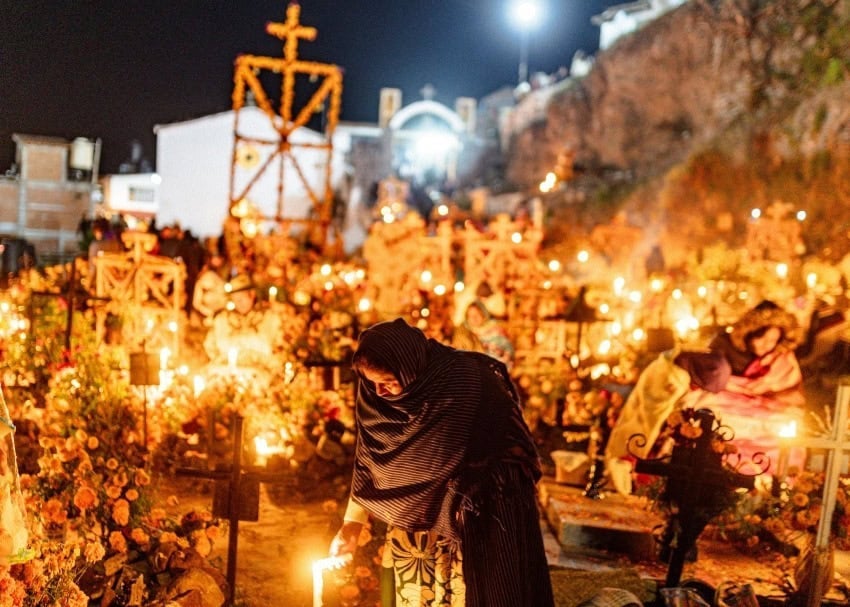
In traditional Mexica narrative, the flower’s intense yellow or orange color came directly from the sun. Cempasuchil’s golden-orange glow and unique aroma were said to guide departed souls back to a ceremonial banquet for them, prepared by their living relatives.
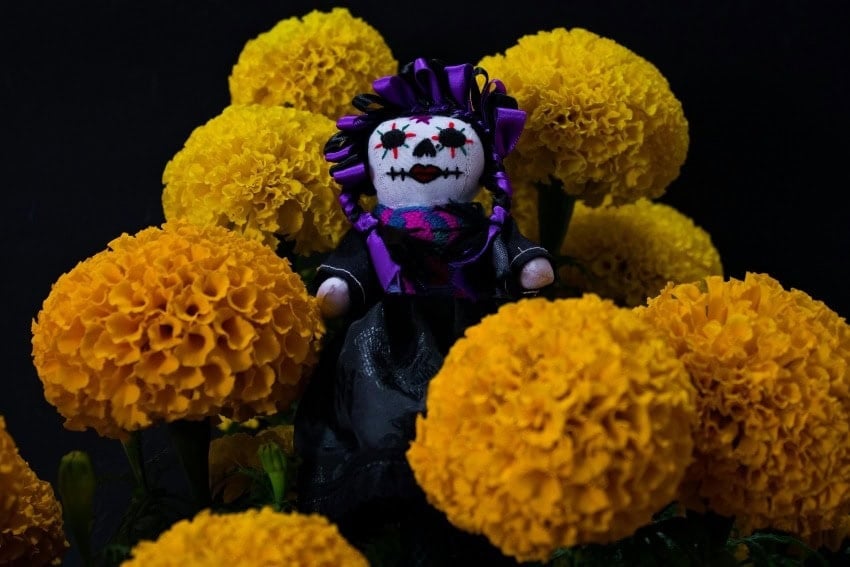
Hence, from time immemorial, the Tagetes erecta (the scientific name for the cempasúchil flower) has been used to decorate altars of the dead in different parts of Mexico, mainly during the first two days of November.
Cempasúchil flowers in the Day of the Dead festivities
Today, this plant, native to Mesoamerica, can be found growing wild in various ecosystems in Mexico. It’s also found in Central American countries, including Panama, Honduras and El Salvador. It can grow as tall as 1 meter, and its buds can reach 5 centimeters in diameter. This extremely versatile plant easily adapts to its surroundings, flourishing in temperate oak forests or in a tropical rainforest’s humidity.
Cempasúchil production in Mexico is primarily focused on the flower’s ceremonial purposes. In late October and the first days of November, the country is covered in an orange blanket of cempasúchil as people across Mexico invoke the spirits of their loved ones during Day of the Dead festivities.
Even centuries after the tradition began, cempasúchil flowers still brighten Mexicans’ altars today, lighting the way back home for the souls of the departed so that, for just one night a year, we can see our loved ones again.
Andrea Fischer contributes to the features desk at Mexico News Daily. She has edited and written for National Geographic en Español and Muy Interesante México, and continues to be an advocate for anything that screams science. Or yoga. Or both.
Source: Mexico News Daily